On August 4, 2026, Anthropic signed a $10 billion agreement to buy computing capacity over six years from Volta, an AI cloud startup that did not exist in its current form six months earlier. On the same day, Volta announced it had closed a $300 million venture round valuing it at roughly $2.4 billion. The pairing of those two numbers, a $10 billion customer commitment to a company worth a quarter of that, is the whole story in miniature: in the 2026 compute market, a signed contract from a frontier lab is worth more than a track record. This piece lays out the deal's actual terms, explains the circular-financing concern that several outlets flagged, and places it inside Anthropic's broader scramble for compute.
 Anthropic
 NVIDIA
The terms, plainly stated
The structure has several moving parts, so it helps to name each one. Anthropic is the customer, buying $10 billion of compute across six years. Volta Infra is the cloud provider selling that capacity. The physical site is a data center in Tydal, Norway, with an initial 133 megawatts of capacity, operated not by Volta directly but by Bitdeer, a Bitcoin-mining company repurposing its expertise in running large, power-hungry facilities. The power itself is Norwegian hydroelectricity, which makes the site both cheaper to run and cleaner than a gas-fired equivalent. The chips are Nvidia Vera Rubin accelerators, the company's newest architecture. Delivery comes in two roughly equal phases, with target activation dates of December 31, 2026 and March 31, 2027.
Volta's own funding round is part of the same announcement. The $300 million was led by Andreessen Horowitz and Altimeter Capital, with Nvidia and Michael Dell among the investors, and Volta says it has also assembled a $5 billion financing pool to help customers afford the chips they rent. That last detail matters: Volta is not just selling compute, it is helping finance the purchase of the hardware that compute runs on.
The circular-financing question
The detail that drew the most comment is that Nvidia appears on both sides of the transaction. It is an equity investor in Volta, and it is the supplier of the chips Volta buys and deploys. Put simply, some of the money Nvidia puts into Volta can come back to Nvidia as revenue when Volta orders accelerators. This is the pattern critics call circular financing, and it is not unique to this deal; variations of it run through several of 2026's largest AI infrastructure arrangements.
Who pays whom in the Volta deal
The same chipmaker appears twice: Nvidia is both an equity investor in Volta and the supplier of the accelerators Volta buys. That overlap is what critics mean by circular financing.
Simplified structure based on public reporting. It shows the flow of money, chips and capacity, not every contractual party.
It is worth being precise about why this draws scrutiny and also why it is not automatically improper. The concern is that when a chip supplier helps fund the customers who buy its chips, reported demand can look stronger than independent, unsubsidized demand would be, and the risk concentrates in a tightly linked group of companies rather than spreading across a diverse customer base. The counterpoint is that vendor financing is a long-established practice in capital-intensive industries, from aircraft to telecom equipment, and it can be a rational way to accelerate a market that is genuinely growing. Both things can be true: the underlying demand for Anthropic's models can be real, and the financing structure can still make the ecosystem more fragile by concentrating its dependencies. The honest read is to hold both, not to pick one.
A signed contract from a frontier lab is now worth more than a track record.
On why a six-month-old startup lands a $10B deal
Why Anthropic is signing deals like this at all
The Volta agreement is not a standalone move; it is one entry in a much longer list. Anthropic is pursuing compute across multiple suppliers at once, with reported arrangements involving Google and Broadcom, Amazon, SpaceX, and AMD, on top of this Volta deal. That breadth is the strategy. A frontier lab's single largest constraint in 2026 is not talent or data but access to enough accelerators, powered and cooled, to train and serve ever-larger models. Spreading commitments across many providers reduces dependence on any one of them and locks in capacity before competitors can claim it.
Signing a six-year, $10 billion deal with a company that is barely six months old only makes sense in that light. Anthropic is not buying Volta's history; it is buying a claim on future megawatts and chips, secured early. From Volta's side, a marquee customer commitment of that size is precisely what turns a young company into a fundable one, which is why the venture round and the customer contract were announced together. Each makes the other credible.
What could go wrong, stated without drama
Three dependencies sit underneath the deal, and naming them is more useful than either boosterism or alarm. The first is execution: two data center phases have to be built and energized on schedule, in late 2026 and early 2027, by an operator whose core business was mining Bitcoin. The second is the hardware timeline: the capacity depends on Nvidia's Vera Rubin chips arriving in volume when planned. The third is the financing web: the more the same handful of companies invest in, supply, and buy from one another, the more a problem at any single node can ripple through the others. None of these is a prediction of failure. They are simply the specific things that have to hold for $10 billion of contracted compute to become $10 billion of delivered compute.
The takeaway
What is verifiable is straightforward: Anthropic committed $10 billion over six years to a cloud provider that is months old, powered by Norwegian hydropower and Nvidia's newest chips, with Nvidia also holding equity in the provider. That combination captures the state of the AI compute market in 2026, enormous demand, aggressive early commitments, and a small circle of deeply interlinked companies. Whether that structure looks, in hindsight, like efficient capital formation or like concentration risk waiting to surface depends on facts that are not yet in evidence: whether the Tydal site delivers on time, whether the chips arrive as scheduled, and whether demand for Anthropic's models keeps pace with the capacity being built to serve it.
For teams building on top of these models rather than financing the infrastructure beneath them, the practical lesson is about not inheriting a supplier's dependencies as your own. Keeping applications portable across models and providers, the model-agnostic posture Metir AI takes rather than binding to a single lab or cloud, is one way to stay insulated from how any one of these tightly linked deals plays out.
Sources:
- Anthropic signs $10B deal with AI cloud startup Volta | TechCrunch
- Anthropic locks in $10 billion of compute from Volta, a cloud startup that didn't exist six months ago | The Decoder
- Anthropic Inks $10 Billion Computing Deal With New Cloud Startup | Bloomberg
- Anthropic signs $10 billion computing deal with Volta Infra | Quartz
- Anthropic signs a $10bn compute deal with a week-old cloud startup | The Next Web
Image credits
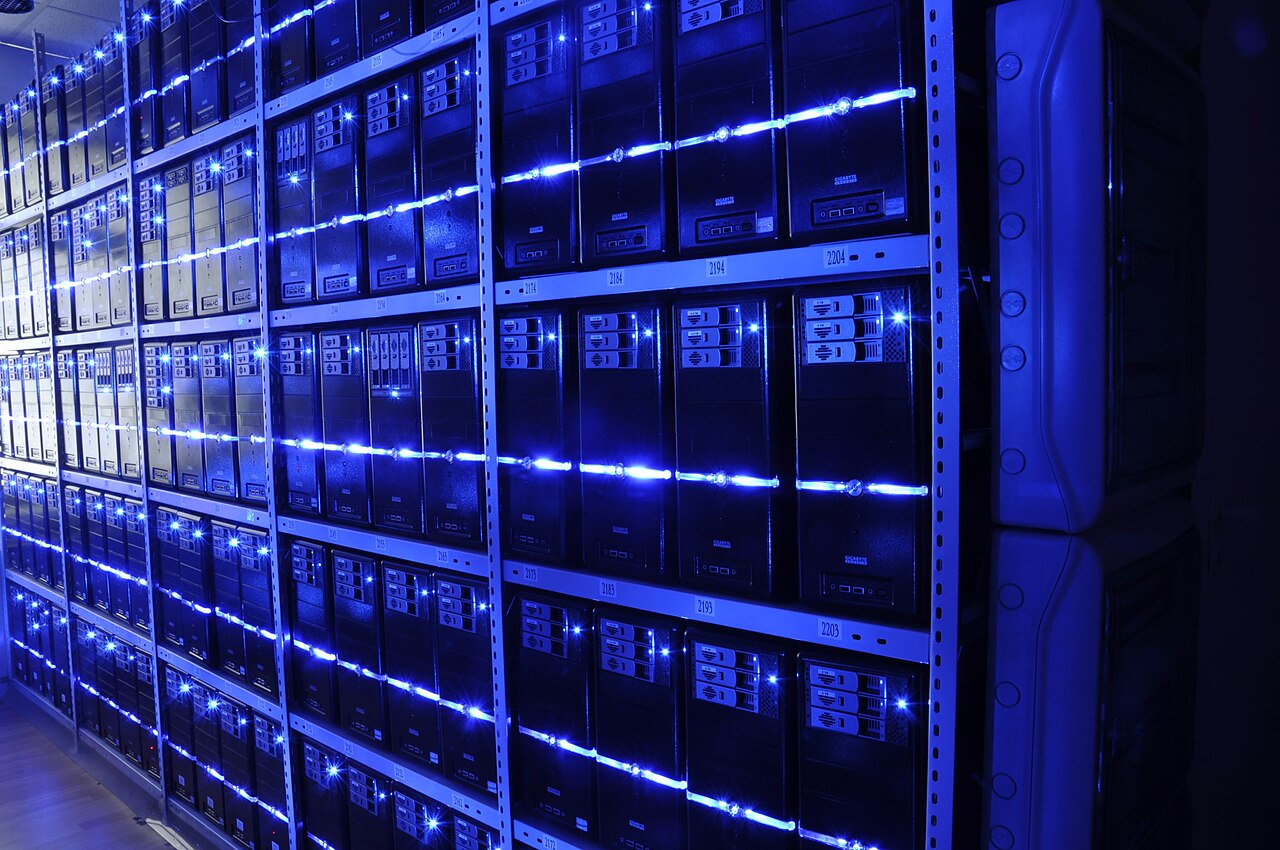
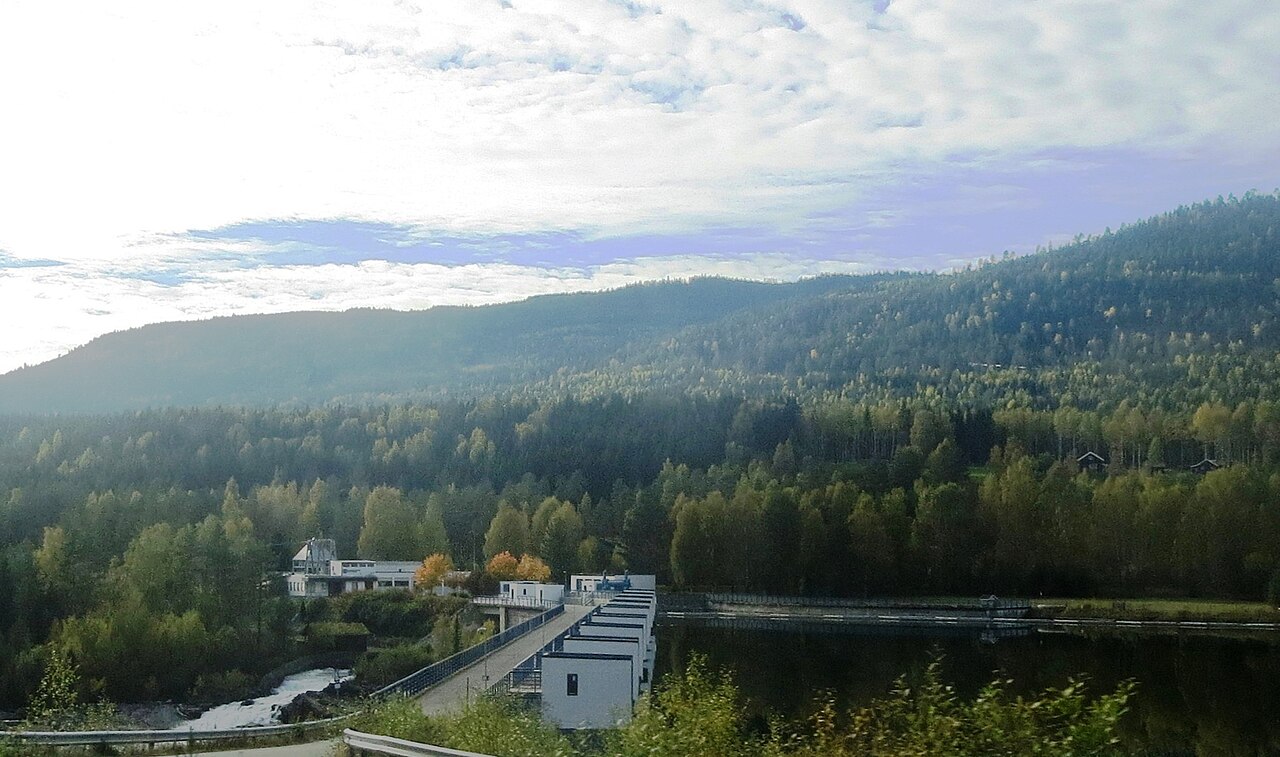
Header image: server racks in a data center, via Wikimedia Commons, licensed under CC BY-SA 3.0; an illustrative data center, not a Volta facility. In-body photograph of a Norwegian hydroelectric station, via Wikimedia Commons, licensed under CC BY-SA 3.0; it depicts Norwegian hydropower generally, not the Tydal site. Both images were reviewed before use.