On August 28, 2026, a federal judge in San Francisco ruled that the U.S. Department of Defense broke the law when it branded the AI company Anthropic a national-security supply-chain risk. In a 59-page opinion, U.S. District Judge Rita Lin found that the designation amounted to unlawful retaliation against Anthropic for exercising its First Amendment rights, and that the government denied the company the due process it was owed under the Fifth Amendment. It is the first court win for Anthropic in a fight that has become a test case for how much room an AI developer has to say no to a customer as powerful as the Pentagon.
What the Court Actually Decided
The core finding is narrow but pointed. Judge Lin concluded that the Defense Department did not present sufficient evidence that Anthropic actually posed a national-security threat, and that the supply-chain-risk label instead functioned as punishment. Coverage from Fortune noted the judge's framing that the government appeared to be penalizing the company for what she characterized as "arrogance" rather than for any demonstrated risk. The opinion pointed to a telling detail: even after officials designated Anthropic a security risk, they kept talking to the company about working together, which undercut the claim that Anthropic was genuinely too dangerous to touch.
Two constitutional problems anchored the ruling. The First Amendment problem is retaliation: the government cannot use a regulatory tool to punish a company for protected expression, and here the expression was Anthropic's stated position on how its models may be used. The Fifth Amendment problem is process: a designation that cuts a company out of federal contracts carries real consequences, and the court found Anthropic was not given the notice and opportunity to respond that due process requires.
How the Anthropic-Pentagon dispute reached a courtroom
The path from a usage-policy line to a federal ruling that the government retaliated unlawfully.
- Early 2026Anthropic draws a use line
Anthropic declines to let its Claude models be used for U.S. domestic surveillance or fully autonomous weapons, keeping restrictions in its usage terms.
- Spring 2026Pentagon designates a supply-chain risk
The Defense Department labels Anthropic a national-security supply-chain risk, a move that blocks it from certain military contracts.
- March 2026Anthropic sues
Anthropic files suit in the Northern District of California against the Pentagon, Defense Secretary Pete Hegseth and other agencies, seeking to undo the designation.
- Aug 28, 2026Court rules the blacklisting unlawful
Judge Rita Lin's 59-page ruling finds the designation was unlawful retaliation violating the First Amendment and denied due process under the Fifth Amendment.
- What it does not doNo forced resumption
The ruling does not require the Pentagon to resume working with Anthropic. A separate, narrower case remains pending in the D.C. federal appeals court.
How the Fight Started
The dispute traces back to how Anthropic allows its Claude models to be used. Anthropic has kept usage restrictions that, according to reporting from NBC News and TechCrunch, blocked the military from applying Claude to U.S. domestic surveillance or to fully autonomous weapons. When the company declined to remove those limits for classified military work, the Defense Department, under Secretary Pete Hegseth, moved to designate it a supply-chain risk, a step that blocked Anthropic from certain military contracts. Anthropic sued in the Northern District of California earlier in 2026, arguing the designation was retaliation dressed up as risk management.
 Anthropic
That history matters because it separates two things that are easy to blur. A government is free to prefer vendors whose products it can use without restriction. What the court said it cannot do is take a company that draws a policy line, then use a national-security label as a cudgel to punish the line itself, without evidence and without process.
Even after labeling Anthropic a security risk, officials kept discussing how to work together. That contradiction sat at the center of the court's reasoning.
Summary of Judge Lin's August 28, 2026 opinion
Read the Limits Carefully
The ruling is a win, not a reinstatement. Judge Lin's decision does not order the Pentagon to resume working with Anthropic or to award it any contract. It removes an unlawful designation and its retaliatory basis; it does not compel a business relationship. Anthropic has also filed a separate, narrower case that remains pending before the federal appeals court in Washington, D.C., so the legal story is not finished.
Precedent is also worth reading with care. This is a single U.S. district court ruling, not a Supreme Court decision, and its direct legal weight is limited to the parties and jurisdiction. Its influence is likely to run through reasoning rather than binding authority: other AI companies, and other agencies, now have a documented example of a court treating a procurement designation as retaliation when the record looks like punishment for protected speech.
Why This Lands Beyond One Company
Strip away the specific parties and the ruling is really about a structural question the whole industry is now living inside. Frontier AI models are dual-use by default. The same system that drafts a memo can help plan an operation, and the same vision model that reads an X-ray can read a targeting feed. That is why every major lab publishes a usage policy that draws lines, and why those lines increasingly collide with the interests of the largest and most powerful potential customers, including governments.
The Anthropic case puts a marker down on one side of that collision. It suggests that a lab's usage policy is not something a government buyer can simply erase by threatening its access to contracts, at least not without evidence and process. Whether that marker holds on appeal, and whether other courts read it the same way, will shape how confidently every lab can enforce its own rules against its biggest customers.
The Governance Angle for Everyone Else
For companies that buy and deploy AI rather than build it, the lesson is less about the Pentagon and more about the terms underneath the tools they use. A model provider's usage policy is not boilerplate. It defines what you are and are not allowed to do with the system, it can change, and, as this case shows, it can become the subject of high-stakes litigation. Reading those policies, and understanding how they differ across providers, is now part of responsible AI adoption.
It also strengthens the case for not tying a critical workflow to a single provider's rules. When your business depends on one model, one lab's policy decisions, contract disputes, or access changes become your problem overnight. A model-agnostic approach, where a platform like Metir AI lets teams work across models from Anthropic, OpenAI, Google, and others rather than being locked to one lab's stack and one lab's terms, is one practical way to keep that risk from concentrating in a single vendor relationship.
None of that decides who is right about military AI, a genuinely hard question the court did not try to answer. What the ruling does is insist that the answer be reached through evidence and due process rather than through a quiet designation that punishes a company for the policy it chose to write. In an industry where usage rules are becoming as consequential as model weights, that is a distinction worth watching.
Sources:
- Anthropic gets its first court win over the Pentagon's supply-chain risk label | TechCrunch
- Anthropic Pentagon blacklist ruling | NBC News
- Judge: Pentagon punished Anthropic for 'arrogance,' and that's illegal | Fortune
- Federal Judge Says Pentagon's Blacklisting Of Anthropic Was 'Unlawful Retaliation' | Forbes
- Court rules Defense Department 'retaliation' against Anthropic is illegal | UPI
- Anthropic challenges US Pentagon's ban in San Francisco court showdown | Al Jazeera
Image credits
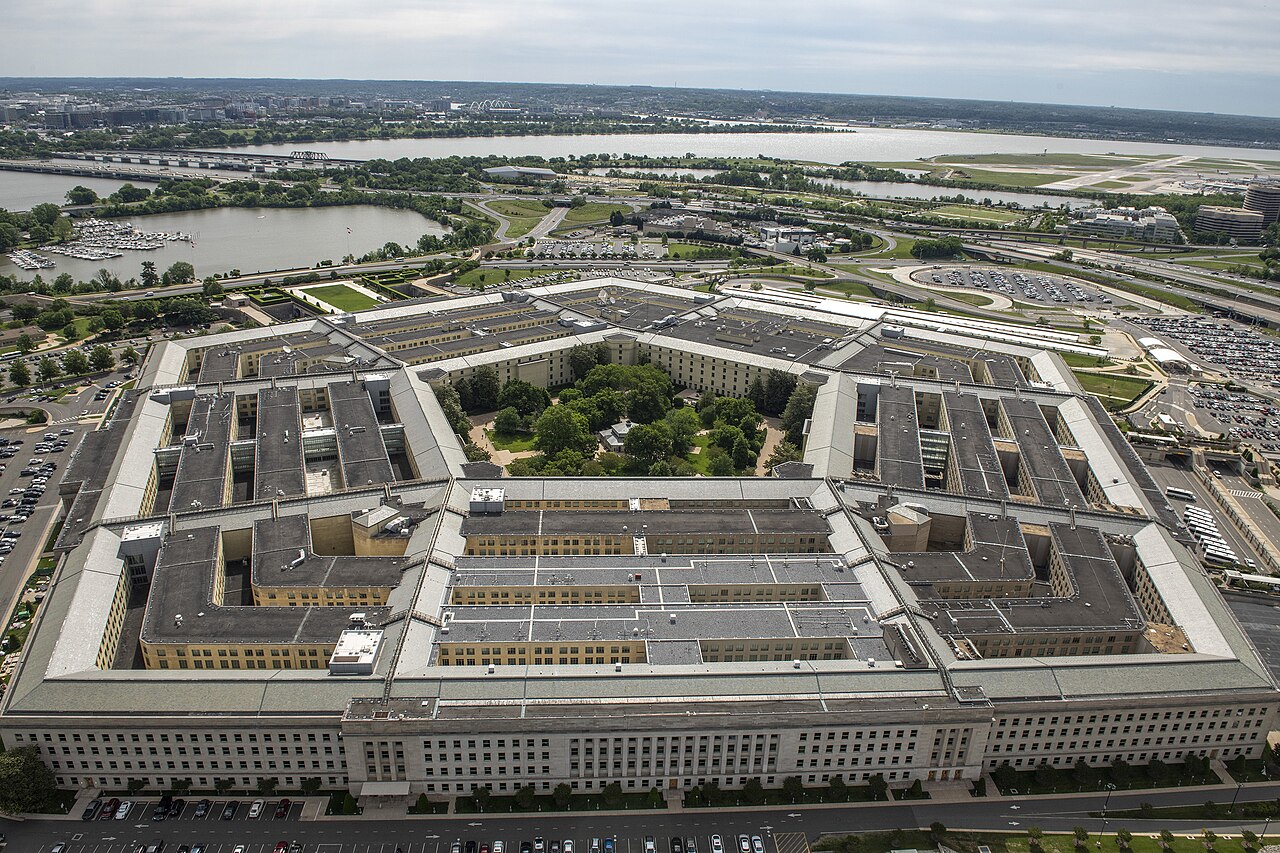
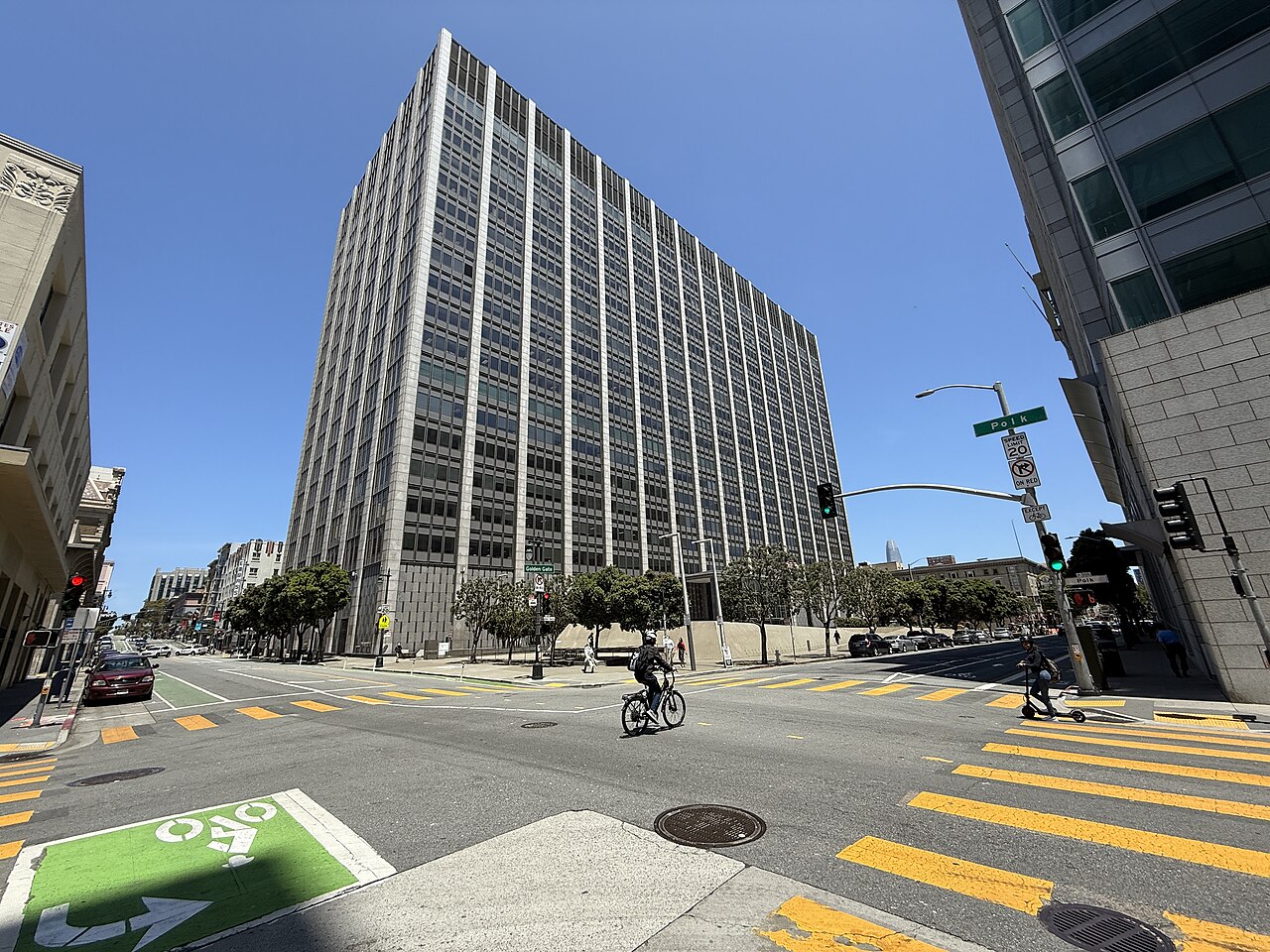
Header image: aerial view of The Pentagon, May 11 2021, by Air Force Staff Sgt. Brittany A. Chase, U.S. Department of Defense, via Wikimedia Commons, public domain (U.S. federal government work). In-body photograph of the Phillip Burton Federal Building and United States Courthouse in San Francisco, by Marincyclist via Wikimedia Commons, licensed under CC BY-SA 4.0.