On September 16, 2026, Anthropic said it would fold its two flagship consumer products into one. Claude Chat, the conversational assistant, and Claude Cowork, the more autonomous task runner, are becoming a single Claude that decides on its own where a request should go. The company also introduced two new beta tools, Claude Docs and Claude Slides, and made its Claude Design feature available inside any conversation rather than as a separate destination. The rollout reaches Pro and Max subscribers first, on web, desktop and mobile, with Free and Team plans to follow and Enterprise unchanged for now.
The headline is a product consolidation. The more interesting story is what it says about where assistant design is heading, and about the quiet cost that comes with letting one system decide what to do with your request.
What actually changed
Before this week, a Claude user faced a choice at the door. A quick question went to Chat. A multi-step job that might run for a while, open files, and produce a deliverable went to Cowork. Design work went to a third surface. The friction Anthropic describes is the decision itself. People told the company that the annoying part was working out where a task belonged, and that work started in one place did not carry into the other.
The new setup removes that fork. A user brings a request, and Claude uses context, the skills it has been given, and the connectors already linked to judge whether to answer directly or to pick up tools and work through a longer job. Docs lets several people edit a document in real time with Claude drafting and commenting alongside them. Slides can be drafted, edited and presented inside Claude or exported to PowerPoint or PDF. Design now lives in the conversation.
From separate products to one routed surface
Anthropic is folding standalone products into a single Claude that decides where a request should go.
Source: Anthropic announcement, September 16, 2026. Enterprise plans keep Chat and Cowork separate for now.
Anthropic keeps a human check in the default. Claude asks before it takes an action, and a user can instead let it keep working and check in only when something needs a closer look. That default matters, because the merge quietly raises the stakes of any single message. When one surface can either reply in a sentence or spend twenty minutes editing your files, the system's judgment about which to do becomes part of the product.
Why every large assistant is collapsing into one box
Anthropic is not alone in this. Reporting on the move framed it as part of a push to build an all-in-one assistant, and the pattern is visible across the market. The industry spent two years shipping separate surfaces for chat, for agents, for coding, for image work and for documents. It is now spending 2026 merging them back together.
The logic is straightforward once the model is capable enough. Separate products force the user to predict what the model can do before they have described their problem. That is backwards. The person with the task rarely knows in advance whether it is a one-line answer or a two-hour project, and asking them to sort it is asking them to do the routing the software should do. Collapsing the surfaces moves that judgment from the user to the system.
 Anthropic
 OpenAI
 Google
 Microsoft
There is a business reason underneath the design reason. An assistant that owns the whole workflow, from the question to the finished document, is far harder to leave than a chat box a user can swap for another. Every capability folded into the surface raises the switching cost. A merged assistant that drafts your slides, edits your docs and runs your longer tasks is closer to an operating layer than a feature, and operating layers are where durable businesses sit.
The routing problem is now the product
Once one surface can answer or act, the quality of the assistant is decided by an invisible step. Before the model does anything, something has to read the request and decide what kind of work it is. Get that right and the experience feels effortless. Get it wrong and the failure modes are worse than a plain chatbot ever produced. A misjudged reply that fires off a long, file-touching job when the user wanted a sentence is a new class of mistake, and it is why Anthropic ships the ask-first default.
The decision the user used to make at the door has not disappeared. It has moved inside the assistant, where it is now the assistant's job to get right.
This is the part of the announcement that is easy to skip past. The consolidation is not only a convenience. It is a bet that the model, plus context and connectors, can classify intent well enough that removing the manual choice is a net gain. For short factual questions and clearly scoped jobs that bet is safe. The harder cases are the ambiguous ones, where a reasonable person could read the same sentence as either a question or an instruction to go and do something.
There is a broader design principle here that applies well beyond Claude. As assistants take on more of the workflow, the layer that decides how to handle each request, which capabilities to engage, and, increasingly, which model to run, becomes the thing that determines quality. Systems built to route intelligently across tools and models, rather than lock a user into a single fixed path, are converging on the same insight from different directions. It is the reason a model-agnostic orchestration layer, the approach platforms like Metir take, is less a feature and more the shape the category is settling into. The value is moving from the model to the judgment about how to use it.
What to watch as it rolls out
Three things are worth watching over the coming weeks. The first is how often the merged Claude guesses wrong about intent, and whether the ask-first default is enough to keep that from becoming a nuisance or a hazard. The second is Enterprise, which Anthropic is deliberately leaving on the old split for now, with at least thirty days of notice before any change. Enterprises tend to want predictable, auditable behavior, and a surface that decides on its own what to do with a request is a harder thing to govern than two clearly separated products. The third is Docs and Slides, which put Anthropic into direct competition with the document and presentation tools most knowledge workers already use every day.
None of this settles whether merging is the right call. The honest read is that it is a reasonable response to a real friction, with a real trade-off attached. Users get one place to work and lose the ability to know, at a glance, whether the system is about to answer or to act. Anthropic has bet that better routing is worth that loss, and it has kept a confirmation step as insurance. Whether that holds up depends less on the models, which are clearly capable, and more on the unglamorous work of getting intent classification right often enough that the door people used to stand at is one they never miss.
Sources:
- Anthropic merges Claude chat and Cowork in one interface (TechCrunch)
- Anthropic merges its chat and agentic products into one AI assistant in push to build a superapp (Fortune)
- Anthropic folds Cowork into Claude and launches Docs and Slides (The Next Web)
- Anthropic brings Cowork directly inside Claude's chat interface (SiliconANGLE)
- Claude Cowork and chat are now one Claude (Anthropic)
Image credits
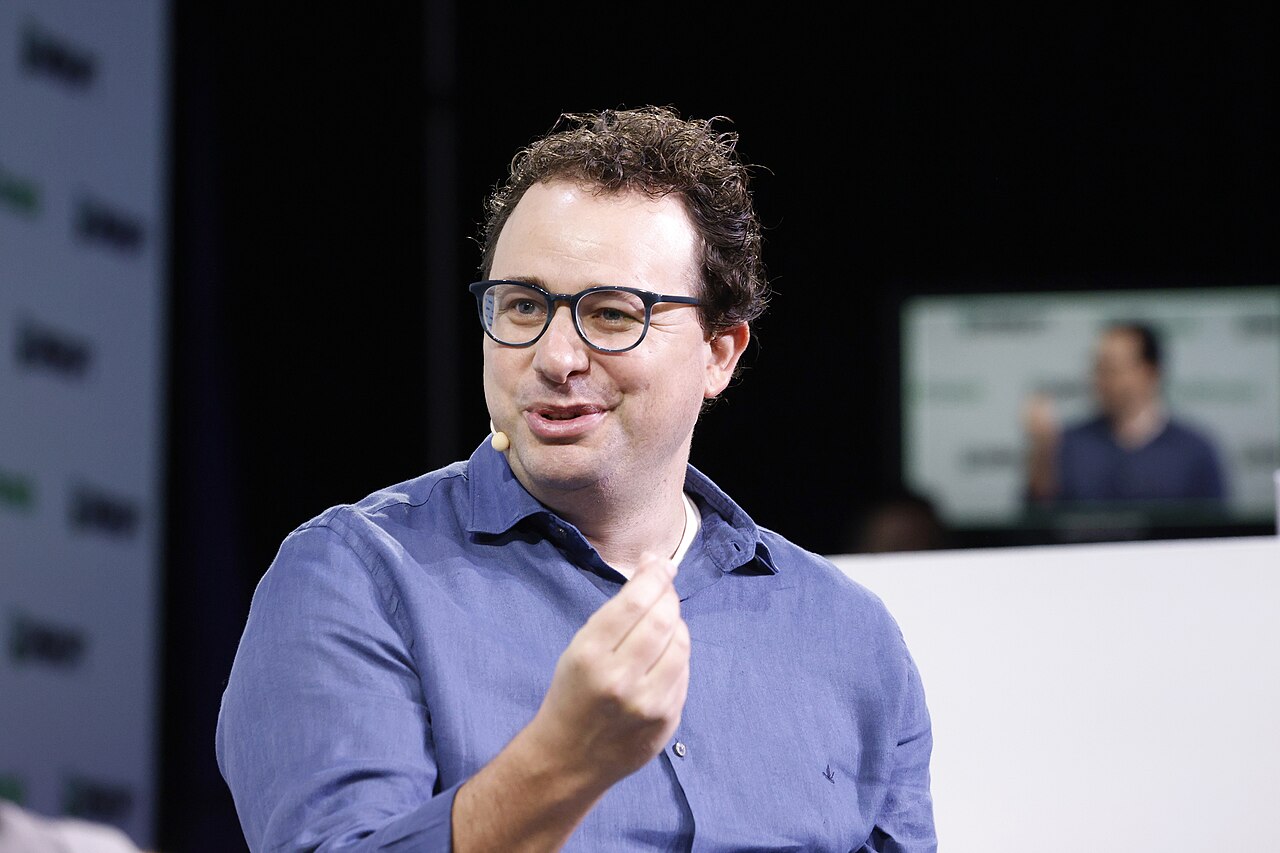
- Hero: "Dario Amodei at TechCrunch Disrupt 2023" by TechCrunch, via Wikimedia Commons, licensed CC BY 2.0. Retrieved September 18, 2026.