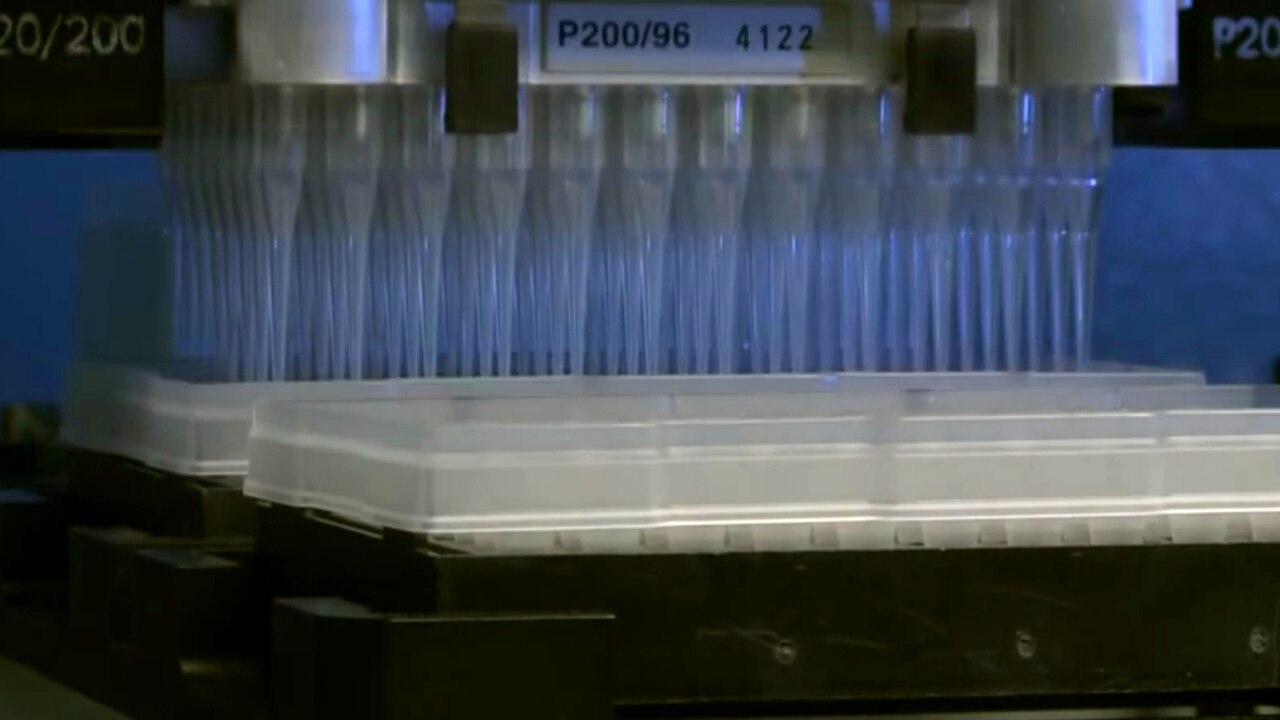
On August 27, 2026, Anthropic previewed the Model Hardware Standard (MHS), an open specification designed to let AI agents discover and operate physical devices such as microscopes, robotic arms, liquid handlers, and lasers. The pitch is narrow on its face, better plumbing between software agents and lab equipment, but the implication is broader: Anthropic is applying the same open-standard playbook it used for the Model Context Protocol (MCP) to the physical world, and betting that the bottleneck holding back "physical AI" has been fragmented integration work rather than model capability.
 Anthropic
 AWS
AWSHow the Driver Actually Works
The core of Anthropic's Model Hardware Standard is a standardized driver: software that translates between a computer's operating system and a hardware device. Rather than every instrument shipping its own bespoke integration, a device that speaks MHS exposes a simple set of primitives, commands like "read" (for example, get temperature) or "write" (for example, set temperature). That alone would just be a thinner API. The more consequential piece is what else the driver carries: tags, written in natural language, that encode a device's physical characteristics, its weight, its capabilities, and its safety limits. Anthropic's announcement describes this as automatically producing a reference file with a device's general characteristics, information that has historically lived only in a paper manual or in the tacit knowledge of whoever has run the machine for years.
Once a device speaks that language, it becomes discoverable in a standard format, so devices and agents can find each other and communicate across a network without a bespoke translator program in between. Anthropic lists three ways an agent can then drive the device: through MCP, through a command-line interface, or through code files acting as an API. That layering matters because it means MHS is not a Claude-only feature. It is model-agnostic, and any agent harness can access it using standard protocols such as MCP, so an OpenAI model, an open-weight model, or any other agent framework can in principle drive the same certified driver.
Before MHS, every microscope, every liquid handler, every robotic arm had its own proprietary software, often incompatible with the one on the neighboring bench.
Framing used in coverage of the announcement
The USB-C Comparison, and What It Actually Fixes
Anthropic's own framing for MHS is USB-C, the connector standard that unified how data moves between devices from different manufacturers regardless of who built them. The analogy is doing real work here. Physical AI, the idea of agents operating real equipment rather than just generating text, has been technically plausible for a while. What has slowed it down in practice is not model reasoning but the unglamorous cost of integration: every liquid handler, plate reader, and robotic arm has historically needed a custom driver written by someone who understands both that specific instrument's control protocol and the software stack trying to talk to it. That cost scales with the number of device-and-software pairs, not with the number of devices, which is why labs running a dozen instruments from different vendors have often relied on manual handoffs between machines that cannot otherwise coordinate.
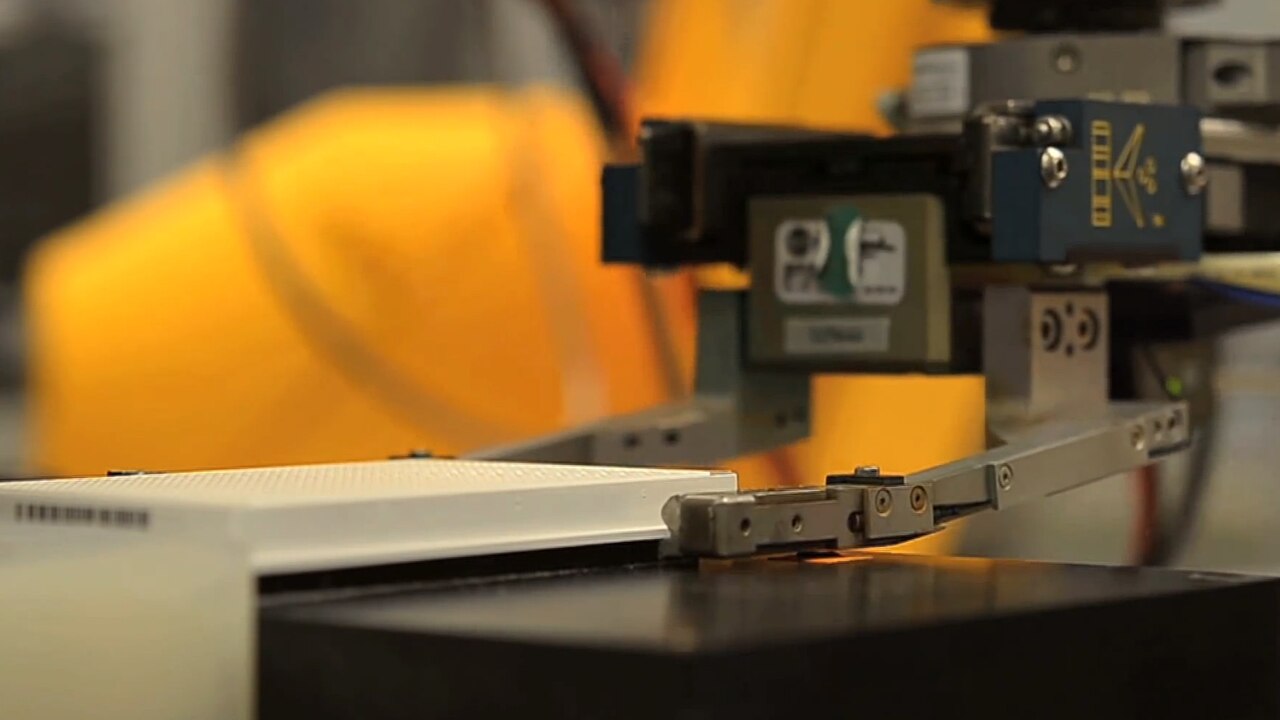
A shared driver standard converts that integration cost from bespoke, per-pair engineering into a one-time cost per device. Anthropic's documented example from Carnegie Mellon makes the economics concrete: a serial dilution dose-response experiment that previously required a multi-week integration effort was cut to roughly one-third of its previous duration, with the incompatible instrument interfaces themselves integrated in about eight hours, because the driver spoke a language already common to programmable devices rather than a dialect specific to each one.
Early Results Across Labs
Anthropic's research preview is running with a first group of scientific labs and manufacturers, and the early results it has published are specific rather than aspirational. At Genentech, MHS orchestrated a BCA protein assay across liquid handlers, robotic arms, and plate readers, with Claude autonomously tuning fluid dynamics and converging on flow rates of 140 microliters per second for water and 10 microliters per second for viscous BSA solution. At the University of Washington, the standard enabled real-time qPCR monitoring with multi-instrument plate handoffs coordinated closely enough to avoid collisions between machines. At HHMI Janelia, MHS unified seven separate vendor programs for microscopy control into a single interface. And at QuEra Computing, a quantum computing company, agents managing laser calibration lifted the laser-lock recovery success rate from 58% to 99.3%, while cutting recovery time from 150 seconds to six.
Beyond the launch labs, Anthropic says it plans to make the standard open source once it has developed safety evaluations and operating best practices together with these partners, and companies including AWS have said they intend to build MHS support into their own robotics tooling.
Safety Encoded, Not Just Assumed
The detail worth sitting with is that MHS puts a machine's safety limits into the same file a model reads before it acts, rather than leaving them in a manual nobody consults under time pressure. That is a meaningfully different design choice than simply letting an agent send arbitrary commands to a device and hoping the physical hardware clips anything dangerous at the interlock level. Encoding limits as structured, machine-readable metadata means an agent can, in principle, refuse or flag a command that would exceed a device's stated tolerance before it ever reaches the hardware.
It is not, on its own, a complete safety story. A standard is only as trustworthy as the driver authors who write it, and a research preview with a handful of launch partners has not yet been tested against the long tail of adversarial or simply careless use that a fully open, widely adopted standard would eventually face. Open questions that a research preview by definition leaves unresolved include how liability is assigned when an agent-driven device causes damage, how a device's control channel is secured against unauthorized access once it is discoverable on a network, and how consistently third-party driver authors, rather than Anthropic's own launch partners, will implement the safety-tag conventions once the spec is open source. Anthropic has been explicit that developing safety evaluations and best practices alongside partners is the point of running this as a preview rather than a full release.
Why the Open, Model-Agnostic Design Matters
MHS repeats a pattern Anthropic already ran once with MCP: rather than keep hardware access as a Claude-specific feature, it published an open specification that any model provider's agents can use. That choice trades away a potential lock-in advantage for faster ecosystem adoption, the same bet MCP made for software tools, and it is why device manufacturers and labs have reason to invest in an MHS driver rather than a one-off integration tied to a single AI vendor.
That same principle, that useful infrastructure should work across models rather than lock a workflow to one provider, is the logic behind keeping any AI product model-agnostic. Metir AI, for instance, routes chat requests across models from OpenAI, Anthropic, Google, and xAI and supports MCP connectors so a workflow built today keeps working as the best available model changes. A hardware standard that only worked with one company's models would recreate the exact fragmentation MHS is trying to remove, just one layer up the stack.
What to Watch
MHS is a research preview, not a finished standard, and Anthropic has not published a firm timeline for open-sourcing it. The near-term signals worth watching are whether the safety evaluations Anthropic says it is building with launch partners hold up as more device types and driver authors are added, whether other AI labs adopt or extend the specification once it is public, and whether the integration-time gains seen at Carnegie Mellon and Genentech generalize beyond the initial group of research labs and manufacturers into ordinary industrial and clinical settings where the cost of a mistake is higher. The comparison to USB-C is Anthropic's own, and it is a high bar: USB-C won because it was good enough that manufacturers adopted it voluntarily rather than because it was mandated. Whether MHS clears that bar depends on choices, adoption and security chief among them, that a preview announcement cannot settle on its own.
Sources:
- Previewing the Model Hardware Standard | Anthropic
- Anthropic pushes into physical world with new standard to help AI agents operate machines | CNBC
- Anthropic proposes plumbing spec to link AI agents to lab kit and robots | The Register
- Anthropic Model Hardware Standard connects AI to lab equipment | Quartz
- Anthropic makes first move into physical AI with universal standard for scientists, manufacturing | Fortune
Image credits
Header image: a Beckman Coulter BioMek FX dual-arm liquid handling robot with a P200/96-multichannel pipetting head, credited to the National Institute of Allergy and Infectious Diseases (NIAID), via Wikimedia Commons, public domain. In-body photograph of a robotic arm handling an assay plate during high-throughput screening, credited to NIAID, via Wikimedia Commons, public domain. Neither photograph depicts Anthropic's Model Hardware Standard deployment specifically; both illustrate the general category of programmable lab hardware the standard targets.