
On August 13, 2026, Bloomberg, Fortune and Yahoo Finance reported that Anthropic was in talks to acquire Decart, an Israeli AI startup founded in 2023, for about $6 billion. If completed, it would be the largest known acquisition in Anthropic's history. The reporting was consistent on one point: the deal is not finalized, the talks were described as early stage, and they could still fall apart. Later reporting from Calcalist and its English edition Ctech described advanced drafts being exchanged and a valuation trending toward roughly $7 billion, with a possible signing ahead of Anthropic's expected public offering. This piece looks at what Decart actually builds, why an AI lab racing to expand compute would pay frontier-scale money for it, and how to read the move without treating a reported, unsigned deal as a settled one.
What Decart builds
Decart is not, at its core, another frontier model lab. As reported, its central product is software that lowers the cost of training and operating AI by making chips work more efficiently. In an industry where the binding constraint is increasingly the price and availability of compute rather than raw ideas, a layer that extracts more useful work from the same hardware is a direct lever on unit economics.
The company also builds generative systems. Reporting describes two in particular. Lucy is a system for real-time video, capable of editing live video as it streams. Oasis is a world model, a system that generates simulated environments useful for training and testing physical AI such as robotics and autonomous-driving systems. Alongside these, Decart has described an inference and training stack, reported under the name DOS, aimed at running agents and reasoning models faster. Taken together, the portfolio spans two things Anthropic cares about at once: squeezing more out of existing compute, and generating the kind of synthetic environments and media that increasingly feed model development.
 Anthropic
 NVIDIA
Decart was founded in 2023 out of Israel's technology scene, with reporting naming Dean Leitersdorf as chief executive and Moshe Shalev as chief product officer, both described as veterans of the Israeli military's Unit 8200 signals-intelligence unit. The company has raised about $450 million to date, including a $300 million Series B in May 2026 that valued it at about $4 billion. A reported purchase by Anthropic in the $6 billion to $7 billion range would mark it up meaningfully within the same year, ahead of the reported interest from Nvidia and others.
The reported deal, in context
The figures are the part that draws attention, and they are worth stating precisely. The first wave of reporting put the deal at about $6 billion. Subsequent reporting described the number drifting toward roughly $7 billion as drafts advanced, with most of the consideration expected to be paid in Anthropic shares rather than cash. Both figures are as reported, and neither has been confirmed as a signed transaction.
Decart's reported valuation, from Series B to the reported deal
Decart was valued at about $4 billion in a $300 million Series B in May 2026. The reported acquisition figure appears first at about $6 billion and, in later reporting, as trending toward roughly $7 billion. Figures are as reported and the deal is not finalized.
A reported step from about $4 billion to roughly $6 to $7 billion within the same year. Reporting notes most of the consideration would be paid in Anthropic shares rather than cash.
A step from a roughly $4 billion Series B mark to a reported $6 billion to $7 billion inside the same year is steep, but it is not out of pattern for 2026, where positions perceived as strategic to the AI build-out have been re-marked far faster than revenue typically moves. The relevant question is less whether the multiple is high in the abstract, and more what specific scarcity the acquirer is paying for. In Decart's case, the reported answer is efficiency: a way to get more capability out of infrastructure that is expensive and supply-constrained.
Why an AI lab would want this now
The strategic logic reported around the deal is straightforward once framed against Anthropic's position. Demand for Claude has surged, driven in large part by enterprise adoption of coding and agent tools, and every additional unit of demand has to be served by compute that is costly to secure and slow to expand. A company whose software makes the same chips do more is, in that context, a way to absorb more demand without a proportional increase in hardware. The efficiency angle is not a side benefit; by the reporting, it is the core of the rationale.
When compute is the binding constraint, a company that makes the same chips do more work is buying capacity without buying more hardware.
There is a second dimension. Decart's world models and real-time video systems point at capabilities beyond text, in simulation and media generation, that a frontier lab may value both as products and as sources of training data. And the reporting notes a structural prize that has nothing to do with any single product: the deal would give Anthropic its first development center in Israel, and with it access to a concentration of AI talent. Acquisitions at this scale are rarely about one feature. They are about capacity, capability and people at once.
The contest for the company
One detail in the later reporting is worth drawing out, because it says something about how strategic this category has become. According to Calcalist, Anthropic advanced ahead of Nvidia, which had also been interested and, as an existing investor in Decart, had reportedly offered a higher valuation. Reporting described Decart initially advancing talks with Nvidia before halting that process after Anthropic's offer, and noted that Decart's technology had also drawn interest from Google and from Elon Musk's SpaceX.
That a chipmaker, an AI lab, a hyperscaler and a space-and-robotics company were all reported to be circling the same startup is itself the story. Efficiency software and world models sit at an intersection that several very different acquirers can each justify, which is part of why a young company can command a frontier-scale price. It also means the outcome was not preordained, another reason to hold the reported terms loosely until any deal is signed.
The scale that makes it affordable
A $6 billion to $7 billion acquisition reads differently depending on the buyer's size, and Anthropic's reported financials have moved sharply. The company reported preliminary Q2 2026 revenue of more than $11.5 billion, up from $787 million in the same quarter a year earlier and $4.73 billion in the prior quarter, and it reported its first quarter of positive adjusted operating income. These figures were described as preliminary in the reporting and could change. Anthropic is also widely reported to be moving toward a public offering.
Quarterly revenue, roughly fourteen-fold in a year
Anthropic's reported quarterly revenue. The preliminary Q2 2026 figure of more than $11.5 billion compares with $787 million in the same quarter a year earlier and $4.73 billion in the prior quarter.
Figures are described as preliminary in the reporting and could change. Q2 2026 covers April through June. The company also reported positive adjusted operating income for the quarter.
Against a business reported to be operating at that scale, a multi-billion-dollar acquisition aimed at lowering the cost of serving demand is easier to rationalize than the headline number alone suggests. If efficiency software meaningfully reduces the compute cost of each Claude request, the return is measured against a very large and fast-growing base of usage. That is the arithmetic behind paying up for an efficiency layer: the savings compound across every unit of inference the acquirer sells.
The through-line for people building on AI
Strip the deal down and it is, in part, a very large bet on cost efficiency, on getting more capability out of the same compute. That same principle scales down to how individuals and teams use AI day to day. The models available keep changing, their prices per token keep falling, and the ones that are most cost-effective for a given task shift from month to month. Keeping the workflow as the fixed point, and treating the underlying model as something you can swap for the best cost-to-quality option, is what turns a fast-moving model market into an advantage rather than a source of churn. A model-agnostic workspace such as Metir AI applies that portability principle to everyday work, so choosing a cheaper or more capable model for a task is a setting rather than a rebuild.
The neutral read, including the caveats
Two things are worth holding at once. The strategic logic is coherent: efficiency software is a direct lever on the largest cost in the business, world models and real-time video extend capability beyond text, and an Israel development center adds talent, all at a moment when Anthropic's reported scale makes the price digestible. At the same time, this is a reported and unsigned deal. The figures have moved between $6 billion and roughly $7 billion across successive reports, the terms are not confirmed, and the early reporting was explicit that the talks could fall through. A negotiated price in draft is not a proven one.
There is also a reasonable question about how much of the value is efficiency versus everything else bundled with it. The reporting frames chip efficiency as the core, but the same package includes world models, a real-time video system, an inference stack, and a team. Which of those the acquirer is really paying for is not something an outside reader can fully separate, and the answer matters for judging whether the price is about a durable technical edge or about securing scarce capability and people before a rival does.
The bigger picture
A reported $6 billion to $7 billion price for a compute-efficiency and world-model company is a marker of where the AI build-out is spending. The money here is not chasing a bigger model. It is chasing a way to serve more demand from the same hardware, plus adjacent capability in simulation and media, at a moment when compute is the scarce input and Anthropic is racing to expand capacity ahead of a possible listing. The strategic fit is real, the competitive interest from several very different acquirers is real, and the pace of the re-mark is a reminder to read private AI valuations against the market around them. On the underlying direction, though, the signal is clear enough: as capability grows abundant, a growing share of the value, and the spending, is settling on the layers that make it cheaper to deliver.
Sources:
- Anthropic said in talks to buy startup Decart for $6 billion | Fortune
- Anthropic in talks to acquire Israeli AI startup Decart for $6 billion | Yahoo Finance
- Anthropic in talks to acquire Israeli AI startup Decart for $6 billion | Ctech
- Anthropic closes in on $7 billion Decart deal after beating Nvidia to the table | Ctech
- Anthropic reportedly in talks to buy Israeli-founded AI startup at $6B valuation | The Times of Israel
- Anthropic Pursues $6 Billion Decart Deal to Cut AI Costs | PYMNTS
- Anthropic In Early-Stage Discussions To Acquire Israeli Startup Decart AI | Crowdfund Insider
- Anthropic revenue jumps to over $11.5 billion in Q2: report | CNBC
- Anthropic revenue surges to over $11.5 billion in second quarter | Fortune
Image credits
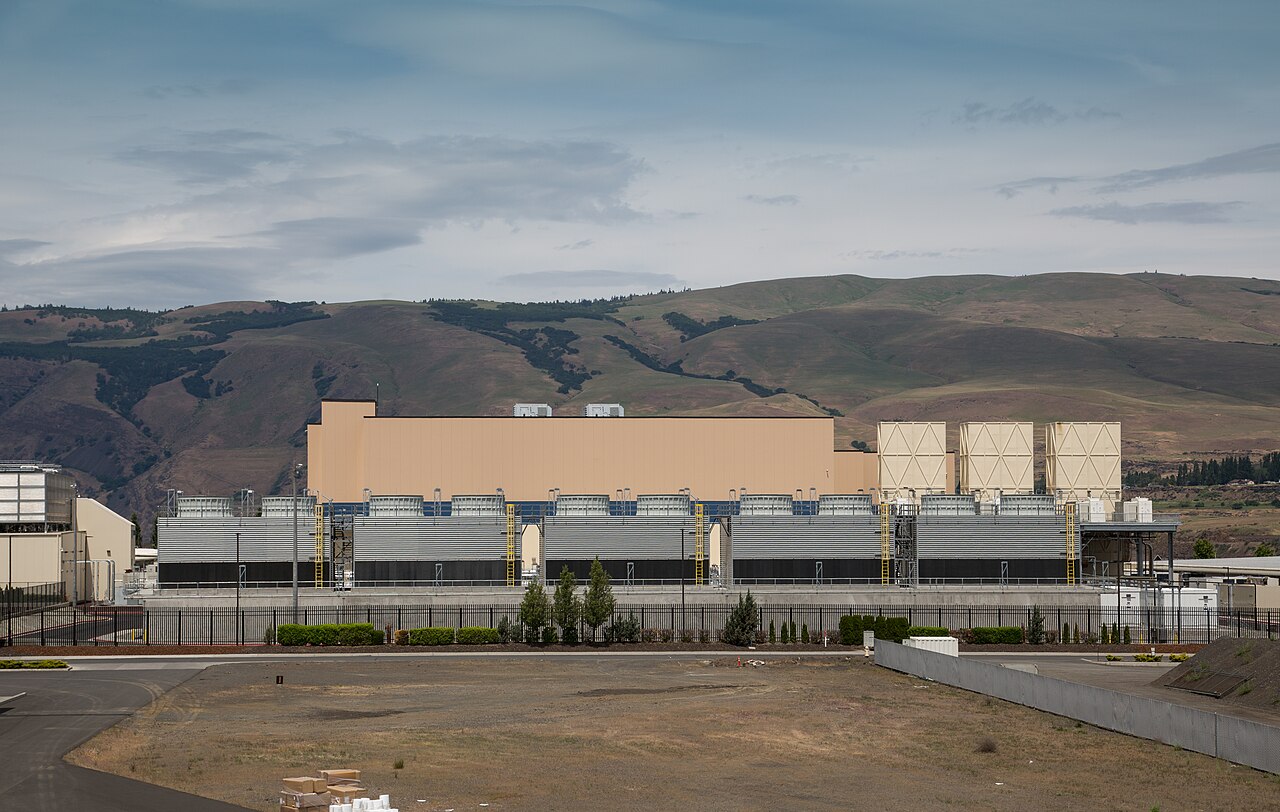
Header image: Tel Aviv-Yafo skyline and beachfront, by Ketlgo via Wikimedia Commons, licensed under CC BY-SA 4.0. Tel Aviv is the base of Israel's technology sector, where Decart was founded; the photo depicts the city and not the company. In-body photograph: a Google data center in The Dalles, Oregon, by Tony Webster via Wikimedia Commons, licensed under CC BY 2.0. It shows a general computing facility to illustrate the compute-efficiency theme and does not depict Anthropic or Decart infrastructure. Both images reviewed before use.