On November 23, 2026, Anthropic announced Claude Ship, a set of agents for GitHub pull requests that review a change, fix what is wrong with it and, under a team's rules, approve it. Claude Ship is the clearest step yet toward AI handling the part of software work that happens after the code is written, and its design shows how Anthropic is trying to keep humans in charge of the merge.
 Anthropic
What Claude Ship includes
Anthropic describes Claude Ship as agents that get GitHub pull requests ready to merge. Each has a separate job and a separate maturity level.
- Code Review (generally available): reads a change alongside the surrounding code and posts inline findings ranked by severity. Each repository can use a Quick, Standard or Deep review level.
- PR Steward (public beta): works on failing CI checks, merge conflicts and review comments from people and from review bots. It pushes commits with fixes and, after each push, comments on what it changed and how to undo it. Developers steer it with
@claudeand stop it with@claude stop. - Claude Approvals (public beta): checks each pull request against a policy the team writes as a file in the repository, and can approve routine changes or require people.
Developers can also run a /ship command in Claude Code to get a review and fixes on their own pull requests, without an admin turning anything on.
Where each Claude Ship agent sits in a pull request
Three agents feed one decision, and the final merge still follows GitHub rules the team configures.
Reads the change with the surrounding code and posts inline findings ranked by severity.
Limit: Does not approve or block a merge.
Works on failing checks, merge conflicts and review comments, and pushes fixes. A fix can start another review.
Limit: Designed not to approve or merge. The service refuses approvals, branch protection changes and tag pushes.
Reads the policy file on the default branch, applies the strictest matching rule and counts approvals. Can post an approving review only where the policy allows.
Limit: Blocks a merge only if made a required check in GitHub. Observe mode reports what it would decide.
Decide what merges: required reviews, CODEOWNERS, required checks, merge queues.
Limit: Auto-merge with a policy that needs no person can merge without anyone acting.
The policy file and observe mode
The most consequential piece is Claude Approvals. According to Anthropic's documentation, the policy lives at .claude/approvals.yml and is a list of rules. A rule names the paths it covers and a verdict: how many people must approve, and whether Claude comments or approves. Anthropic's own example sets mode: observe, so a change takes two people and Claude does not approve. A rule can also carry a condition built from facts about the pull request, such as lines changed, author or target branch, or from a classifier, which is a model's judgment on a question like how risky a change is. Anthropic's example is that billing code can need two people while test fixtures need one once Code Review passes.
Observe mode is the recommended starting point. The Claude Approvals check then shows what the policy would decide, with a title marked "(observe mode)", without enforcing it. Per Anthropic, the check blocks a merge only where a team makes it a required check in GitHub, and normally not in observe mode.
Most teams want a person to approve every change, and that's easy to keep up with when people write every line.
Anthropic, Claude Ship announcement, as quoted by TechCrunch

Billing and eligibility
Claude Ship is available to organizations on Claude Team and Enterprise plans with GitHub repositories. It is not available where Zero Data Retention is enabled, the HIPAA configuration is applied, or customer-managed encryption keys are used. Anthropic's Approvals documentation adds that FERPA or Access Transparency settings prevent starting Approvals.
Every agent is billed on token usage through the organization's usage credits, separately from the plan's included usage. That has practical consequences:
- Code Review has no flat per-review price. Cost scales with review level, change size, code complexity and how many reviews run, and a repository added from the admin page starts at "After every push", the setting that runs the most reviews.
- PR Steward has no spend limit of its own until an admin sets one.
- Claude Approvals has no base charge, but classifier runs and the Code Reviews a policy requests are billed, including in observe mode.
- Turning off usage credits does not stop an enabled agent, which keeps running and billing the organization.
Eligible Enterprise organizations can claim at least $10,000 in promotional credits, used within 30 days of claiming, with a claim deadline of January 15, 2027.
Where the risks sit
Anthropic states that Claude Ship uses AI and may miss bugs or security vulnerabilities. Three narrower risks follow from the design.
Review comments as an attack surface. PR Steward acts on comments. Anthropic's documentation says its service sends a session the comments and reviews of the pull request's author, people with write access and bots, and that a session reading the pull request directly can also see what anyone else wrote. TechRepublic reports that Anthropic warns agents interpreting such comments can be manipulated, and suggests starting with trusted collaborators. I could not locate that warning in the pages reviewed for this post, so treat the wording as reported rather than confirmed.
Merges without a person. Anthropic's documentation warns that with GitHub auto-merge or a merge queue and a policy that requires no person, a change can merge without anyone acting. With seats: 0, a bot-written pull request can merge unseen, and a rule with claude: approves starts no Code Review by itself.
Soft guardrails on merging. PR Steward's inability to approve is enforced by Anthropic's service, but merging, auto-merge and force-push are left to GitHub's branch rules. Anthropic notes that its permission rules match command text and its auto mode check is a model's judgment, so a differently written command can pass both. Its advice is to require reviews through branch rules and keep the Claude GitHub App off ruleset bypass lists.
What to watch
The headline numbers are internal. Anthropic says merged pull requests on the Claude Code team more than doubled from June to September and reverts fell by more than 40%, but TechRepublic notes this is not an independent benchmark. Adoption in regulated settings is limited by the exclusions above, and the beta status of two of three agents means policy syntax and billing behavior may still shift.
For teams that spread coding work across several models, which is how tools like Metir are used, the lesson is portable: put the approval rules in the repository and in branch protection, not in any one vendor's agent, so the policy survives a change of model.
Sources:
- Introducing Claude Ship, Anthropic
- Claude Ship documentation
- Claude Approvals documentation
- What PR Steward can access
- Code Review costs and usage
- TechCrunch, November 23, 2026
- TechRepublic on Claude Ship
The flow diagram restates Anthropic's documentation; no figures in it are estimates.
Image credits
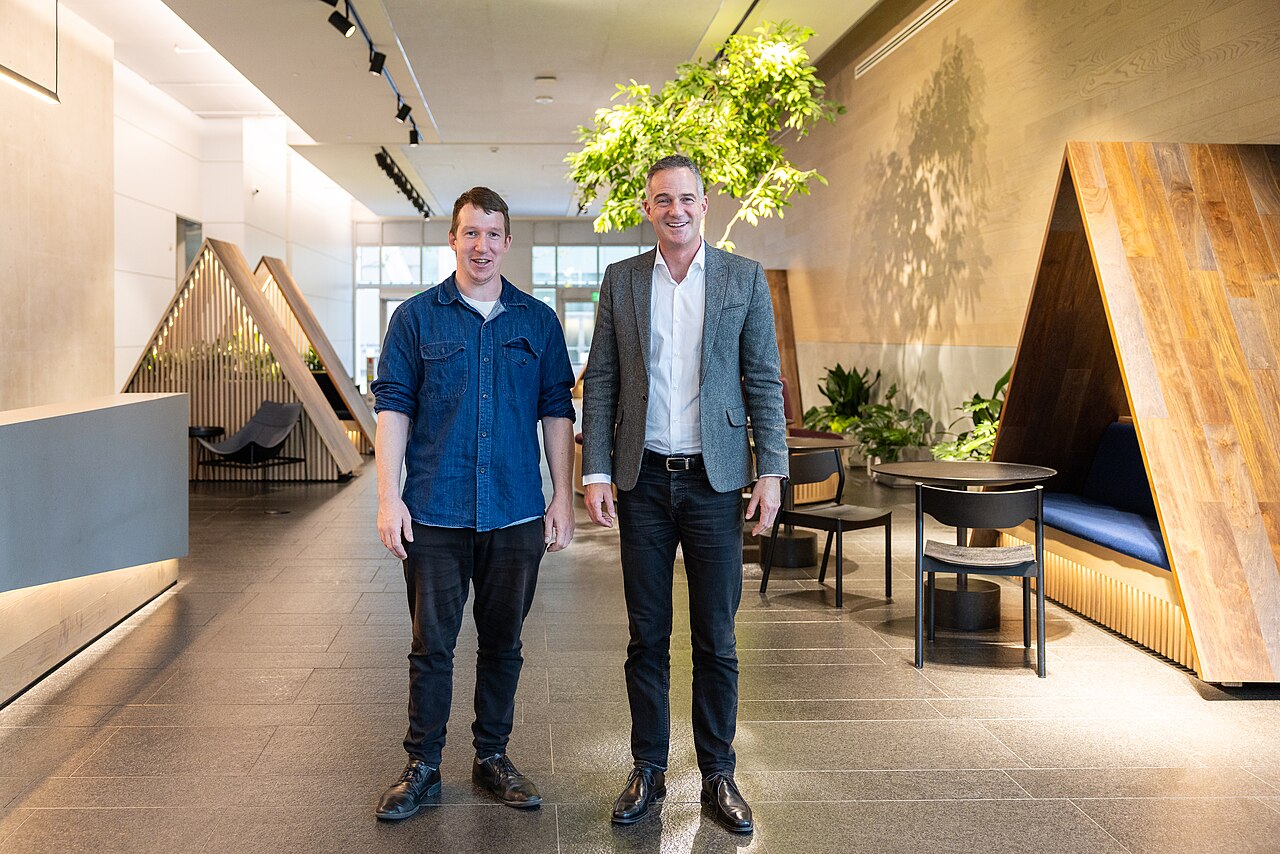
- Hero: lobby of Anthropic's San Francisco office, UK Secretary of State Peter Kyle's visit, October 25, 2024. Photo by Alecsandra Dragoi / DSIT, Wikimedia Commons, CC BY 2.0.
- In-body figure: same visit, second frame. Photo by Alecsandra Dragoi / DSIT, Wikimedia Commons, CC BY 2.0.