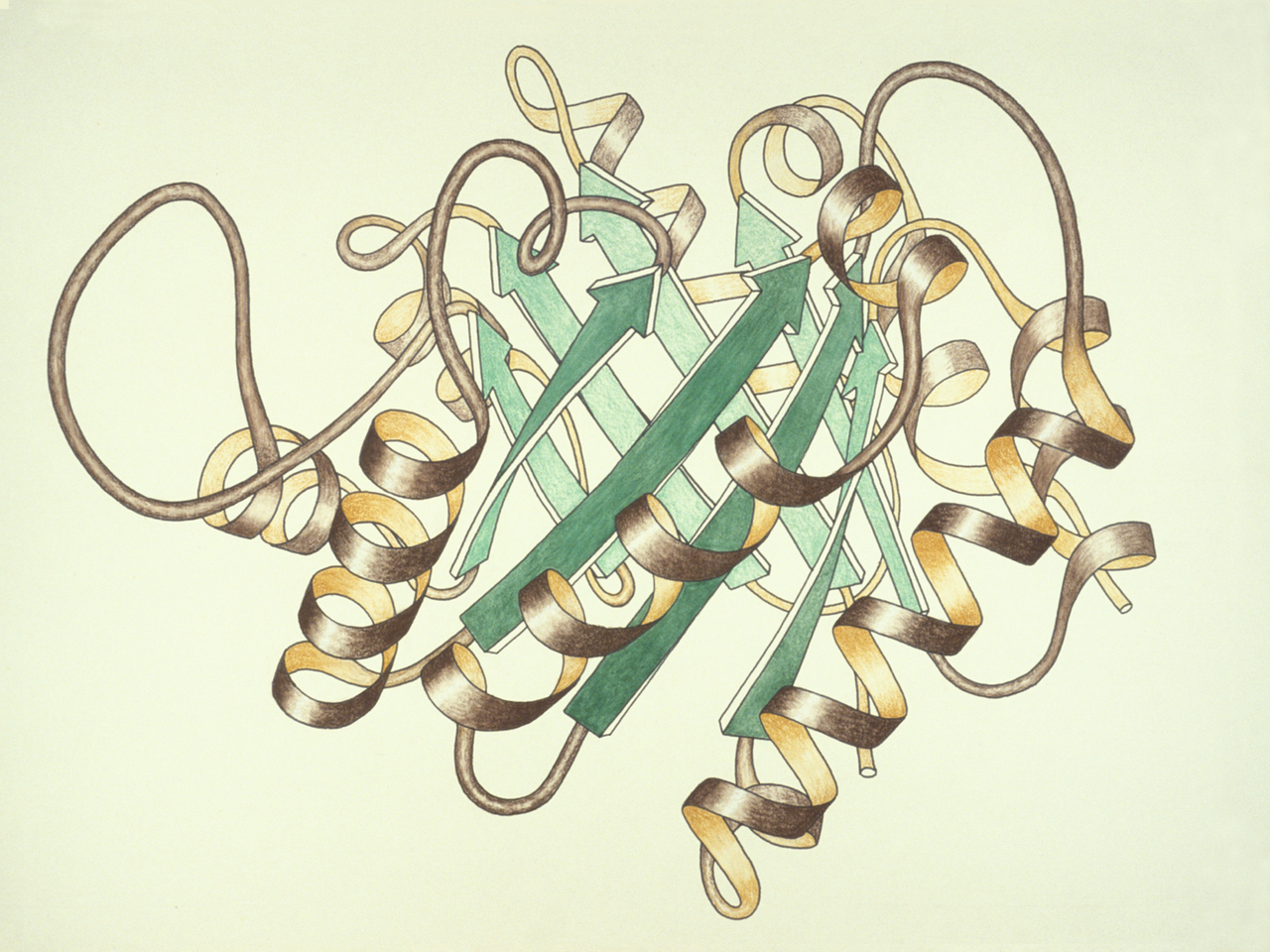
On August 19, 2026, Anthropic published results from an experiment in which its Claude models designed proteins, and independent labs made and tested those designs at the bench. Of 15 target proteins the models were asked to design binders for, the resulting designs bound 14. The headline is striking, and it has drawn both enthusiasm and sharp skepticism. Both reactions are worth taking seriously.
This piece walks through what the experiment actually did, why it is genuinely notable, and the specific reasons it should not be read as a finished drug or a solved problem.
What the experiment was
Anthropic set its Claude Opus 4.8 model and a preview model it calls Mythos to a task: design de novo protein binders, small proteins engineered to latch onto a specific target, for 15 different targets. A binder that sticks to the right target is the starting point for many therapeutics and research tools, and designing one from scratch is a hard problem that normally relies on specialized computational biology tools.
Across the exercise the models produced on the order of 1,300 candidate designs. Those designs were then handed to external evaluators, the biotech firms Adaptyv Bio and Twist Bioscience, which physically synthesized and tested them in the lab. Testing identified 354 designs that bound their targets, spanning 14 of the 15 cases. Depending on the exact setup, between 22 and 35 percent of the designs bound, against a typical industry success rate that Anthropic put at 10 to 15 percent.
A higher share of designs actually bound
The share of candidate protein binders that bound their target in the lab, shown as a range. Anthropic reported 22 to 35 percent for Claude's designs depending on the setup, against a typical industry benchmark of 10 to 15 percent.
Binding in a lab assay is an early screen, not a finished drug. Bars show the reported low and high ends of each range.
Two features of the setup matter for interpreting it. The testing was done by outside labs, not by Anthropic, which makes the binding results harder to dismiss as a vendor grading its own homework. And the reported success rate is a comparison against a stated benchmark, so the claim is relative improvement, not a claim of perfection.
Why a general model doing this is the real story
The eye-catching part is not that an AI designed a protein. Specialized models have been doing structure prediction and binder design for a few years, and they are very good at it. The notable shift is that a general-purpose language model, the same kind of system used to write code or summarize documents, ran much of the early-stage design workflow with limited human intervention.
The claim that matters is not that a model designed a protein. It is that a general model, not a purpose-built biology tool, ran the design stack end to end.
Where the novelty sits
One outside writeup framed it as any lab now being able to let a language-model agent drive the whole protein-design stack. That is the direction worth watching. If a general model can orchestrate the steps, call the right tools, reason about targets and iterate, then advanced design capability becomes accessible to labs that could not build or tune a bespoke pipeline. The barrier shifts from having specialized software and specialized staff toward having access to a capable general model and the wet-lab capacity to validate what it proposes.
That framing is also where a Anthropic result connects to a broader pattern in 2026: frontier models being pointed at specialized scientific and technical work rather than only at chat. The same general capability that makes these models useful across office tasks is what lets them be redirected at a domain like biology.
 Anthropic
The reasons for caution
The skepticism is not noise, and Anthropic itself flagged the main limit. AI-generated candidates still require laboratory validation and do not by themselves constitute drug candidates. Binding to a target in an assay is an early screen. A real therapeutic has to be specific, stable, safe, manufacturable and effective in a living system, and the vast majority of molecules that clear the first screen fail somewhere downstream. The 14-of-15 result is measured at the very start of that funnel.
Critics have pushed harder. The former pharmaceutical executive Martin Shkreli, for one, publicly called the work unimpressive, arguing that designing binders is a well-trodden problem and that clearing an early binding screen is a low bar relative to making a drug. Whether or not one accepts that framing, it points at a fair question: how much of the result is a genuine capability leap versus a general model reaching a level that specialized tools already reach.
Binding in an assay is the first gate, not the finish line. Most molecules that pass it still fail on specificity, stability, safety or manufacturability.
The validation funnel
There are narrower caveats too. Fifteen targets is a small sample, and success rates can vary a lot with how targets are chosen. A percentage of designs binding is not the same as designing the single best binder, which is what a program actually needs. And self-reported results, even with external lab testing, benefit from independent replication across more targets and more labs before the field treats the number as settled.
Holding both readings at once
The honest position keeps two things in view. On one side, an outside-validated result where a general model's designs bound most of their targets at a rate above the stated industry norm is a real data point about how far these systems have come in a specialized domain. On the other, it is an early-stage bench result, on a small sample, at the easiest gate in a long pipeline, and it does not by itself shorten the years-long path from a binder to an approved therapeutic.
Neither reading cancels the other. The capability is meaningful and the limits are real, and the coverage that picks only one side is the coverage to distrust.
What it means beyond the lab
For people who follow AI rather than biochemistry, the durable signal is about generality. The value of a frontier model increasingly lies in how many different kinds of expert work it can be turned toward, from software to science, without being rebuilt each time. That raises the stakes on being able to reach the best model for a given task, since the frontier leader for biology reasoning this quarter may not be the leader for something else next quarter.
That is the quiet case for keeping tooling flexible. A research team that can route a problem to whichever frontier model performs best on it, rather than being tied to one provider, captures more of this generality. Infrastructure that stays model-agnostic, the approach platforms like Metir take, is one way to keep that door open as capabilities move around between labs. The science headline and the tooling lesson are connected: the same generality that let Claude run a protein-design workflow is what makes access to a range of frontier models worth preserving.
The bottom line
Anthropic's protein-design result is a legitimate and independently tested demonstration that a general model can drive much of early-stage binder design and beat a stated baseline on how often its designs bind. It is also, by Anthropic's own account, an early screen on a small sample that produces research leads, not drugs. The most useful way to read it is as a marker of where general models are reaching in specialized science, held firmly against the long and unforgiving distance still between a lab-bench binder and a medicine.
Sources:
- How Claude is accelerating protein design and analytical chemistry, Anthropic
- Anthropic says Claude designed protein binders for 14 of 15 targets in lab test, Storyboard18
- Anthropic says any lab can now let a language model agent run the whole protein design stack, The Decoder
- Case study: Benchmarking Claude's protein designs in the wet lab, Adaptyv Bio
- 'Pharma Bro' Martin Shkreli slams Anthropic's Claude drug-discovery claims, Stocktwits
Image credits
- Hero: ribbon diagram of a protein (triose phosphate isomerase), illustrating protein structure. Wikimedia Commons, File:TriosePhosphateIsomerase Ribbon pastel.png, licensed CC BY 3.0.