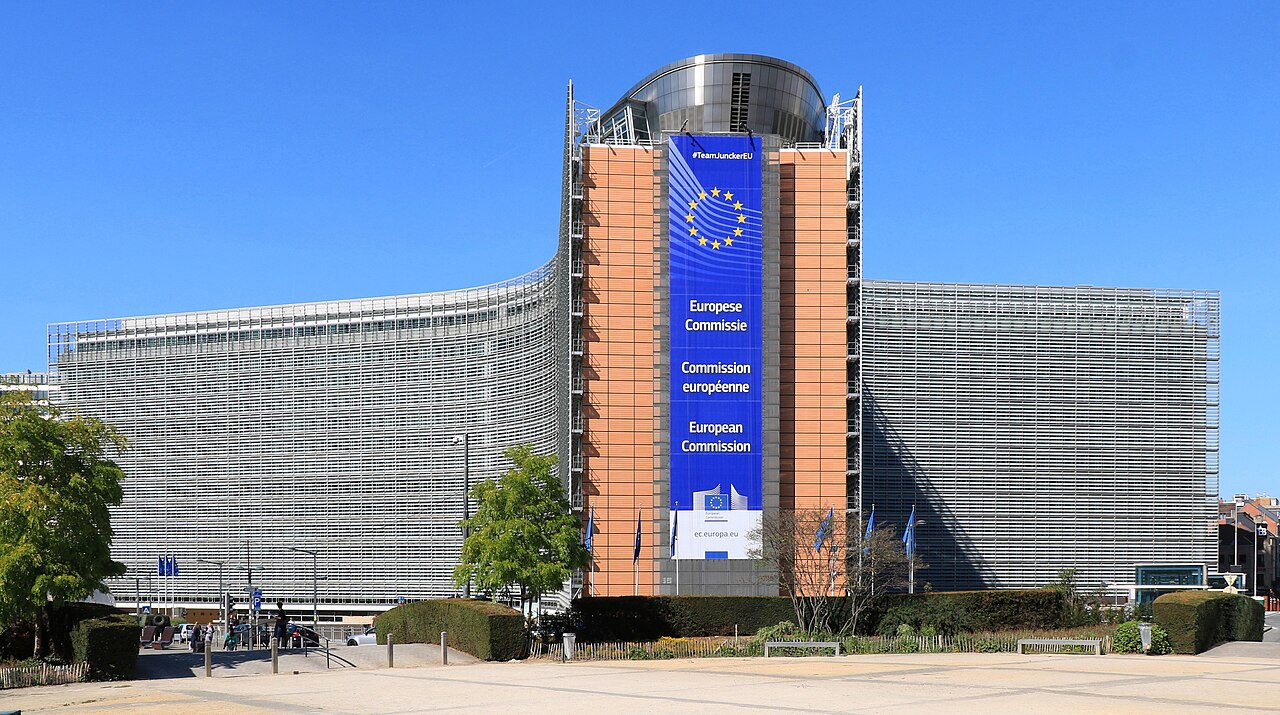
Starting August 2, 2026, new Claude models began embedding an invisible watermark in the text they generate, alongside signed provenance metadata attached to supported files. Anthropic is applying the change worldwide, with no opt-out, even though the rule that triggered it, Article 50 of the EU AI Act, only legally requires marking for output reaching the European market.
 AnthropicClaude
 Google
 Microsoft
 AWS
AWSWhat Anthropic Announced
Anthropic confirmed that Claude models launched on or after August 2, 2026 mark their text output at launch, and that the marking applies everywhere Claude is offered, not only inside the EU. The policy covers Claude's web and desktop apps, the Claude Platform API, Claude Code, Claude Cowork, and Claude Tag, and it extends to supported Claude models accessed through AWS, Google Cloud, and Microsoft Foundry, though Anthropic notes that signed file metadata may not be available on every one of those platforms. Older Claude models are not immediately covered; Anthropic says it is working to extend marking to them during the EU AI Act's transition period.
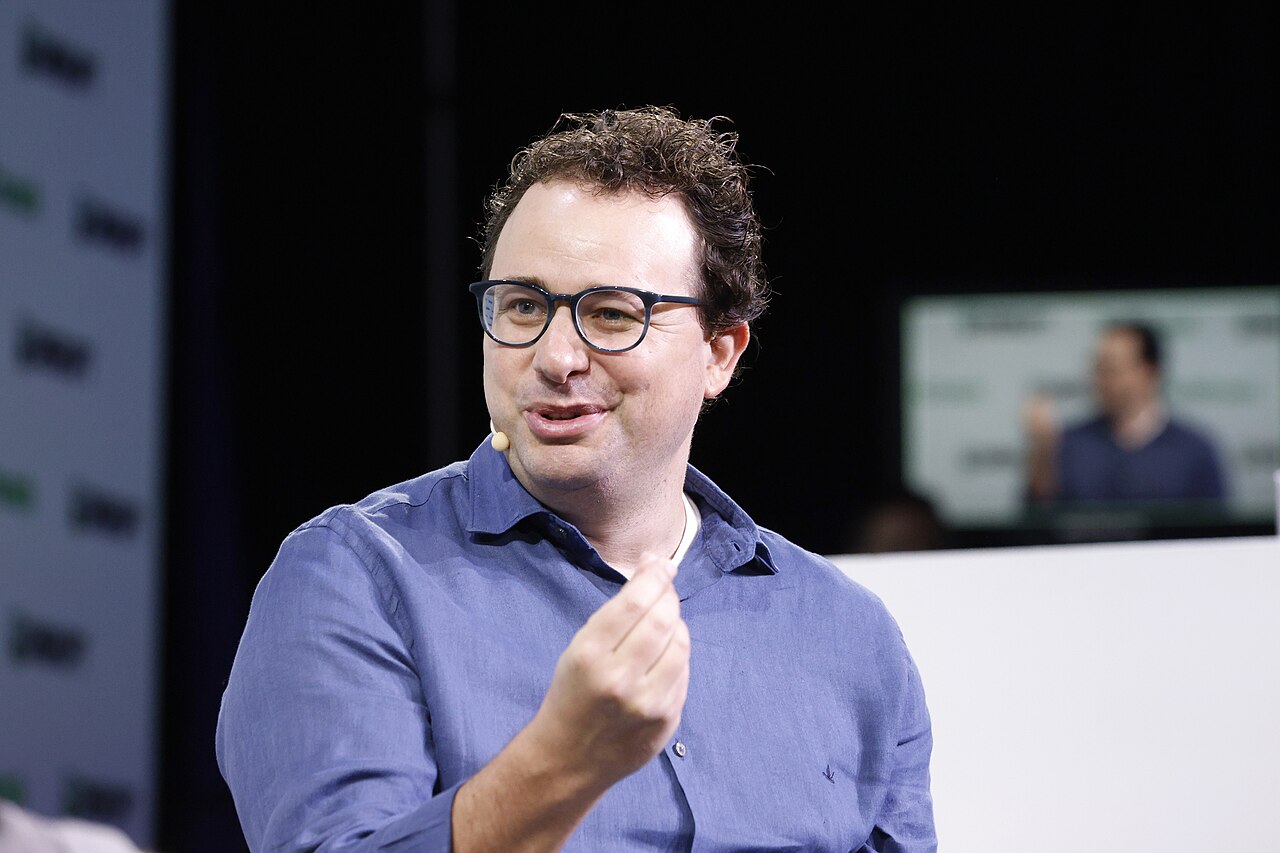
The move follows Anthropic signing the EU's Code of Practice on Transparency of AI-Generated Content in July 2026, a voluntary framework that ultimately drew roughly 190 signatories. Google, Meta, Microsoft, Mistral, and OpenAI joined Anthropic on the section of the code covering machine-readable marking and detection of AI-generated content.
Why Now: Article 50 of the EU AI Act
The EU AI Act's transparency obligations for general-purpose AI systems became enforceable on August 2, 2026. Article 50 requires that providers of AI systems generating synthetic text, audio, image, or video content mark that output as machine-generated in a way that is technically detectable. Non-compliance can carry fines of up to €15 million or 3% of a company's total global annual turnover, whichever figure is higher, which is a meaningful incentive for a provider serving EU customers to have a working answer ready before enforcement began, not after.
Anthropic's decision to apply the marking globally, rather than geofencing it to EU traffic, mirrors a pattern already familiar from other EU-driven rules, like GDPR's influence on privacy practices outside Europe. One code path is simpler to maintain than a separate, unmarked version of the product for every other market.
How the Text Watermark Actually Works
The mechanism is a statistical one, not a visible tag or a string appended to the output. As Claude generates a response, it selects each next word from a probability distribution over plausible candidates. Anthropic's watermark, which the company describes as an adaptation of Google DeepMind's SynthID-Text approach published in a 2024 Nature paper, changes only the source of randomness used to make that selection. The wording still reads naturally and the model's quality is unaffected, but the pattern of choices carries a signal that is invisible on the page and undetectable to a human reader.
That signal is only reliably recoverable statistically, over enough generated text, using a detector that knows what pattern to look for. It is not something a person can spot by reading the text, and Anthropic says it plans to offer a watermark detection API so third parties, such as publishers, schools, or platforms, can check content against it rather than relying on guesswork or third-party AI-detection tools of uncertain accuracy.
Two provenance layers, one shared limit
Claude marks its output in two different ways depending on the format, but both point back to Anthropic’s help documentation on what a detected mark actually establishes.
- +The text was probably generated or processed by a watermark-enabled Claude model at some point.
- +A signed file was produced by a Claude model that supports C2PA metadata.
- -That a human did not write or heavily edit the underlying content.
- -Who the user was, or anything else about their identity.
- -Authorship on short passages, heavily paraphrased text, translated text, or output from older, unsupported models.
Anthropic’s own guidance is explicit: the mark proves processing, not authorship.
What a Detected Watermark Does and Does Not Prove
This is the part worth getting precise about, because it is easy to overstate. A detected watermark indicates that a Claude model was probably involved in producing the text at some point. It does not distinguish between text Claude wrote outright and text a person drafted and then had Claude proofread, translate, or lightly edit. It carries no information about who the user was. And Anthropic's own documentation is direct about the boundary: a mark tells you a model touched the content, not who is responsible for what it says.
The mark proves processing, not authorship.
Anthropic's stated position on what a detected Claude watermark establishes
That distinction matters most in exactly the settings where people most want an answer: a teacher checking a student's essay, an editor screening a submission, an employer reviewing a cover letter. A positive detection in any of those cases is evidence that Claude was used somewhere in the process, not proof that the person did not do the underlying thinking or writing themselves.
The Limits: What Breaks the Signal
The watermark is also not designed to survive everything. Reporting following the announcement noted that substantially rewriting the text, including asking a different model to paraphrase it, can defeat the signal once enough of the original token sequence has changed. Very short passages carry too little signal to detect reliably. Translation into another language, heavy manual editing, and content generated by older, unmarked Claude models will also not carry a usable signal. For files, the separate C2PA metadata layer, the Coalition for Content Provenance and Authenticity standard Anthropic uses for supported image formats like SVG, PNG, and JPG, can be stripped just by taking a screenshot or converting the file format.
None of that makes the watermark pointless. It raises the cost of claiming AI-generated text as entirely human-written without doing real editing work, and it gives platforms a first-pass signal to check rather than nothing at all. It just is not, and was never designed to be, a forensic guarantee.
The Bigger Picture
Anthropic's move sits alongside a broader industry shift toward provenance standards, from SynthID's use across Google's own models to C2PA's adoption by camera makers, news organizations, and now AI labs. Regulators in the EU, and separately in US states like California under its AI transparency laws, are converging on the same idea: synthetic content should carry some detectable signal of its origin, even an imperfect one, rather than none.
For teams figuring out how this affects their own workflows, the durable lesson is that provenance questions like this one are becoming a standard part of using any frontier model, not just Claude. A model-agnostic platform like Metir AI, which gives teams access to Anthropic, OpenAI, Google, and xAI models side by side, is one way to stay informed about how transparency policies differ across providers rather than being tied to a single lab's approach.
Sources:
- How Claude marks AI-generated content | Anthropic Help Center
- How Claude's text watermarking works | Anthropic
- EU compliance, delivered globally: Anthropic to watermark Claude's output worldwide | Euronews
- Anthropic's Claude Adds Invisible Watermarks To AI-Generated Text | Forbes
- Anthropic puts hidden watermarks on Claude text under new EU rules | Interesting Engineering
- Anthropic's new invisible watermark marks content generated by AI chatbot Claude | NPR
- Anthropic announces watermark detection API that will let third parties detect Claude's AI texts | The Decoder
- Anthropic will watermark Claude text worldwide and attach C2PA metadata to files | MLQ News
- Anthropic starts marking all of Claude's output worldwide as EU transparency rules take effect | TNW
- Claude Now Watermarks Text Everywhere; Mark Proves Processing, Not Authorship | Tech Times
Image credits
Header image: the Berlaymont building, headquarters of the European Commission in Brussels, Belgium, whose Article 50 transparency rule under the EU AI Act drove this policy. Photo by EmDee via Wikimedia Commons, licensed under CC BY-SA 4.0. In-body photograph of Dario Amodei, Anthropic's co-founder and CEO, at TechCrunch Disrupt 2023, by TechCrunch via Wikimedia Commons, licensed under CC BY 2.0.