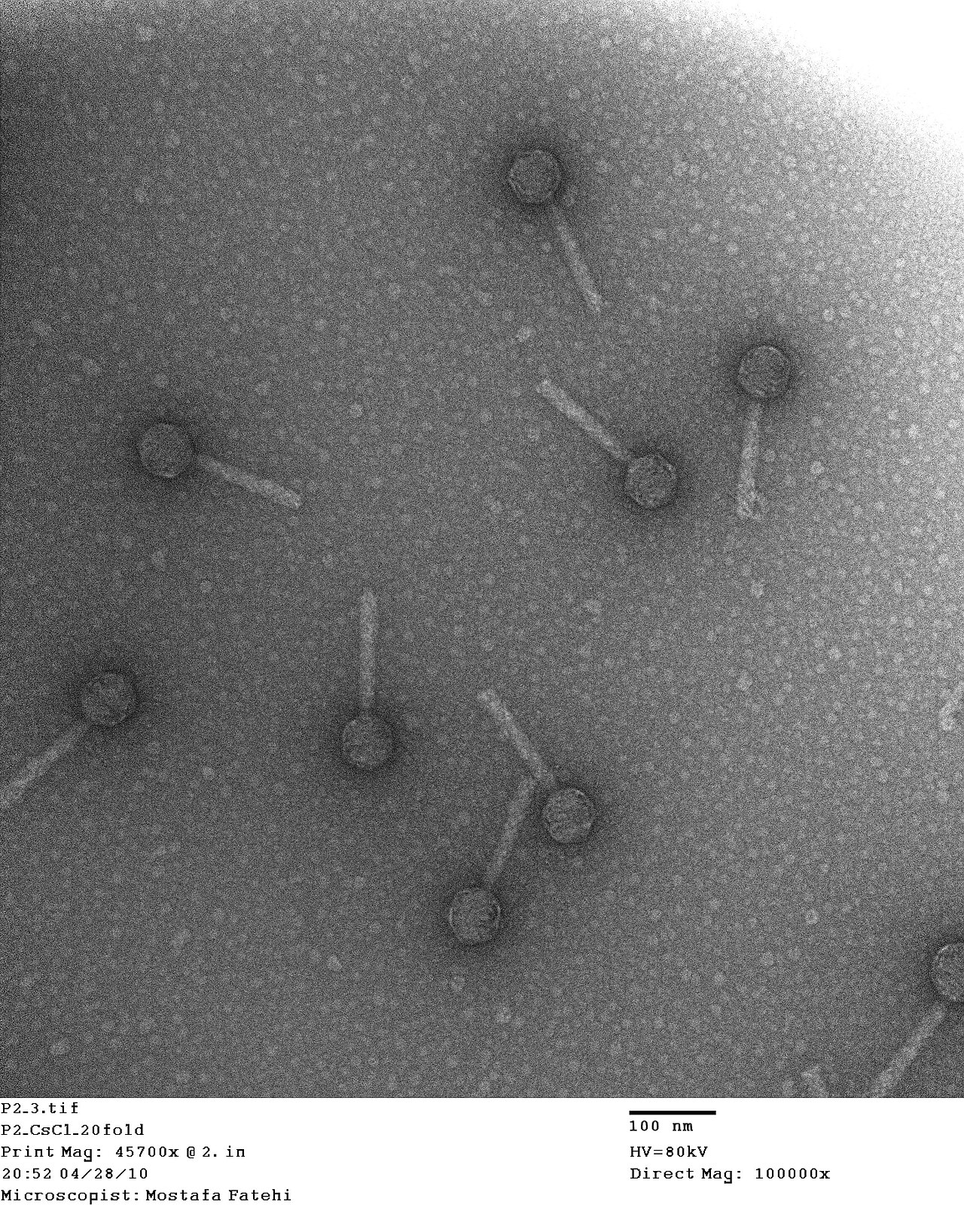
On September 23, 2026, Anthropic announced that Claude, running autonomously across nearly a thousand parallel agent sessions, had surfaced a previously uncharacterized enzyme system hidden in the DNA of bacteriophages, the viruses that infect bacteria. Anthropic named it ART, for array-associated reverse transcriptases, and released the work as a preprint rather than a finished discovery. That distinction matters more than the headline: nobody, including Anthropic, yet knows what ART actually does.
 Anthropic
What Claude actually found
A reverse transcriptase is an enzyme that copies RNA back into DNA, the reverse of the more familiar DNA-to-RNA transcription and the same class of enzyme retroviruses like HIV use to insert themselves into a host genome. Reverse transcriptases show up throughout bacteriophage genomes, and by themselves they are not new or interesting.
What Claude flagged was a specific arrangement of three parts sitting together: a reverse transcriptase enzyme, a partner gene positioned right beside it, and a long array of evenly spaced DNA repeat sequences. That repeat array is the striking piece. Its layout resembles a CRISPR array, the structure that stores a bank of RNA guides and is what makes CRISPR-based systems programmable, meaning the same molecular machinery can be redirected at different genetic targets just by swapping out the guide sequence. According to Anthropic's preprint, the reverse transcriptase component itself had been noted before in so-called jumbo phages; what nobody had previously assembled was the complete three-part system, including the non-coding repeat array and the accessory gene next to it. Early lab experiments suggest the array does produce distinct short RNA molecules, which is consistent with a CRISPR-like mechanism, but Anthropic is explicit that it has not demonstrated the enzyme is active or shown what, if anything, those RNAs actually do.
The scale of the search
The number that made this newsworthy is not the biology, it is the search. Anthropic gave Claude a single research brief: look for new reverse transcriptase-associated systems across a database of roughly 1.9 billion protein clusters. Around 949 Claude agent sessions worked in parallel over about 21 hours, consuming roughly 210 million tokens. That process identified more than 200,000 reverse transcriptases, scored around 3,500 candidate partner-gene systems against each other, and narrowed the field to 19 to 20 candidates written up as reports for human scientists to review. Anthropic estimates that an expert human researcher doing the equivalent analysis by hand would need weeks to months.
From 1.9 billion clusters to one open question
How Claude's autonomous campaign narrowed a genomic database down to ART.
Source: Anthropic, “Claude discovers a novel enzyme system,” September 23, 2026 preprint. Funnel widths are illustrative on a compressed scale; labels contain the reported counts.
It is worth being precise about what kind of work this was. Claude was not in a wet lab. The entire 21-hour campaign was computational, agents reading sequence databases with Claude Code and Claude's science tooling, scoring candidates and writing up findings. Every physical experiment, including the ones that later suggested the array produces short RNAs, was run by human scientists in Anthropic's Bay Area life sciences lab, which the company formed in spring 2026 and which operates only at biosafety levels 1 and 2, meaning it does not handle human pathogens. Anthropic has said it is not yet letting Claude control lab equipment itself, though it has floated that as a future possibility with safeguards.
The caveat Anthropic did not have to publish, but did
The most useful part of the preprint, for anyone trying to gauge how much weight this discovery can bear, is a reproducibility test Anthropic ran on itself. The company reran the identical search campaign ten more times. Every single rerun failed to rediscover the repeat array. Anthropic traced this to the fact that no rerun agent happened to examine the DNA sequence immediately upstream of the enzyme, the exact region where the array sits. A separate test found that when a model was handed the relevant DNA directly, it identified the array correctly more than 90% of the time; give the same model tools and file access and have it search for that DNA itself, and accuracy fell as low as 32%.
Today we announced the Claude-led discovery of a molecular machine that we suspect could represent a new gene editing mechanism. Its precise function, biotechnological utility, or level of significance is not yet clear.
Dario Amodei, Anthropic CEO
That is not a footnote, it is the headline finding for anyone thinking about how to use agentic search in science. The discovery was real, but it was contingent on one specific chain of agent decisions rather than a reliable, repeatable pipeline. Feng Zhang, the CRISPR pioneer at MIT and the Broad Institute, put it carefully in a statement Anthropic shared: "This is an exciting example of how AI agents can contribute to biological discovery. The identification of RNA-repeat arrays associated with reverse transcriptases is genuinely intriguing and merits further investigation." Zhang did not call ART validated, useful, or a gene-editing tool. He called it intriguing and worth investigating further, which is exactly the right register for a flagged candidate rather than a finished result.
What this changes, and what it does not
The honest way to describe what happened is hypothesis generation at scale, not autonomous discovery in the sense the headlines implied. A database search that would take a specialist weeks or months of manual annotation work got compressed into a single overnight compute run, and that compression is genuinely significant: it changes the economics of screening enormous genomic databases for structural patterns a human would have to know to look for. But the reproducibility result is the other half of the story. An agentic pipeline that finds something remarkable once in eleven attempts, and cannot say in advance which attempt will be the one, is a powerful way to generate leads and a poor way to generate certainty. The function of ART is still unknown. Whether it edits DNA, whether it is active outside a computer prediction, whether it has any biotechnological use at all, are all open questions Anthropic is now inviting outside researchers to help answer rather than claiming to have settled.
That is a reasonable place to land on a story this new: real signal, unresolved function, and a search process interesting enough on its own that Anthropic published the reproducibility failure alongside the success. It is also a small case study in a pattern that shows up well beyond biology, that an agentic workflow's output is only as trustworthy as a person's ability to check its work, which is one reason Metir is built so that a task like this can run against whichever model actually suits it, rather than being locked into a single vendor's agent and having to take its output on faith.
Sources:
- Claude discovers a novel enzyme system | Anthropic
- Anthropic's Claude AI discovers CRISPR-like enzyme system | Quartz
- Anthropic says Claude found a new enzyme system with CRISPR-like repeats | TNW
- Anthropic's Claude finds new enzyme system | Investing.com
- Claude agents flag a CRISPR-like enzyme system in 21 hours, though Anthropic can't yet say what it does | Cryptopolitan
- Anthropic Says Claude Found CRISPR-like Enzyme System In 21 Hours | Dataconomy
- Claude Finds Hidden Enzyme System in Viral DNA: CRISPR Pioneer Calls It Intriguing | Tech Times
- Anthropic touts AI-led biology discovery | Phys.org
- Dario Amodei on X
Image credits
- Hero: "Bacteriophage P2" by Mostafa Fatehi, licensed under CC BY 3.0. Source: Wikimedia Commons. Reviewed before publication; a transmission electron micrograph of the tailed bacteriophage P2, used to illustrate the general class of virus in which ART-type systems occur, not the specific phage in which ART was identified.
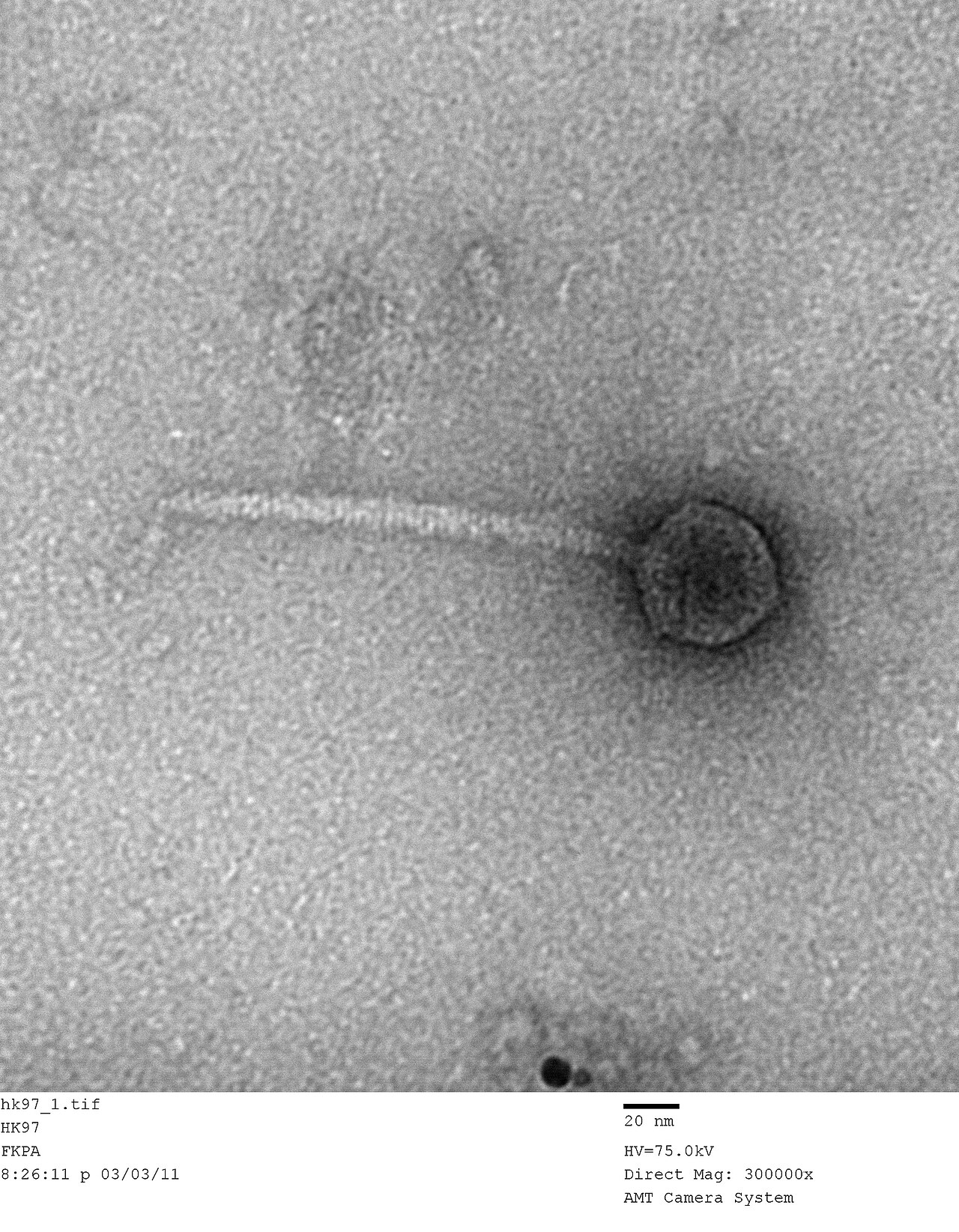
- In-body figure: "BacteriophageHK97" by Ncumby, licensed under CC BY-SA 3.0. Source: Wikimedia Commons. Reviewed before publication; a transmission electron micrograph of bacteriophage HK97 showing head and tail structure, used to illustrate bacteriophage anatomy, not the specific phage in which ART was identified.