Anthropic has agreed to pay Akamai Technologies roughly $11.6 billion over seven years for cloud computing capacity, the two companies disclosed on September 24, 2026, in an agreement that also hands Anthropic a warrant to acquire up to about 5% of Akamai. Two details set this contract apart from the run of multi-billion-dollar AI compute deals signed through 2026. First, it is for CPU capacity, the general-purpose processors that sit alongside the GPUs most AI headlines focus on. Second, the customer, not the supplier, walks away holding equity. This piece lays out what has been reported, explains the warrant structure without drama, and looks at why a Claude developer is spending on CPUs at this scale.
 Anthropic
The terms, plainly stated
Anthropic is the customer, committing to roughly $11.6 billion of Akamai Cloud services over seven years to support what both companies describe as growing central processing unit workloads behind Anthropic's products. Akamai, historically known as a content delivery and edge security network, is the supplier, providing access to its distributed compute infrastructure. The agreement, reported by TechCrunch, Business Standard, and confirmed in Akamai's own securities filing, extends a $1.8 billion arrangement the two firms had reached earlier in 2026.
The warrant is the eye-catching part. Akamai issued Anthropic a warrant for nonvoting preferred stock convertible into 7.7 million common shares, about 5% of Akamai's outstanding stock, at a strike price of $111.33 a share. Roughly 2% is expected to vest once Anthropic makes its first payment under the deal, and each additional $3 billion Anthropic commits unlocks approximately another percentage point. That is what could push the arrangement as high as $20 billion in total contract value, with Anthropic's potential ownership rising alongside it. Akamai shares rose sharply on the news, with several outlets reporting a move of about 20%.
The more Anthropic spends, the more of Akamai it owns
Approximate share of Akamai the warrant grants Anthropic as committed spend rises. Base tier vests on first payment; each roughly $3B of added commitment unlocks about another percentage point, toward a reported ceiling near $20B and about 5%.
Warrant covers up to about 5% of Akamai, or 7.7 million shares at $111.33. Intermediate dollar rungs illustrate the reported "+$3B unlocks +1%" schedule and are not exact contractual thresholds.
Why a warrant, and who is aligning with whom
Equity warrants attached to commercial deals are not new, but the direction here is worth noting. In many AI infrastructure arrangements the chipmaker or cloud provider takes a stake in the AI lab, tying the supplier's fortunes to the customer's growth. In this deal the flow runs the other way: the AI lab receives the right to buy into its supplier. The practical effect is a shared interest in Akamai's stock performing well, since Anthropic now benefits directly if the market rewards Akamai for landing the contract.
In most AI infrastructure deals the supplier takes a stake in the lab. Here the lab receives the right to buy into the supplier.
On the reversed direction of the Akamai warrant
That structure aligns incentives, and it also concentrates them. The same names recur across the year's largest deals as suppliers, customers, financiers, and now cross-shareholders, which means a shock at one company has more routes to reach the others than it would in a market where those roles stayed separate. None of this is a prediction of trouble. It is a description of how tightly the AI buildout's participants are becoming financially interlaced, a pattern regulators and credit analysts have started to examine across the sector.
The overlooked layer: CPUs, not GPUs
The reflexive read of any AI compute deal is that it is about GPUs, the accelerators that train and run large models. This one is explicitly about CPUs. General-purpose processors handle the work that surrounds model inference: data preprocessing, orchestration, retrieval, tool execution, serving application logic, and the growing volume of agentic steps where a model calls out to code, databases, and external services rather than simply generating text.
As products shift from single-shot chat completions toward agents that run many steps per task, the ratio of surrounding CPU work to raw model computation rises. A commitment of this size signals that Anthropic expects that surrounding workload to grow enough to justify locking in dedicated, distributed CPU capacity years ahead of need, the same logic that drives GPU pre-commitments, applied to the less glamorous half of the stack.
The Akamai deal is Anthropic's CPU line in a GPU-heavy year
Selected disclosed Anthropic compute and cloud commitments announced in 2026, by contract total in billions of dollars. The Akamai contract (green) buys general-purpose CPU capacity; the others buy GPU accelerators.
Not exhaustive. Excludes 2026 arrangements reported without a public dollar figure and per-month capacity deals. Contract totals span different term lengths.
Part of a larger pattern
The Akamai agreement joins a rapid sequence of Anthropic compute commitments disclosed across 2026, including a reported $5 billion deal with AMD in July, a $10 billion arrangement with the cloud startup Volta in August, and a roughly $45 billion contract with Nscale later that month. Viewed together, the pattern is deliberate breadth: multiple suppliers, multiple chip types, multiple geographies, and now both GPU and CPU capacity. That diversification reduces exposure to any single partner missing a delivery schedule, while multiplying the number of counterparties whose execution Anthropic depends on.
It also sits against Anthropic's own financial backdrop. The company has raised at valuations approaching and reportedly exceeding a trillion dollars, and reporting through 2026 has pointed toward a possible public offering. The compute buildout and the march toward public markets are two views of the same wager: spending today at a pace that assumes years of continued demand growth.
What has to hold
For $11.6 billion of contracted capacity to become $11.6 billion of delivered capacity, a few things have to go right. Akamai has to stand up CPU capacity at a scale beyond its historical core business, on the timeline Anthropic's roadmap assumes. Demand for the agentic and inference-adjacent workloads that CPUs serve has to grow into the commitment rather than plateau. And the warrant's value, for Anthropic, depends on Akamai's stock, which introduces a market-price dependency into what is nominally a cloud services contract. These are dependencies to watch, not verdicts.
The takeaway for builders
For teams building on top of these models rather than financing the infrastructure beneath them, the useful lesson is about flexibility, not scale. A frontier lab's supplier commitments, whether for GPUs or CPUs, are the lab's bet, and a product bound tightly to one lab's stack inherits that bet's timing and concentration. Staying portable at the model layer, the model-agnostic approach Metir AI takes by routing across models from multiple providers, is one way to keep shipping regardless of how any single multi-billion-dollar infrastructure deal plays out. The infrastructure story is worth following closely; it does not have to become your dependency.
Sources:
- Anthropic to pay Akamai $11.6 billion over seven years in cloud deal | TechCrunch
- Anthropic signs $11.6 billion, seven-year AI computing deal with Akamai | Business Standard
- Akamai Technologies Form 8-K | U.S. Securities and Exchange Commission
- Akamai signs $11.6B Anthropic cloud agreement | TechNode Global
- Akamai lands $11.6bn Anthropic cloud deal, with room to reach $20bn | Capacity
- Akamai and Anthropic: When the Customer Holds the Warrant | FourWeekMBA
- Anthropic continues compute-gobbling streak in $45 billion deal with Nscale | TechCrunch
- Anthropic signs $10B deal with AI cloud startup Volta | TechCrunch
Image credits
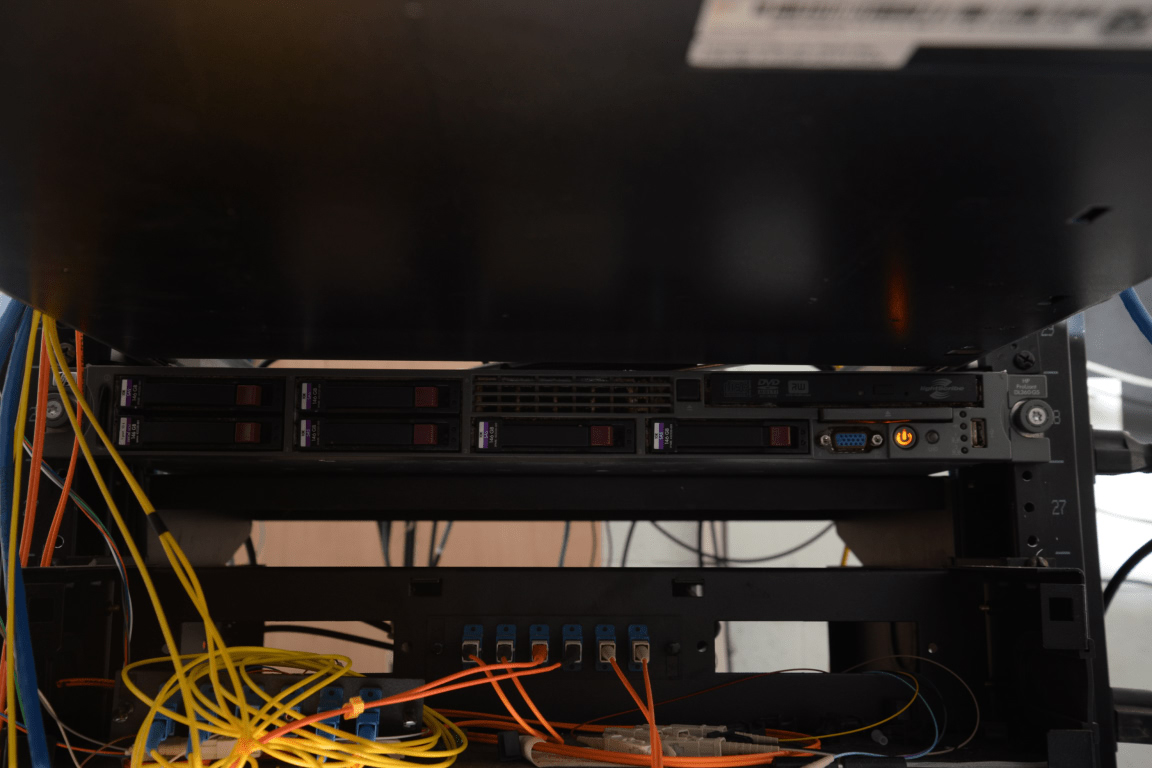
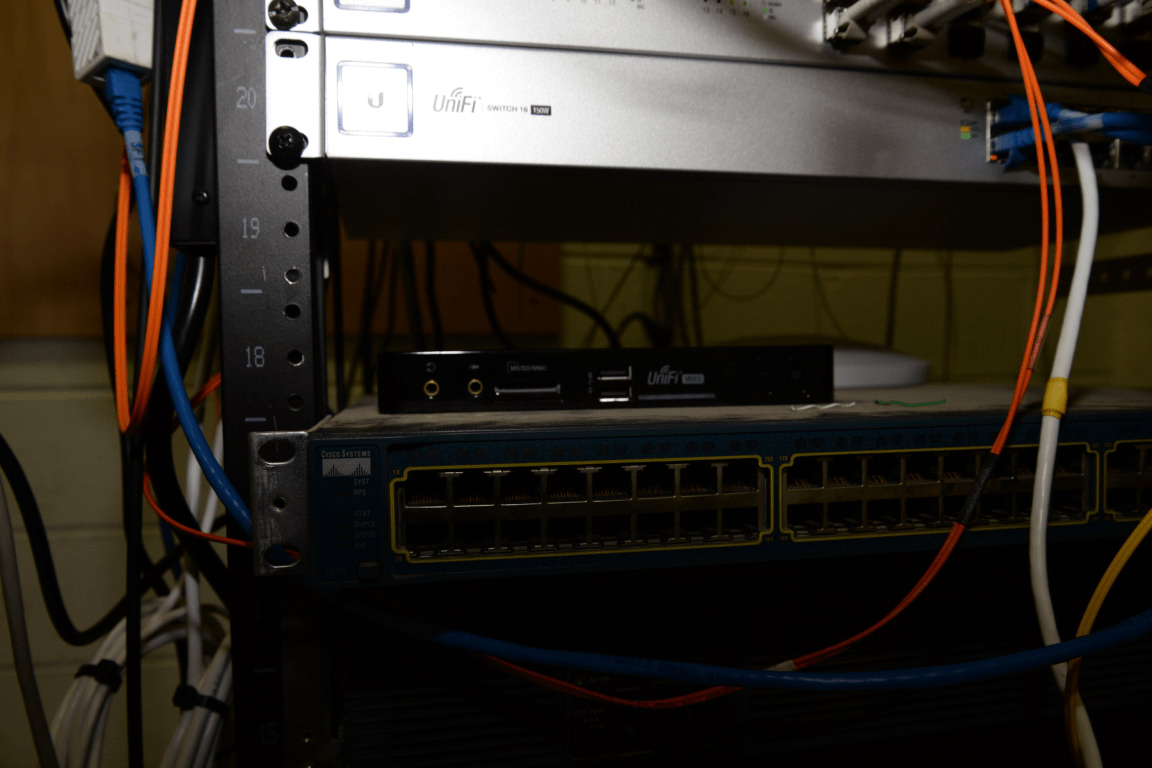
Header image: a rack-mounted server with drive bays and network cabling in a data center, by the Federal Bureau of Investigation, via Wikimedia Commons, public domain; illustrative of general-purpose server capacity, not Akamai's or Anthropic's own hardware. In-body photograph of networking switches and cabling in a server rack, also by the Federal Bureau of Investigation, via Wikimedia Commons, public domain.