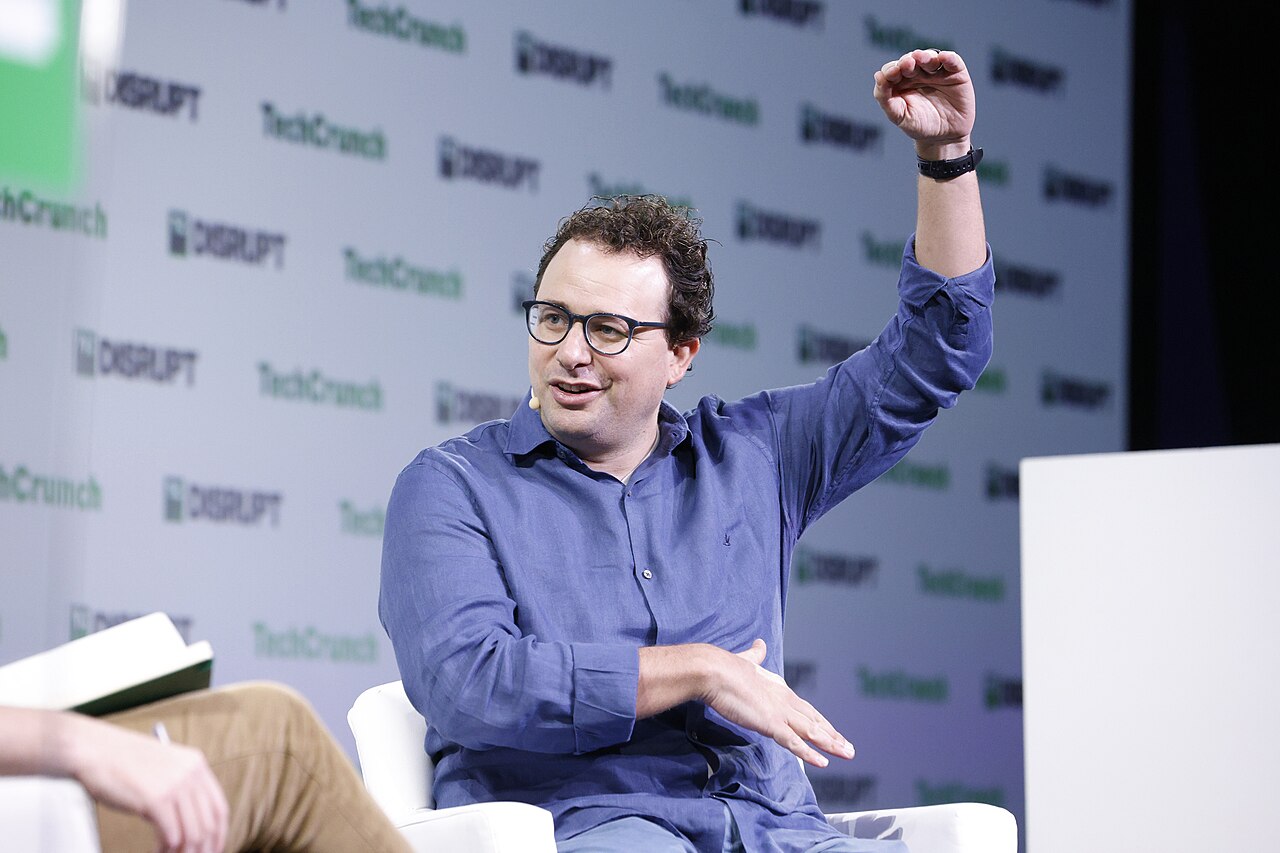
In the high-stakes race to build artificial general intelligence, one company has distinguished itself not by moving fastest, but by moving most carefully. Anthropic, founded by former OpenAI leaders in 2021, has emerged as a major player in the AI landscape—recently valued at $61.5 billion—by betting that safety and ethics can be a competitive advantage, not a constraint.
This is the story of how a group of researchers left one of the world's most prominent AI labs over fundamental disagreements about safety, and built a company that's now challenging OpenAI, Google, and others at the frontier of AI development.
The Exodus from OpenAI: A Crisis of Conscience
The story begins in December 2020, when seven of OpenAI's top researchers made a difficult decision: they would leave the company they helped build to start something new.
At the center of this departure were siblings Dario and Daniela Amodei. Dario, who served as OpenAI's Vice President of Research, had been instrumental in developing GPT-2 and GPT-3—the groundbreaking language models that proved AI could be scaled to unprecedented capabilities. Daniela, meanwhile, had been OpenAI's Vice President of Operations, helping to build the organizational infrastructure for cutting-edge research.
But as these models grew more powerful, a fundamental tension emerged within OpenAI's leadership. "There was a group of us within OpenAI that, in the wake of making GPT-2 and GPT-3, had a very strong focus belief in two things," Dario Amodei explained to Fortune. First, they believed that pouring more compute into these models would make them better with almost no limit—a thesis that has since been validated. Second, they believed "you don't tell the models what their values are just by pouring more compute into them."
This second belief—that AI alignment and safety research needed to advance alongside raw capability—became the breaking point. As Amodei later reflected, "We're building a technology that's powerful and potentially dangerous." He grew increasingly concerned that market incentives and the pressure to commercialize could undermine crucial safety work.
The breaking point came as OpenAI shifted more aggressively toward commercialization. While OpenAI has always maintained its commitment to safety, the departing researchers felt the balance was tipping too far toward speed and profit over caution.
Joining the Amodei siblings in this exodus were five other key researchers: Tom Brown, Chris Olah, Sam McCandlish, Jared Kaplan, and Jack Clark—each a heavyweight in AI research with their own distinguished track record.
The Founding Team: Seven Minds United by Safety
Understanding Anthropic requires understanding the remarkable team that built it. Each of the seven co-founders brought unique expertise that would shape the company's distinctive approach.
Dario Amodei (CEO) emerged from an unusual background for a tech entrepreneur. After earning his PhD in physics from Princeton, he worked at Baidu's AI division alongside Andrew Ng, contributing to Deep Speech 2—a speech recognition system recognized by MIT Technology Review as one of 2016's top breakthroughs. At OpenAI, he led the research that produced GPT-2 and GPT-3, establishing him as one of the field's leading voices.
Daniela Amodei (President) brought operational excellence honed at OpenAI, where she built systems to manage cutting-edge research at scale. Her role proved critical in translating Anthropic's safety-focused mission into concrete organizational practices.
Tom Brown, now Head of Core Resources at Anthropic, manages GPU infrastructure and technical teams—unglamorous but critical work in an era where access to compute can make or break AI projects.
Chris Olah, Research Director, leads Anthropic's research strategy. Previously at Google Brain, he's renowned for his ability to visually explain complex AI concepts, making opaque neural networks interpretable. His recent work identifying distinct neuron clusters within Claude models represents a breakthrough in mechanistic interpretability.
Sam McCandlish, serving as CTO and Responsible Scaling Officer, brings expertise in theoretical physics and AI research. His dual role captures Anthropic's ethos: pushing capabilities forward while ensuring responsible development.
Jared Kaplan, Chief Science Officer, helped pioneer Constitutional AI—Anthropic's signature approach to alignment. His work bridges abstract AI safety concepts and practical implementation.
Jack Clark, formerly OpenAI's policy director, brings crucial expertise in AI policy and communication, helping translate Anthropic's technical work for policymakers and the public.
Together, this team would build something different: an AI company structured from day one around safety.
A Company Built Different: The PBC Structure
In May 2021, the founders unveiled Anthropic. But this wasn't just another AI startup. They incorporated as a Delaware Public Benefit Corporation (PBC)—a legal structure that explicitly allows directors to balance stockholder financial interests with a broader public benefit purpose.
This wasn't window dressing. As Dario Amodei put it, they wanted to inspire a "race to the top" dynamic where AI developers must compete to develop the most safe and secure AI systems.
The early days were humble. Anthropic was formed in the heart of Covid, meeting entirely on Zoom amid the pandemic's second wave. Eventually, its 15 to 20 employees would meet for weekly lunches in San Francisco's Precita Park, pulling up their own chairs to discuss the future of AI safety.
Even choosing the name was a careful process. Early documents show a list of candidates including Aligned AI, Generative, Sponge, Swan, Sloth, and Sparrow Systems. They settled on Anthropic—a word connoting being human-centered and human-oriented—partly because the domain was available.
Constitutional AI: A New Paradigm for Alignment
While the founding story was compelling, Anthropic needed to prove it could do more than just talk about safety—it needed technical breakthroughs. The answer came with Constitutional AI (CAI), a novel approach that would become Anthropic's signature innovation.
Traditional AI alignment relied heavily on Reinforcement Learning from Human Feedback (RLHF)—having humans rate AI responses to teach models what's helpful and harmless. But this approach had limitations: it was expensive, slow, and exposed human reviewers to disturbing content.
Constitutional AI flipped the script. Instead of relying primarily on human feedback, Anthropic gave Claude a "constitution"—a set of principles describing desired behavior. The AI then evaluates its own outputs against this constitution, learning to align with these principles through a process called Reinforcement Learning from AI Feedback (RLAIF).
Claude's constitution draws from diverse sources: the UN Universal Declaration of Human Rights, trust and safety best practices, principles from other AI labs like DeepMind's Sparrow Principles, and even Apple's terms of service (to address modern digital challenges). The current constitution includes 75 distinct principles.
The benefits are significant. Constitutional AI provides scalable oversight—using AI supervision instead of human supervision to handle adversarial inputs. It's also more transparent: anyone can inspect the principles Claude follows. And critically, it spares human reviewers from viewing large amounts of disturbing content.
But Anthropic recognized a tension: while Constitutional AI makes values transparent, it also highlights the outsized role developers play in selecting those values. In response, they pioneered Collective Constitutional AI, using public input through online deliberation to shape Claude's behavior—potentially the first instance of the public collectively directing a language model's values.
Claude: From Concept to Competition
Constitutional AI provided the foundation, but Anthropic needed a product. In March 2023, they launched Claude—named after mathematician Claude Shannon, and deliberately given a masculine name to contrast with feminine AI assistants like Alexa, Siri, and Cortana.
Claude wasn't just another chatbot. It offered a 200,000+ token context window—far exceeding competitors—enabling deep, nuanced reasoning over lengthy documents. More importantly, it demonstrated that safety-focused development could produce competitive capabilities.
The evolution has been rapid. By 2024, Claude 3 Opus was outperforming GPT-4 and Google's Gemini Ultra on key benchmarks, including undergraduate-level knowledge, graduate-level reasoning, and mathematics.
2025 brought an explosion of releases. In February, Claude 3.7 Sonnet introduced hybrid reasoning—letting users choose between rapid responses and thoughtful, step-by-step analysis. May saw Claude Sonnet 4.6 and Opus 4.6, with the latter classified as "Level 3" on Anthropic's safety scale—so powerful it poses "significantly higher risk."
By September, Claude Sonnet 4.6 was being called "the best coding model in the world". And in November, Claude Opus 4.6 demonstrated such impressive capabilities that within Anthropic's 2-hour limit on a performance engineering exam, it scored higher than any human candidate ever.
Perhaps most tellingly, major development platforms—GitHub Copilot, Cursor, Replit—began adopting Claude as their preferred or default model, capturing the enterprise developer market willing to pay premium rates.
The Funding Avalanche: From Startup to $61.5 Billion Juggernaut
Building frontier AI models requires staggering resources. Anthropic would need not just technical excellence, but financial backing on an unprecedented scale.
The money came, and kept coming. Google was first, investing $2 billion and taking a 10% stake. Then came Amazon with an initial investment that would eventually total $8 billion—making it Anthropic's largest investor while designating AWS as the company's "primary cloud and training partner."
But the true inflection came in 2025. In January, Google committed another $1 billion. In March, Anthropic closed a $3.5 billion Series E round led by Lightspeed Venture Partners, valuing the company at $61.5 billion—more than triple its 2024 valuation of $18.4 billion.
Other investors piled in: Salesforce Ventures, Cisco Investments, Fidelity Management & Research, General Catalyst, D1 Capital Partners, and Jane Street. By mid-2025, reports suggested another round was brewing, potentially led by Iconiq Capital and involving Qatar Investment Authority and Singapore's GIC, that could value Anthropic at $170 billion.
In total, Anthropic has raised $14.3 billion—a staggering sum that underscores how seriously major tech companies and investors take both the AI race and Anthropic's approach.
This valuation surge will create seven new billionaires among Anthropic's founding team—a remarkable outcome for researchers who left OpenAI just four years earlier over principle.
The AI Race: Anthropic's Competitive Position
So where does Anthropic stand in the broader AI race? The landscape is crowded: OpenAI with ChatGPT's viral success, Google with massive resources and DeepMind's research prowess, Meta with open-source models, and numerous well-funded startups.
Anthropic has carved out a distinctive position. While OpenAI dominates consumer awareness, Anthropic has quietly built a business that's already 40% the size of OpenAI's revenue—remarkable given the difference in brand recognition.
The company's sweet spot is enterprise developers. Major platforms like GitHub Copilot, Cursor, and Replit have adopted Claude, signaling that professional developers value its capabilities. As one analysis put it, "Like Avis to OpenAI's Hertz, Anthropic seems to be trying a little harder" and has faced fewer distractions from boardroom drama.
Technically, the models are competitive. Claude 3.5 Sonnet is widely viewed as worthy competition for GPT-4, and in some benchmarks surpasses it. Claude's 200K+ token context window enables use cases competitors struggle with.
Strategically, Anthropic has also benefited from talent acquisition. In 2024, they hired Jan Leike and John Schulman—both key architects of OpenAI's alignment work—signaling a doubling down on safety expertise.
Mission and Philosophy: AI Safety as Core Identity
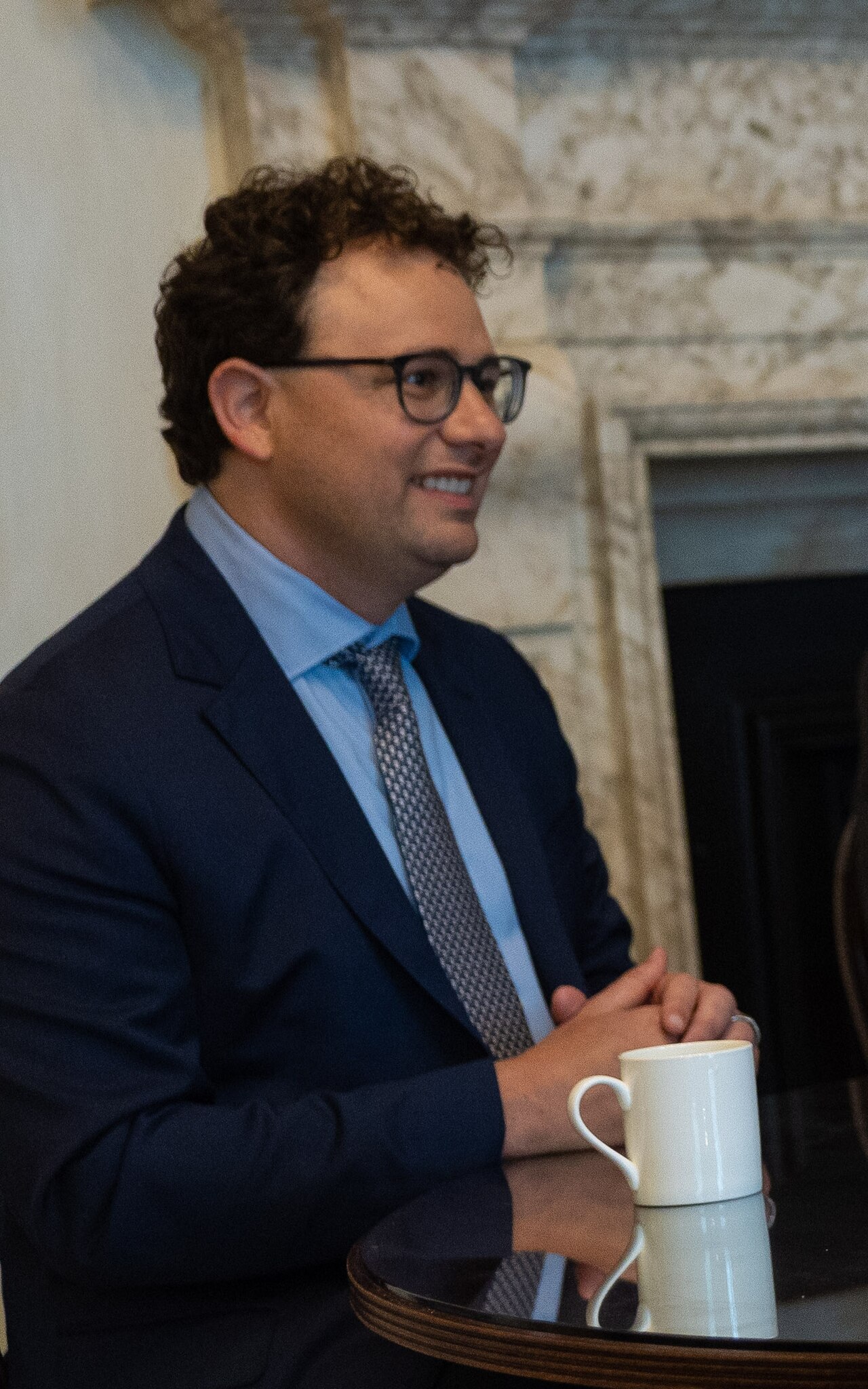
What ultimately distinguishes Anthropic isn't just technical choices or funding—it's the centrality of safety to the company's identity.
Anthropic's stated mission is to build "AI to serve humanity's long-term well-being," pursuing "bold steps forward and intentional pauses" to evaluate consequences. This isn't marketing; it's embedded in the PBC structure and operational decisions.
The company pursues research in scaling supervision, mechanistic interpretability, process-oriented learning, and understanding how AI systems learn and generalize. They've committed to "differentially accelerate" safety work—ensuring safety research keeps pace with or exceeds capability research.
Their Frontier Red Team analyzes implications for cybersecurity, biosecurity, and autonomous systems. And they've pledged that by 2027, interpretability should "reliably detect most model problems"—essentially performing a "brain scan" on AI models to identify issues.
This focus has drawn criticism. Some argue Anthropic is "woke" or overly cautious. But Dario Amodei remains unapologetic. "I'm deeply uncomfortable" that a small cadre of AI leaders, including himself, should be in charge of this technology's future, he's said—hence the push for public input and transparent principles.
Looking Ahead: The Future of Anthropic
Four years after its founding, Anthropic stands at a fascinating juncture. The company has proven that prioritizing safety doesn't mean sacrificing competitiveness—Claude competes with the best models from better-known competitors. The $61.5 billion valuation and backing from Google and Amazon provide resources to compete at the frontier.
But challenges remain. The AI race is intensifying, with competitors investing hundreds of billions. Recent reports suggest Google and OpenAI are dominating in some metrics, while Anthropic faces pressure to maintain momentum.
The company continues to innovate. Recent launches include Claude Code, an agentic tool for developers, and enterprise features that teach Claude specific workflows. They're doubling down on interpretability research, mechanistic analysis, and alignment.
Most importantly, Anthropic is trying to shape the broader AI ecosystem. By demonstrating that safety-focused development can succeed commercially, they hope to inspire a "race to the top"—where companies compete on safety, not just capabilities.
Conclusion: The Safety-First Bet
The story of Anthropic is ultimately about a bet: that in the race to build artificial general intelligence, the companies that win won't just be the fastest or best-funded, but those that figure out how to build powerful AI that remains aligned with human values.
It's a bet made by seven researchers who walked away from one of AI's most prestigious labs because they believed safety couldn't be an afterthought. A bet backed by $14.3 billion from some of the world's most sophisticated investors. And a bet that's produced Claude—an AI assistant competing with the best in the world while adhering to Constitutional AI principles.
Whether this bet pays off remains to be seen. But as AI systems grow more powerful and integral to society, Anthropic's approach—safety as a feature, transparency as a principle, and public benefit as a legal obligation—offers a compelling alternative to moving fast and breaking things.
In an industry often criticized for prioritizing innovation over safety, Anthropic's existence proves another path is possible. And in the high-stakes race to build AGI, that might be their most important contribution of all.
Stay tuned to the Metir AI blog for more insights into the companies, people, and technologies shaping the future of artificial intelligence.
Image credits
Header image: Dario Amodei speaking at TechCrunch Disrupt 2023, by TechCrunch via Wikimedia Commons, licensed under CC BY 2.0. In-body photograph of Dario Amodei at 10 Downing Street, May 2023, by Simon Walker for No 10 Downing Street via Wikimedia Commons, licensed under CC BY 2.0.