Analog Devices agreed on September 9, 2026 to acquire Alif Semiconductor for $1.35 billion in cash, with up to $200 million more tied to undisclosed conditions. The deal adds Alif's low-power microcontrollers and fusion processors to a company already strong in sensors, signal processing, power management, and industrial connectivity. It is a bet that more AI inference will happen inside machines, instruments, and wearables rather than only in data centers.
What Analog Devices is buying
Alif designs secure, connected processors that combine general-purpose cores, neural-processing hardware, graphics acceleration, and power management. These chips are built for systems that must interpret signals and respond locally under tight limits on battery life, latency, bandwidth, and reliability.
That complements Analog Devices' existing position at the boundary between physical signals and digital systems. A sensor can measure vibration, sound, motion, radio waves, temperature, or electrical activity. Alif's processors add a local computing layer that can classify those signals and trigger an action without sending every raw reading to the cloud.
The Alif acquisition's maximum consideration
The announced transaction separates guaranteed upfront cash from performance-dependent consideration.
Source: Analog Devices transaction announcement, September 9, 2026. Closing is expected by year-end, subject to conditions.
Why edge AI has different economics
Cloud AI concentrates expensive processors in large facilities and serves many users over a network. Edge AI distributes smaller processors across products. The individual chip must be cheap and power-efficient, but the potential unit volume can be much larger.
Local inference also changes the product tradeoffs. It can reduce response time, keep sensitive sensor data on the device, and let equipment continue operating when connectivity is poor. The cost is a tighter capability ceiling and a more fragmented software environment. Developers have to fit models into limited memory and power budgets while supporting many hardware configurations.
The strategic fit is clearer than the valuation
Analog Devices says Alif silicon is already shipping and has design wins with consumer and industrial customers. That reduces some product risk, but the companies did not disclose Alif's revenue, unit shipments, customers, or profitability. Without those figures, investors cannot calculate a conventional revenue multiple or know how much of the purchase price reflects current business versus expected growth.
The strategic logic is easier to see. Analog Devices can combine sensing, power, and connectivity components with an AI-capable processor, selling customers more of the system rather than one component. Alif gains access to a much larger industrial sales channel. The integration risk is whether the acquired digital platform becomes a broadly adopted part of that portfolio or remains a specialized product line.
The deal is not about bringing a data-center model to every sensor. It is about deciding locally when a physical signal is important enough to act on.
Metir analysis
This acquisition also complements the wider shift described in the Qualcomm and AWS inference-silicon deal. Inference is separating into distinct markets: giant accelerators for cloud workloads, specialized chips for high-throughput serving, and power-constrained processors embedded in physical products. Analog Devices is buying deeper into the third category.
The transaction is expected to close before the end of 2026, subject to regulatory approval and other conditions. Until then, the $1.35 billion price is firm evidence of strategic intent, while claims about new markets and product combinations remain forward-looking.
Sources:
- Analog Devices to acquire Alif Semiconductor | Analog Devices
- Analog Devices acquisition announcement | US Securities and Exchange Commission
- Analog Devices Form 8-K | US Securities and Exchange Commission
- Analog Devices to buy Alif Semiconductor for $1.35 billion | Reuters via Boursorama
Image credits
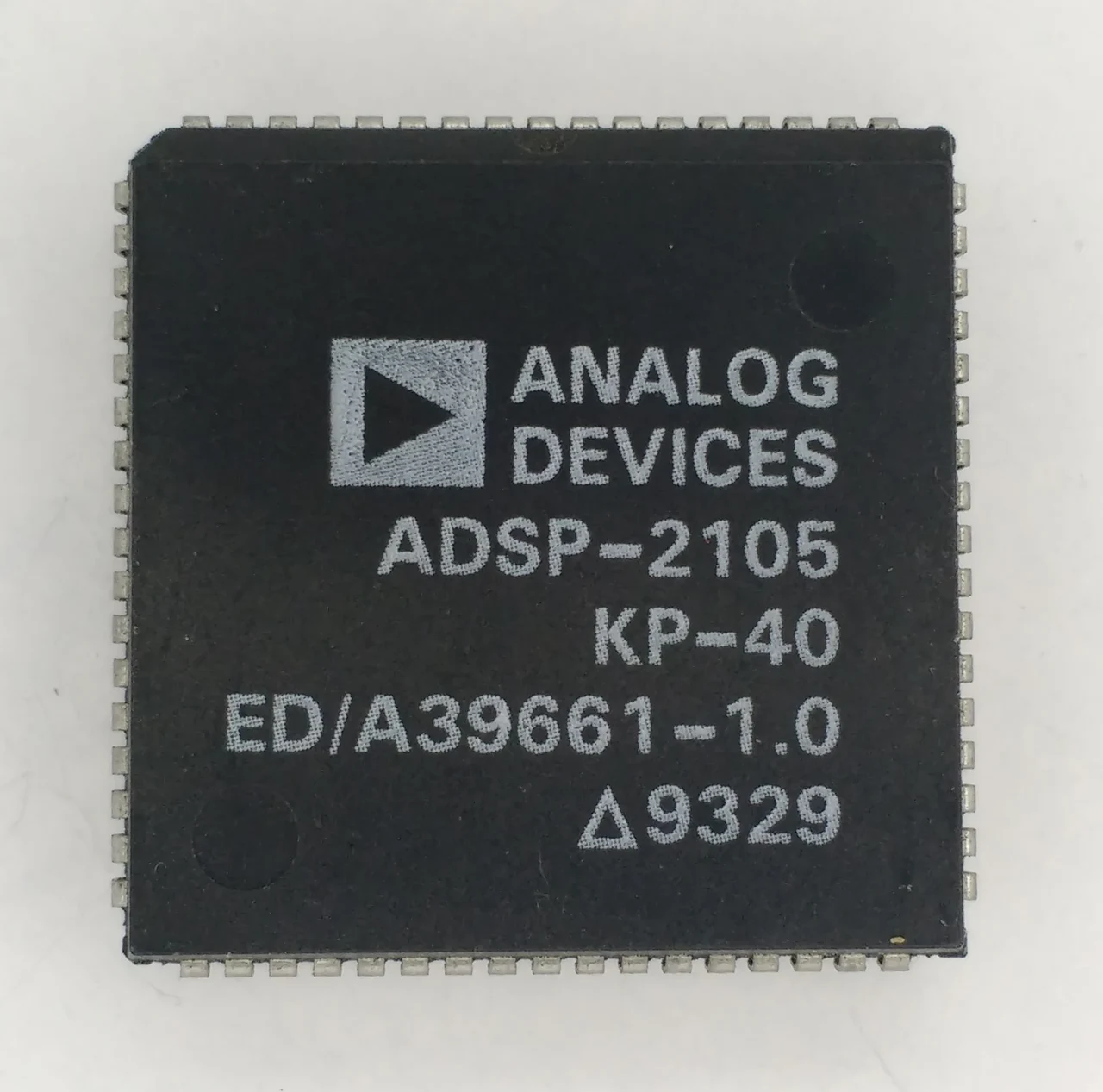
Analog Devices ADSP-2105 processor, ZyMOS, via Wikimedia Commons, licensed under CC BY-SA 4.0.