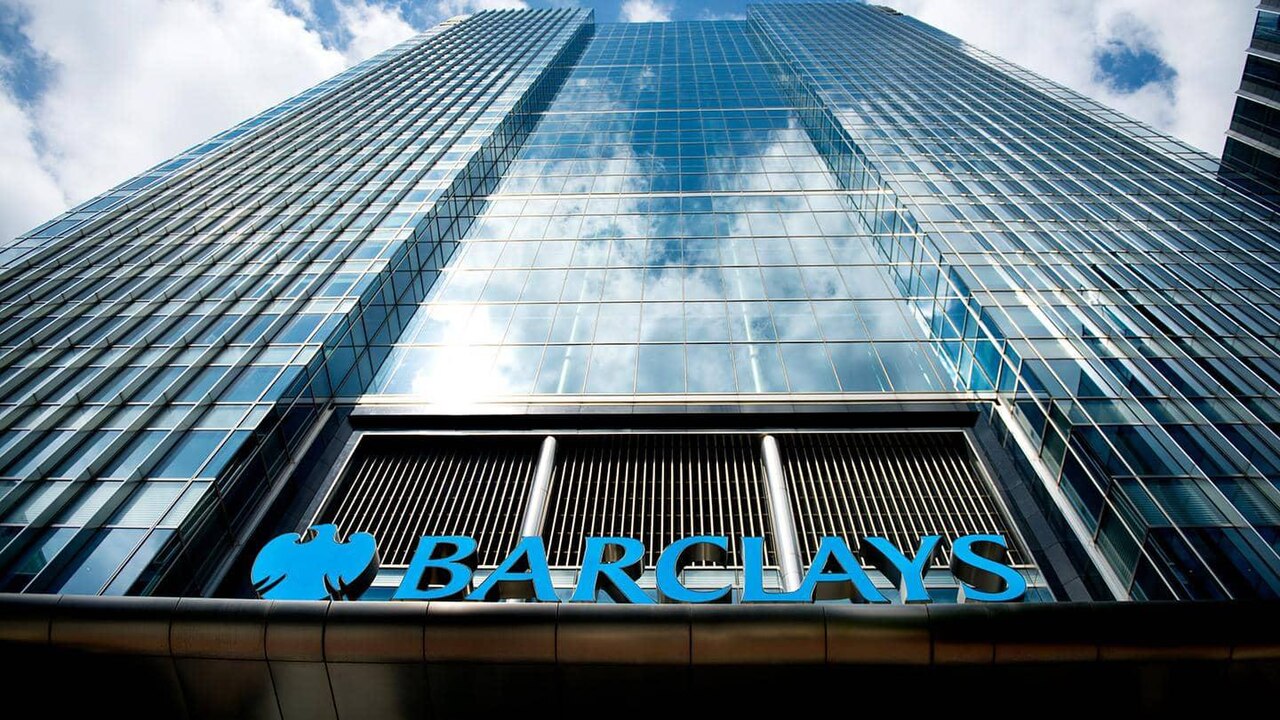
Two large financial institutions announced workforce reductions of about 5% within two days of each other and referred to AI in their rationale. Barclays disclosed about 5,000 job cuts on Thursday, October 22, with its third-quarter results, and American Express announced cuts of about 5% of its global workforce on Friday, October 23, while presenting quarterly results. IBTimes' report collects the disclosures.
The announcements invite a simple headline. The disclosures themselves are more careful, and the difference between what companies said and what readers infer is the useful part.
What each company said
| Item | Barclays | American Express |
|---|---|---|
| Date | October 22, 2026 | October 23, 2026 |
| Scale | About 5,000 jobs | About 5% of roughly 77,000 staff |
| Progress | About 1,000 eliminated; about 4,000 expected by year-end (CFO Anna Cross) | Not itemised in the report |
| Where | About 60% in support functions, including developers | Not specified |
| Stated rationale | "Structurally reducing the cost base to generate capacity for investment"; presentation cites "organisational simplification and technology change efficiency driven by AI" | CEO Stephen Squeri: to become a more "agile and efficient organization"; CFO Christophe Le Caillec: "reduce layers and increase spans of controls" to automate and use AI |
Announced roles to be cut, October 22 and 23, 2026
Approximate roles. American Express: 5% of about 77,000 staff, roughly 3,850. Barclays: about 5,000, of which about 1,000 were already eliminated and about 4,000 are expected before year-end.
Sources: IBTimes reporting on American Express and Barclays earnings disclosures. AmEx figure is our arithmetic from the reported 5% and 77,000 headcount.
The American Express headcount figure is our arithmetic: 5% of about 77,000 is about 3,850. IBTimes reports the 77,000 as the company's workforce at the end of last year, so the actual number depends on the current headcount.
The two disclosures name AI as one input among several, not as a replacement for each eliminated role.
What the disclosures do not show
The IBTimes article is explicit about the gaps, and they are worth listing because they shape any conclusion:
- It notes the disclosures do not show that AI will directly replace each eliminated role.
- It does not state how many developer jobs Barclays will cut, only that about 60% of the cuts fall in support functions that include developers. By our arithmetic, 60% of 5,000 is about 3,000 roles across support functions.
- No severance or restructuring charges for either company appear in the article, and nor do American Express's quarterly financial figures.
Both companies frame the cuts alongside non-AI levers: layers and spans of control at American Express, cost-base reshaping at Barclays. That is consistent with AI being used as part of a wider efficiency programme, and it also leaves open how much of the reduction depends on AI working as intended.
Three ways to interpret "AI-related" cuts
| Reading | What it implies | What would support it |
|---|---|---|
| Direct substitution | Tasks done by staff are now done by AI systems | Named functions, role-level automation metrics |
| Capacity reallocation | Savings in support functions fund AI and technology investment | Barclays' "generate capacity for investment" wording |
| Structural flattening with AI as enabler | Fewer management layers, with AI assumed to absorb coordination work | American Express's "reduce layers" language |
The disclosed language leans toward the second and third readings, though it does not rule out the first. A useful test over the next few quarters is whether headcount reductions track measurable automation, for example lower cost per customer interaction, or simply a lower cost base.
Labour-market context
IBTimes cites Department of Labor data showing initial jobless claims fell by 6,000 to a seasonally adjusted 194,000 in the week ending October 17, the lowest since July, when claims hit 189,000, a level not seen since 1969. It also cites BLS data that about 1.94 million Americans had been unemployed for 27 weeks or longer in September, 27.1% of all unemployed workers, little changed from August.
Those figures describe an economy with low layoffs overall and a sizeable long-term unemployed group. Two bank announcements, however large, are not by themselves evidence of a broad pattern, and the article does not claim one.

What to watch next
- Role-level detail. Whether either bank names functions where AI is replacing tasks rather than reducing layers.
- Year-end delivery at Barclays. The company says about 4,000 more roles are expected to go before year-end, which is a checkable milestone.
- Peers' language. Whether other banks adopt similar wording in their own earnings presentations.
- Evidence of output per employee. Productivity measures, not headcount alone, would show whether AI is doing the work attributed to it.
For organisations planning similar programmes, the pattern is a reminder to measure the workflow, not just the headcount. Teams that run agents across tools, including on platforms such as Metir, generally start with a narrow, measurable task before treating the savings as structural.
Sources:
Image credits
- Header image: "Barclays CW.jpg" by GroupEditor via Wikimedia Commons, licensed CC BY-SA 4.0. It shows the Barclays signage on a building at Canary Wharf, London, and does not depict any staff or the announcement.
- In-body image: "Brookfield Place New York August 2017 003.jpg" by King of Hearts via Wikimedia Commons, licensed CC BY-SA 4.0.