
On September 28, 2026, AMD announced it will acquire World Labs, the spatial-intelligence startup founded by Fei-Fei Li, for approximately $8.2 billion in an all-stock deal. Li, widely known as the "godmother of AI", will join AMD as executive vice president and chief scientist. The transaction is expected to close by the end of 2026, subject to regulatory approvals. The acquisition is a useful window into physical AI, the idea that the next wave of AI leaves the chat window and starts to model, and act in, the physical world.
 AMD
AMD NVIDIA
What the deal is
AMD described World Labs as a builder of deep-learning models that generate, reconstruct and simulate interactive 3D environments from text, image and video inputs, along with technology for robotic learning and simulation. The deal is AMD's second-largest ever, behind the roughly $50 billion Xilinx purchase that closed in 2022 (Quartz).
The two companies were not strangers. TechCrunch reports they formed an inference-optimization and training partnership in 2025 and that Li appeared as a guest at AMD's CES presentation earlier in 2026. AMD also took part in World Labs' $1 billion funding round in February 2026, and Fortune reports that AMD CEO Lisa Su was an early investor in the startup.
Physical AI, spatial intelligence and world models, explained
A large language model predicts the next word. A world model predicts how a scene changes: given what is in a space and what an agent does, what happens next. Spatial intelligence, the term Li uses for her field, is the capacity to perceive, reconstruct and reason about three-dimensional space. Physical AI is the application layer: robots, autonomous machines and simulated environments where those models are put to work.
World Labs' first product, Marble, creates 3D worlds that can be used for entertainment and as simulated environments for robot training, according to TechCrunch. The robotics link matters because real-world training data is slow and expensive to collect. A model that can generate many plausible environments lets a robot practice in simulation first.
Why a chipmaker wants model expertise
AMD sells the hardware models run on. The strategic logic reported by Data Center Knowledge is that AMD aims to co-design hardware, software and systems for robotics and physical AI. Lisa Su said building compute platforms for the next generation of AI "requires a deep understanding of how models are evolving."
Analyst Matt Kimball framed it narrowly: "This isn't about AMD buying a model company. This is about understanding requirements of compute and memory." That reading is plausible on technical grounds. Generating and simulating 3D scenes stresses memory capacity, bandwidth and inference latency differently from text generation, and a team that builds such models can tell a chip designer what future workloads will need.
Li made the complementary argument: "Without having a focused hardware effort, AI is hobbled in efficiency. And scale. And for our purposes, remains trapped in the digital world" (Fortune). She also said the team wants to be "getting closer to the hardware" (TechCrunch).
This isn't about AMD buying a model company. This is about understanding requirements of compute and memory.
Matt Kimball, analyst, quoted by Data Center Knowledge
The competitive backdrop
TechCrunch notes that Nvidia already offers open-weight world models such as Cosmos, and that world models are viewed as essential for deploying AI on robotic platforms and autonomous systems. The Data Center Knowledge report describes AMD as positioning against Nvidia's early lead in physical AI. Nvidia was itself among the backers of World Labs' February round, alongside AMD, Autodesk and others (TechCrunch, February 2026), which shows how intertwined the ecosystem is.
There are two distinct strategies here. One is to ship models as a way to pull developers toward a hardware platform. The other is to embed model research inside the chip roadmap. AMD's announcement leans toward the second, though the reports do not say whether World Labs models will be released openly.
Putting $8.2 billion in context
World Labs in AMD's deal history
Headline transaction value in US$ billions. Second-largest AMD acquisition, but about one-sixth of Xilinx.
ZT Systems includes $400M of performance-based payouts. Values are headline figures as reported at announcement.
AMD has spent years assembling AI capability through acquisitions. Pensando (networking and DPUs) was announced in April 2022 at about $1.9 billion. Silo AI, a Finnish AI lab, closed in August 2024 as an all-cash $665 million deal. ZT Systems, which designs rack-scale systems, was valued at $4.9 billion including $400 million of performance-based payouts. Each fills a layer of the stack: networking, models and software talent, and full-system design.
World Labs is different in kind. Silo AI was a services-oriented model lab. World Labs is a frontier research group with a product and a marquee founder. It is also a young company: founded in 2024, it raised $1 billion at a $5 billion valuation in February 2026 (Bloomberg, TechCrunch). By simple arithmetic, $8.2 billion is about 1.6 times that valuation, reached in roughly seven months.
What the all-stock structure signals
An all-stock deal preserves cash, which matters for a company also spending heavily on capacity and other acquisitions. It also ties the seller's outcome to AMD's share price, which aligns incentives after closing: World Labs holders become AMD shareholders. Fortune reported AMD shares were roughly flat in after-hours trading following the announcement, suggesting the market did not treat the news as a major surprise or a major shock.
The trade-off is dilution and price risk. The value delivered to World Labs holders will move with AMD's stock between announcement and close, and the reports reviewed here do not disclose a share count or collar.
The marquee-researcher pattern
Hardware and cloud companies have repeatedly paid for research leadership: the value is partly the models, partly the people, and partly the signal to other researchers. Here the talent is named in the announcement itself, with Li taking a chief scientist title rather than running a subsidiary. Whether that is a durable integration or a headline hire is not answerable yet. The relevant tests will be whether the World Labs team keeps building general-purpose models, and whether the work visibly shapes future AMD silicon and software.
What to watch
- Regulatory review and the closing date, expected by end of 2026.
- Whether World Labs models, including Marble, stay available to customers on other vendors' hardware.
- Any AMD roadmap language tying robotics and simulation workloads to specific products.
- How Nvidia's world-model releases and AMD's co-design approach compare on developer adoption.
The deal is best read as a bet that the next major AI workloads will look different enough from chatbots that understanding them from the inside is worth $8.2 billion. Reasonable observers can disagree on whether buying the model lab or partnering with it was the better route, and the evidence to settle that will only arrive after the deal closes.
Sources:
- TechCrunch: AMD will acquire Fei-Fei Li's World Labs for $8.2B
- Data Center Knowledge: AMD to acquire World Labs for $8.2B
- Fortune: AMD acquires Fei-Fei Li's physical AI startup World Labs
- Quartz: AMD is acquiring Fei-Fei Li's World Labs in an $8.2 billion all-stock deal
- CNBC: AMD acquiring Fei-Fei Li's World Labs
- TechCrunch: World Labs lands $1B, with $200M from Autodesk
- Bloomberg: Fei-Fei Li's World Labs raises $1 billion
- TechTarget: AMD acquires ZT Systems
- Constellation Research: AMD's $4.9 billion ZT Systems purchase
- AMD Form 10-K, fiscal 2024 (Pensando, Silo AI)
Image credits
- Hero: Fei-Fei Li (name placard visible, second from left) at the HAI Roundtable on AI and the Economy, Stanford HAI. Photo by Steve Jurvetson, Wikimedia Commons, CC BY 2.0.
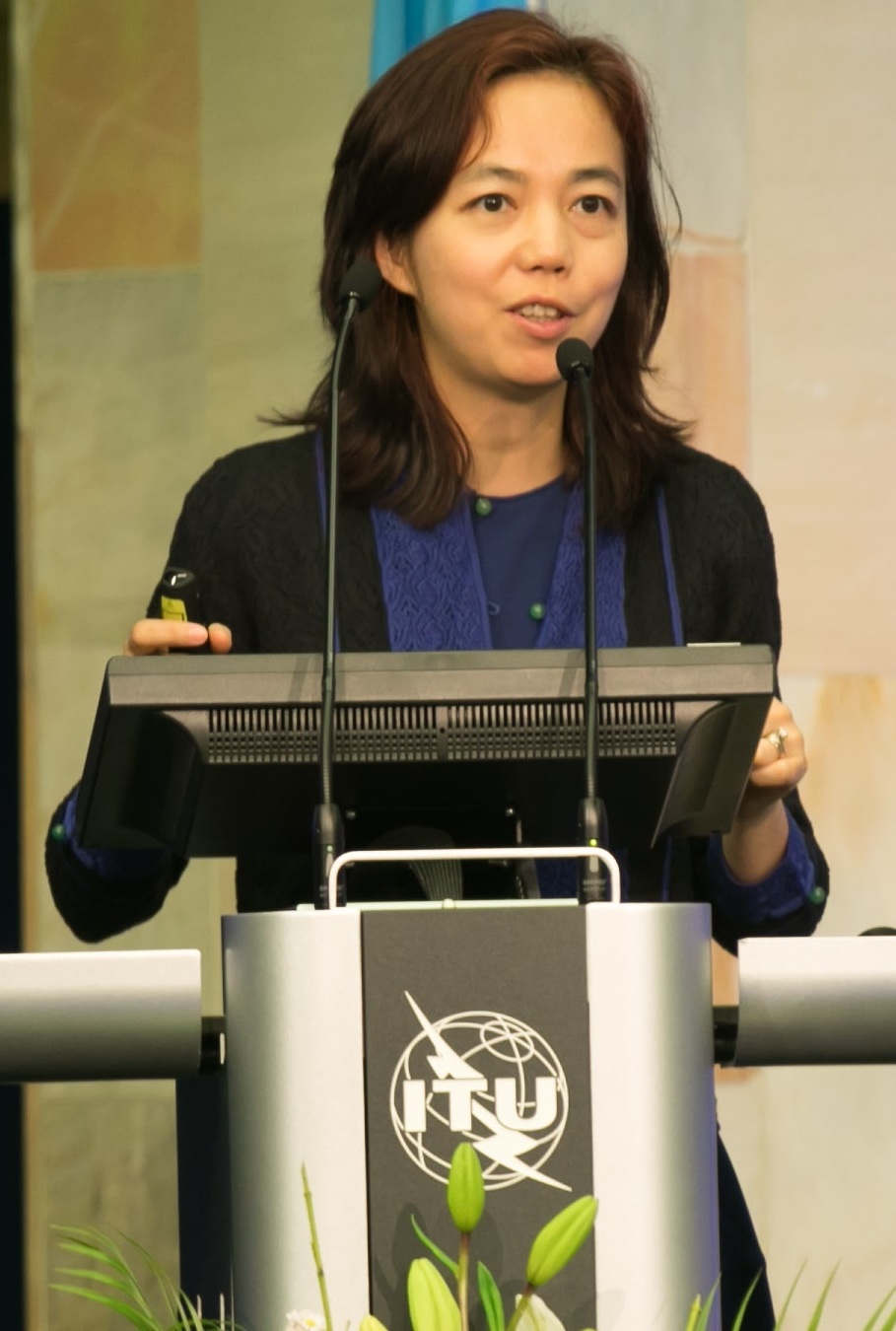
- In-body: Fei-Fei Li at AI for Good 2017. Photo by ITU Pictures, Wikimedia Commons, CC BY 2.0.