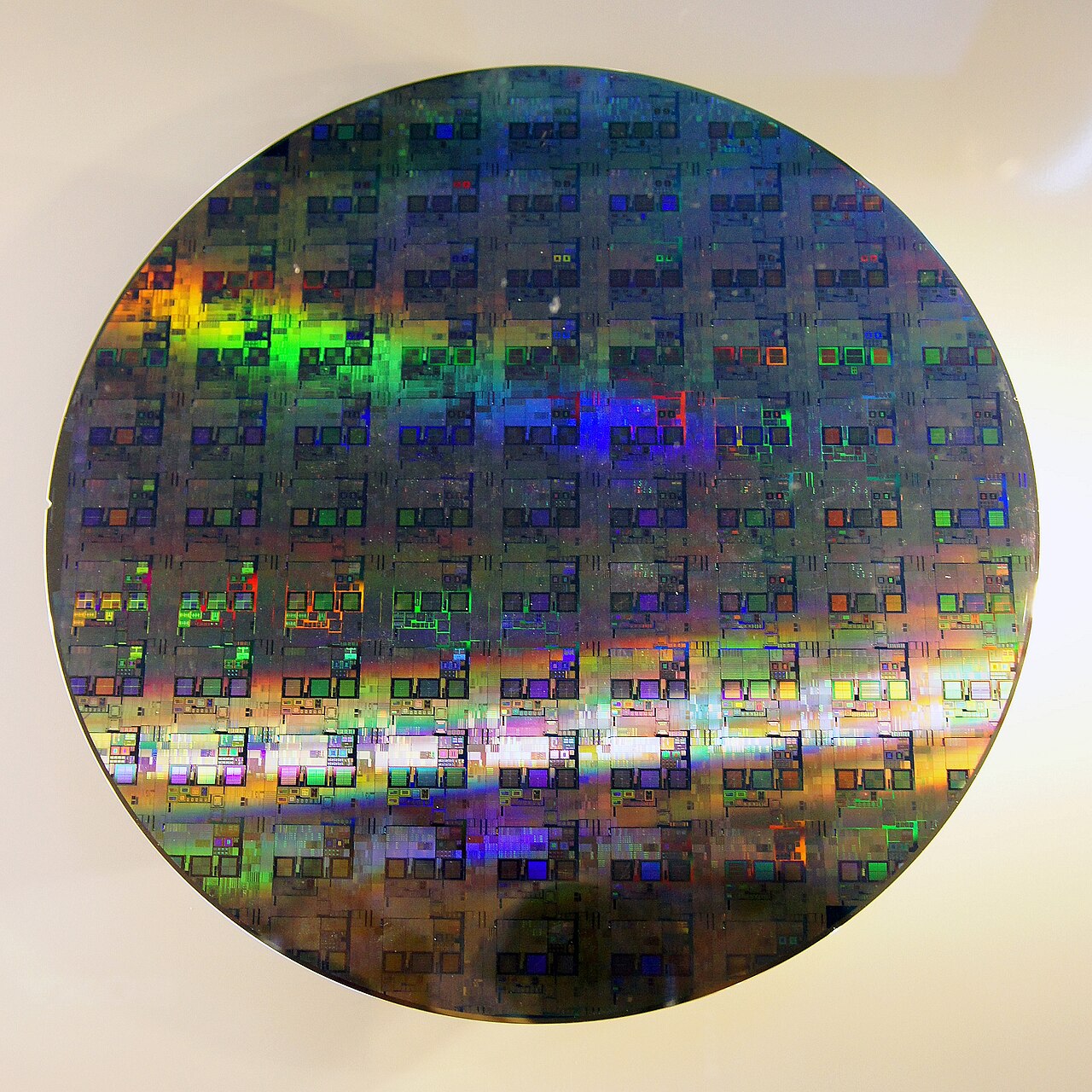
On August 6, 2026, AMD agreed to acquire Taalas, a Toronto startup with an unusual pitch: instead of storing an AI model's weights in memory and streaming them to a processor, its chips etch those weights permanently into the transistors themselves. The chip becomes the model. AMD said it plans to fold the technology into its Helios rack-scale systems, alongside its Instinct GPUs and EPYC CPUs, with the transaction expected to close in the fourth quarter of 2026. The deal is small next to AMD's data-center business, but it is a clear signal about where the industry thinks the next round of competition sits: not in training models, but in serving them. This piece explains the technical idea, why it is suddenly worth buying, and the trade-off that decides whether it matters for any given workload.
 AMD
AMD NVIDIA
 Meta
MetaThe memory wall, in plain terms
To see why a chip company would buy this, start with the bottleneck it targets.
A large language model is, at run time, a very large pile of numbers called weights. Generating each token of a response means multiplying incoming data against those weights. On a general-purpose GPU, the weights sit in high-bandwidth memory (HBM) next to the chip, and for every single token the processor has to read the relevant weights out of that memory and into its compute cores. The math is fast; the reading is not. For the kind of models that answer chat queries one token at a time, the speed ceiling is usually set by how quickly weights can be moved from memory to compute, not by how quickly the compute can multiply. Engineers call this being "memory-bound," and it is why adding raw arithmetic horsepower to a GPU often does not make token generation proportionally faster.
Taalas attacks the problem by removing the memory trip entirely. If the weights are physically built into the transistors during manufacturing, there is nothing to read from external memory at run time. The company's first test chip, called HC1 and built on TSMC's 6-nanometer process, reportedly served Meta's Llama 3.1 8B model at close to 17,000 tokens per second, an order of magnitude beyond what a single general-purpose GPU typically delivers on a model of that size. The catch is the mirror image of the benefit: because the model is baked in, that chip can only ever run that model. Deploying a different one means designing and fabricating entirely new silicon.
The inference-hardware spectrum: flexibility versus efficiency
Moving left to right trades the ability to run any model for raw speed and energy efficiency on one model. Each step pulls the weights closer to the compute.
A spectrum, not a ladder: most large deployments will keep general-purpose GPUs for training and experimentation and add specialised inference silicon only where one model runs at enormous, steady volume.
Why now, and why AMD
The idea of specialized inference silicon is not new. What changed is the economics of inference itself.
Training a frontier model is an enormous but essentially one-time cost per model. Inference (running the finished model to answer queries) is a recurring cost that scales with usage: every prompt, from every user, every day, consumes hardware and power. As AI products reach hundreds of millions of users, inference becomes the dominant, repeating line in the compute bill, and small per-query efficiency gains multiply across billions of calls into very large sums. That is the pool of money a chip built narrowly for inference is trying to capture.
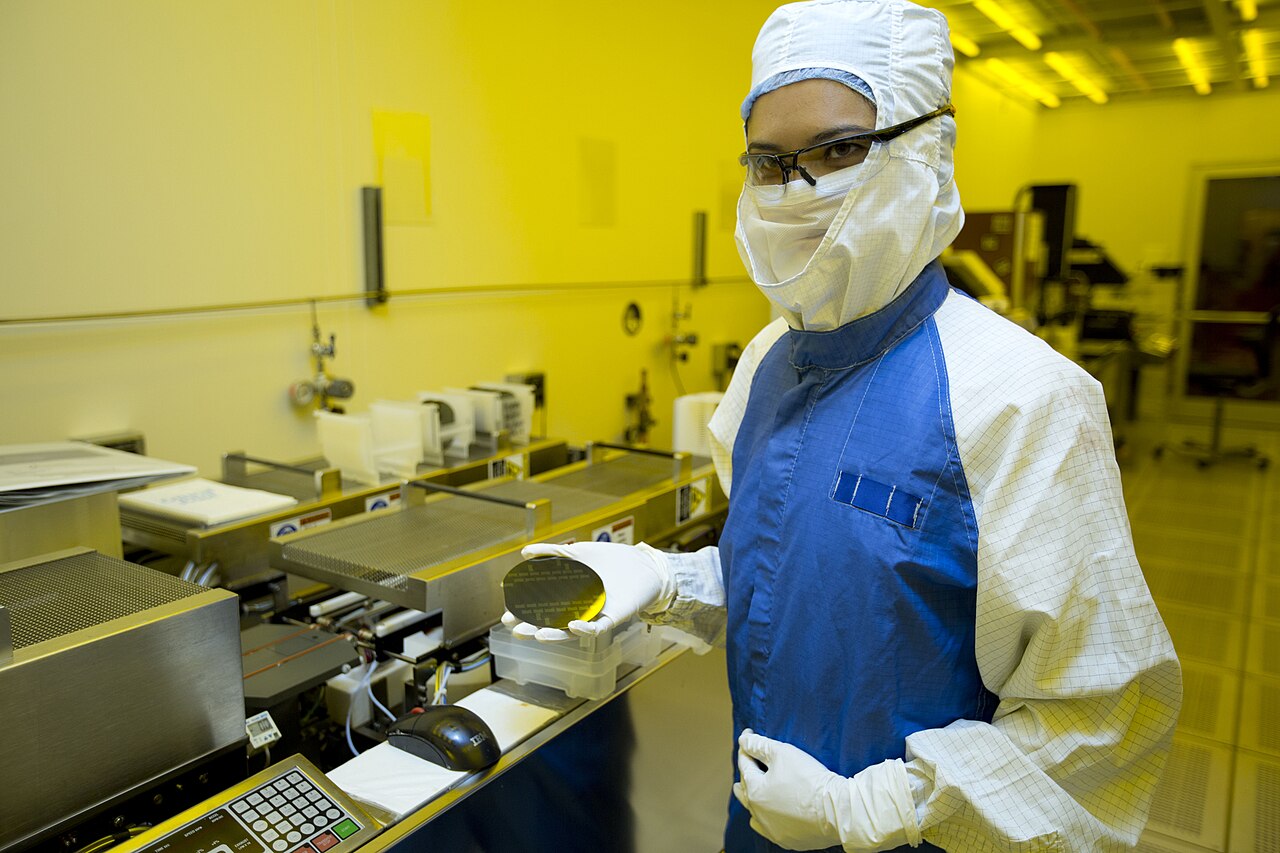
For AMD specifically, the deal is a hedge and an option. AMD sells Instinct GPUs that compete with Nvidia's, and those remain general-purpose parts that can run anything. Owning a radically different inference approach gives AMD something to offer customers whose economics are dominated by one or two models running at massive, steady volume, exactly the profile where hardwired silicon pays off. Integrating Taalas into the Helios rack systems lets AMD position it as one tool inside a larger menu rather than a replacement for its own GPUs. It is vertical breadth, not a bet against the GPU.
The timing also rhymes with the rest of the market. AMD's move lands months after Nvidia absorbed the inference-chip maker Groq, in a deal press reports pegged at roughly $20 billion, and weeks after SambaNova, another inference-silicon company, raised $1 billion at an $11 billion valuation. The common thread is a shift of attention, and capital, from the chips that train models to the chips that serve them.
2026: the money moves toward inference silicon
A run of deals and raises in 2026 pointed capital at chips designed to serve models cheaply, not just train them. AMD’s Taalas deal is the latest.
- Early 2026 (reported)Nvidia acquires GroqReporting around the AMD deal put Nvidia’s earlier purchase of inference-chip maker Groq at roughly $20 billion, folding a dataflow architecture into the market leader.
- Jul 8, 2026SambaNova raises $1B at an $11B valuationAn inference-focused chip and systems maker draws a $1 billion Series F first close, five months after its previous mega-round, signalling how much capital is chasing inference.
- Aug 6, 2026AMD agrees to acquire TaalasAMD moves to buy the Toronto startup that etches model weights directly into silicon, planning to fold it into its Helios rack-scale systems. Expected to close in Q4 2026.
Deal values for the Nvidia-Groq transaction reflect press reporting rather than an official figure. The pattern, not any single number, is the point.
Training is a one-time cost per model. Inference is forever, and that is the market these chips are built to win.
The trade-off buyers actually weigh
The reason hardwired silicon is interesting rather than obviously superior is that it sits at one extreme of a genuine trade-off, and most buyers do not live at the extremes.
A general-purpose GPU is maximally flexible. It runs today's model, tomorrow's model, and the experimental one a team trains next week. That flexibility is not a luxury in a field where the leading model changes every few months; a fleet that can only run one model is stranded the moment that model is superseded. Taalas-style silicon is the opposite: unmatched efficiency on exactly one model, and useless on any other. Between them sit dataflow designs like those from Groq and SambaNova, which keep weights closer to the compute than a GPU does but remain reprogrammable across models.
The decision therefore turns on two questions. First, how stable is the model? A chip that bakes in a model only makes sense if that model will run, essentially unchanged, for long enough to amortize the cost of designing and fabricating custom silicon. Second, how large and steady is the volume? The efficiency gain has to be multiplied across an enormous number of queries before it outweighs the flexibility that was given up. For a handful of very large, very stable, very high-volume workloads (a widely used open model served at scale, say), the math can favor hardwiring. For almost everyone else, including teams whose model mix changes constantly, a programmable chip remains the rational default.
What it does not change
Two limits are worth stating plainly, because the narrative around exotic silicon tends to outrun the reality.
It does not end the GPU. Nvidia's and AMD's general-purpose accelerators remain the only hardware that can run any model, including the ones nobody has trained yet, and that property is exactly what a fast-moving field needs for training and experimentation. Specialized inference chips are a complement aimed at the steady-state serving of stable models, not a replacement for the flexible fleet underneath. AMD buying Taalas while continuing to sell Instinct GPUs is the clearest possible statement of that.
It also does not remove the foundry chokepoint. Whether a chip is designed by Nvidia, AMD, or Taalas, it is still fabricated by a small number of leading-edge foundries, overwhelmingly TSMC. HC1 was a TSMC part. Moving cleverness into the chip design shifts where the competition happens; it does not change the fact that the industry's deepest constraint is the handful of fabs able to build any of this at the leading edge.
The read-through for everyone else
For teams building products on top of models rather than fabricating the chips underneath, the Taalas deal is best read as one more sign that the hardware layer is fragmenting. A model you call through an API might, over its life, be served on general-purpose GPUs, on dataflow ASICs, and eventually on hardwired silicon, with the price and speed shifting as providers move it between them. Which physical chip answers a given request is becoming an implementation detail that can change underneath you.
That fragmentation is mostly good news for buyers, because the competition it reflects is what keeps pushing the cost of a unit of intelligence down. The practical way to benefit from it is to avoid hard-wiring a product to any single model or provider, and instead route each task to whatever option currently offers the best mix of quality, speed, and price. A model-agnostic workspace such as Metir AI takes that stance by design: the specific chip and provider serving a model stay abstracted away, so an efficiency gain in inference reaches the user as better speed or lower cost rather than a migration project.
The bigger picture
AMD's purchase of Taalas is a modest deal with an outsized message. It confirms that the center of gravity in AI hardware is moving from training to inference, and that the largest players are willing to pay for approaches that squeeze the cost of serving a model, even approaches as uncompromising as etching a model into silicon. The honest framing is neither hype nor dismissal. Hardwired inference is a real efficiency lever at the extreme of scale and stability, a poor fit everywhere else, and no escape from the foundries that build every chip in the story. What the deal really marks is the maturing of a market that has stopped treating inference as an afterthought and started engineering it as a first-class problem.
Sources:
- AMD acquires AI chip startup Taalas to boost inference performance by etching models into silicon | The Register
- AMD acquires Taalas to hardwire AI models into silicon | SiliconANGLE
- AMD Buys Taalas to Hardwire AI Models Into Silicon, Bypassing GPU Memory Wall | TechTimes
- AMD acquires Taalas to accelerate AI inference | Futurum Group
Image credits
Header image: a 12-inch silicon wafer patterned with integrated-circuit dies, by Peellden via Wikimedia Commons, licensed under CC BY-SA 3.0. In-body photograph of a technician holding a silicon wafer in a fabrication cleanroom, in the public domain via Wikimedia Commons.