On August 4, 2026, AMD reported the strongest quarter in its history and, more importantly, the clearest evidence yet that the AI accelerator market has a credible second supplier. Total revenue reached a record $11.5 billion, up 50% year over year. The number that mattered most sat one line down: data center revenue of $6.7 billion, up 107%, driven by the ramp of the Instinct MI350 series and continued strength in EPYC server processors.
For two years the shorthand for AI hardware has been a single company. This quarter is a reason to check that assumption, without overcorrecting into the opposite one.
Data center is now the center of gravity
The structural shift in this report is that data center has become the majority of AMD's business. At $6.7 billion of $11.5 billion in total revenue, the segment now represents roughly 58% of the company, up from a minority position a year earlier. AMD is no longer a PC and gaming chip company with a data center side project. It is a data center company with a consumer business attached.
Data center is now the majority of AMD
AMD Q2 2026 revenue split ($ billions). At $6.7B of $11.5B total, data center is about 58% of the company, up from a minority a year earlier.
The "rest of AMD" figure is total revenue ($11.5B) minus the disclosed data center segment ($6.7B).
AMD said Instinct GPU sales more than doubled year over year as the MI350 series broadened across the largest AI labs, cloud providers, AI startups, national labs and sovereign deployments. It also introduced the MI350P, a variant aimed at dropping into existing infrastructure, which matters because the practical barrier to adopting a second GPU vendor is rarely the raw silicon. It is the cost and risk of re-plumbing racks, networking and software around a different architecture.
Helios is the real tell
The forward-looking disclosure was Helios, AMD's first rack-scale AI system, which combines Venice CPUs, MI450-series GPUs, networking and software into an integrated unit. Helios has entered production, and AMD said shipments of second-generation Helios servers with MI455X accelerators are expected to begin in the coming months to customers including Meta and OpenAI.
Rack-scale is the competitive frontier because the largest buyers no longer purchase chips; they purchase integrated systems that arrive ready to run. For most of the current AI cycle, one vendor owned that integrated-rack conversation almost entirely. AMD shipping a rack-scale product to named frontier customers is a different kind of milestone than shipping a faster chip. It is AMD competing where the actual purchasing decisions are made.
Data center grew twice as fast as the whole company
AMD year-over-year revenue growth, Q2 2026. Instinct GPU sales more than doubled as the MI350 series broadened across labs, clouds and sovereign deployments.
AMD guided Q3 2026 revenue to roughly $13 billion and said it expects data center sales to accelerate further in the second half of 2026.
Why a second supplier matters beyond AMD
The reason hyperscalers are qualifying AMD is not primarily benchmark scores. It is supply and leverage. A data center operator spending tens of billions of dollars a year on accelerators does not want a single point of failure in its supply chain, and it does not want a single vendor setting prices with no alternative on the table. A credible second source improves availability and negotiating position at once, even for buyers who still purchase most of their capacity from the market leader.
A credible second source improves availability and negotiating position at once.
On why hyperscalers qualify a second GPU vendor
That dynamic rhymes with a broader pattern in AI infrastructure. The same logic that makes a company want two chip suppliers makes it want more than one model provider: optionality is a hedge against price, availability and lock-in. Platforms built to stay model-agnostic, Metir among them, exist because that optionality has value at every layer of the stack, from the silicon up to the model API. AMD's quarter is the hardware expression of the same instinct.
The gap that the doubling does not close
A neutral read has to state the other half. Revenue doubling off a smaller base is not the same as parity. Nvidia's data center business remains multiples larger than AMD's, and the incumbent's advantage is not only in chips but in a mature software ecosystem that a decade of developer adoption built. AMD's ROCm software stack has closed distance, but "closed distance" is not "caught up," and switching costs in production AI infrastructure are real. Many workloads are written against the incumbent's libraries, and porting them is work that buyers weigh carefully.
So the honest framing is a narrowing gap rather than a closed one. AMD guided Q3 2026 revenue to roughly $13 billion and said it expects data center sales to accelerate further in the second half, which suggests the trajectory continues. Whether that converts into durable share gains depends on execution on Helios volume, on ROCm maturity and on whether the very largest buyers move from qualifying AMD to standardizing on it.
 AMD
AMD NVIDIA
 OpenAI
 Meta
Meta Microsoft
What the quarter signals
Read as a market signal rather than a stock story, AMD's Q2 2026 says three things. AI accelerator demand is broad enough to support a strong number-two at scale, not just a dominant number one. The competitive battle has moved from chips to integrated rack-scale systems, where the money actually changes hands. And the buyers pulling AMD forward are doing so partly for reasons that have nothing to do with which chip is fastest, and everything to do with not depending on a single vendor.
For anyone planning AI infrastructure, the practical lesson is that supplier diversity is becoming a design principle rather than a nice-to-have. AMD's record quarter is what that principle looks like when it shows up on an income statement.
Sources:
- AMD Reports Second Quarter 2026 Financial Results, AMD Newsroom
- AMD Reports Second Quarter 2026 Financial Results, AMD Investor Relations
- AMD Q2 2026 revenue hits record $11.5bn as data center sales surge 107%, InfotechLead
- AMD Q2 2026 earnings: data center revenue doubles, KuCoin
- AMD Data Center revenue more than doubles to $6.7B in Q2, StockTitan
Image credits
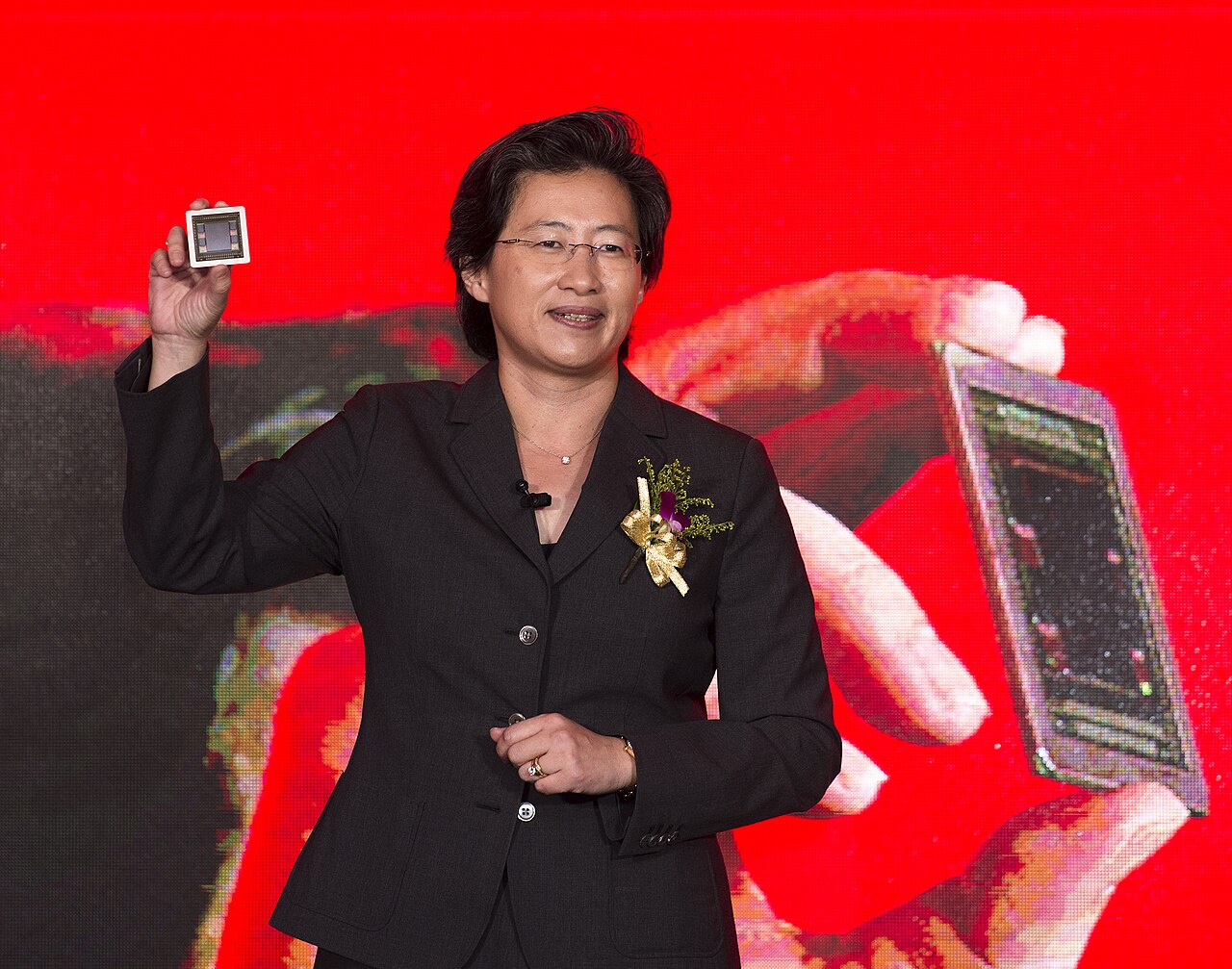
- Hero: "AMD CEO Lisa Su 20150603" by Sinchen.Lin, licensed CC BY 2.0, via Wikimedia Commons. Retrieved August 6, 2026, and visually reviewed before use. It shows AMD CEO Lisa Su holding a processor and predates the Q2 2026 results discussed here.
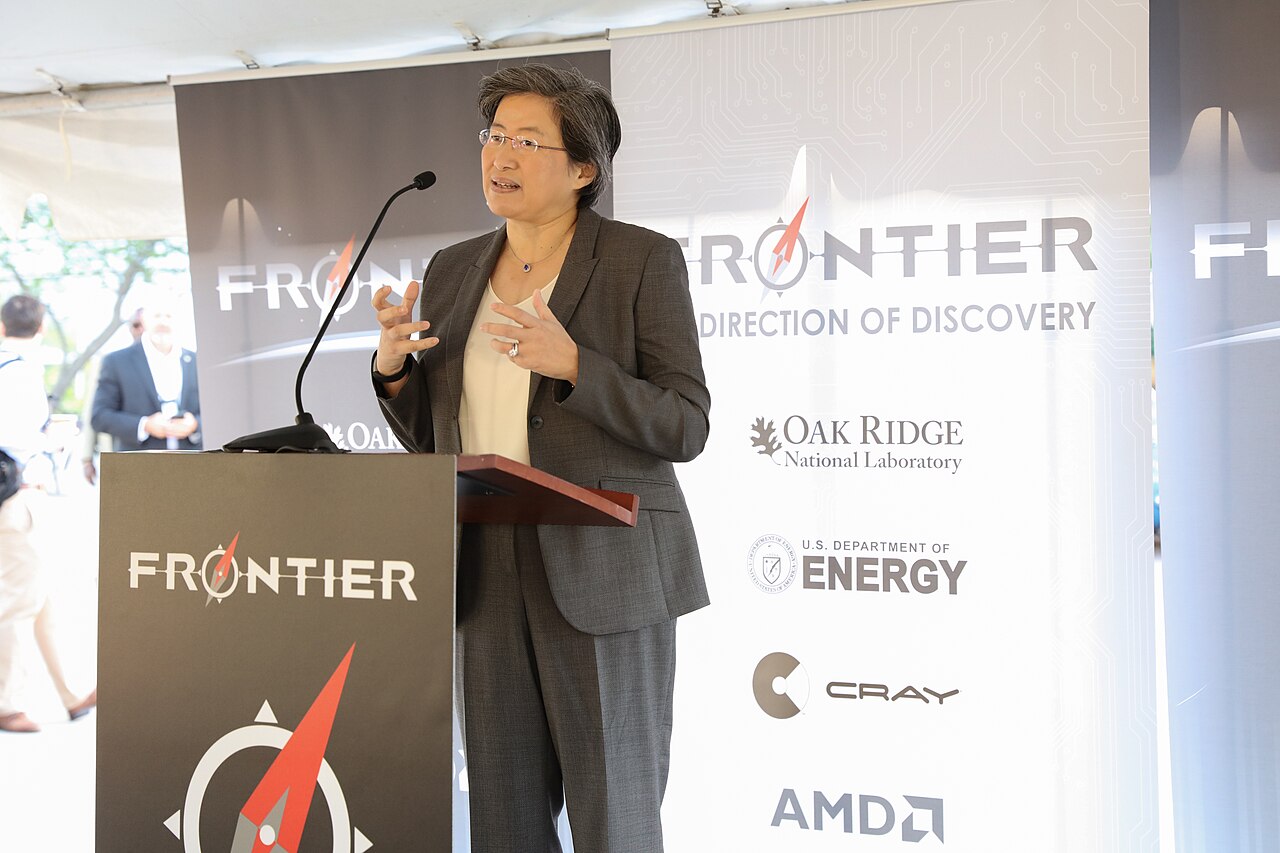
- In-body: "AMD CEO Lisa Su speaking at ORNL 2019-05-07-2" by Oak Ridge National Laboratory, licensed CC BY 2.0, via Wikimedia Commons. Retrieved August 6, 2026, and visually reviewed before use.