
Amazon's Q2 2026 earnings, reported on July 30, 2026, delivered a version of the same story investors have now heard from every major hyperscaler this earnings season, but with a sharper edge: the cloud business is growing faster than it has in years, and the company still says it cannot build fast enough to keep up. Total revenue reached $200.6 billion, up 20% year over year and above the roughly $196.5 billion analysts expected. Operating income jumped 43% to $27.5 billion. Inside those numbers, AWS revenue accelerated to $42.2 billion, up 36.7% year over year, its fastest growth rate in 18 quarters. Yet alongside the beat, Amazon raised its 2026 capital-expenditure guidance to roughly $220 billion, up from $200 billion just one quarter earlier, and CEO Andy Jassy told analysts that even at that level, AWS will not have enough capacity to meet all of 2026's demand, a dynamic he expects to persist into 2027. This piece walks through what changed inside AWS, why the capex number keeps climbing even as margins expand, what the backlog does and does not prove, and how Amazon's spending compares to the rest of the hyperscaler field.
 AWSAWS
 NVIDIA
The headline numbers
AWS's acceleration is not a one-quarter blip. Growth has now accelerated for five consecutive quarters, from 16.9% in Q1 2025 to 17.5%, then 20.2%, then 24%, then 28% in Q1 2026, and finally 36.7% in Q2 2026, according to Amazon's own earnings release and reporting from Digital Commerce 360 and CNBC. At $42.2 billion in quarterly revenue, AWS is now running at an annualized rate of roughly $169 billion, a figure Fortune notes would rank it 24th on the Fortune 500 as a standalone company. Operating income for the segment reached $16.6 billion, up 64% from $10.2 billion a year earlier, pushing operating margin from 32.9% to 39.4%, a roughly 650 basis point expansion in a single year.
AWS growth has accelerated for five straight quarters
AWS year-over-year revenue growth by quarter. Q2 2026's 36.7% is AWS's fastest pace in 18 quarters.
AWS revenue reached $42.2 billion in Q2 2026, an annualized run rate of about $169 billion, with operating margin expanding from 32.9% to 39.4% over the same year.
Why growth accelerated while margins expanded
Faster growth and expanding margins moving together is the more interesting half of this quarter's story. A cloud business absorbing enormous capital spending to build new capacity would typically be expected to see margins compress, at least temporarily, as depreciation on new data centers and chips outpaces the revenue those assets generate before reaching full utilization. AWS instead expanded margin even as its capex guidance climbed, which points to newly added capacity being filled quickly by paying customers rather than sitting idle, and to Amazon's custom Trainium chips and other cost efficiencies doing real work inside the P&L. Management highlighted that Amazon's AI and custom-silicon businesses each now carry annual revenue run rates above $25 billion and are growing at triple-digit rates, a detail that helps explain both the growth and the margin expansion at once.
The capex hike, memory costs, and the capacity admission
The number that will dominate discussion of this quarter is capital expenditure. Amazon now expects to spend about $220 billion in 2026, up $20 billion from the $200 billion guided just three months earlier. CNBC's coverage attributes the increase specifically to higher memory costs, a reference to the DRAM and high-bandwidth memory supercycle that has seen memory suppliers redirect capacity toward AI-grade chips, driving reported price spikes of 55 to 60% quarter over quarter in some memory categories during early 2026. Micron's HBM output is reported sold out through 2027, and SK Hynix's chairman has warned that global memory supply could stay roughly 20% below demand through 2030. That backdrop turns memory cost, not just chip or power availability, into a genuine constraint on how much capacity a company can build for a given budget.
But even at that amount, we will still not have enough capacity to meet all the demand we have in 2026, and I believe this dynamic will also be true in 2027 too.
Andy Jassy, Amazon President and CEO, Q2 2026 earnings call
Jassy's framing is worth sitting with because it inverts the usual read of a capex raise. A company raising spending because demand is uncertain or growth is slowing is a warning sign. A company raising spending and telling investors, in the same breath, that it still expects to turn away demand is describing a supply problem, not a demand problem. AWS said it remains on pace to double its power capacity by the end of 2027 compared with 2025, which is itself an admission of how far behind current demand the buildout still is. None of this is independently verifiable in the way an audited financial statement is; it is management's own characterization of a market only they can see the order book for, and it should be read with the same caution investors apply to any single company's account of an industry-wide dynamic.
What the $496 billion backlog signals, and its limits
AWS's contracted backlog, the value of signed customer commitments not yet recognized as revenue, jumped from $364 billion at the end of Q1 2026 to $496 billion at the end of Q2, a $132 billion increase in a single quarter. That backlog has now roughly doubled from $244 billion at the end of 2025. Amazon and outlets covering the quarter point to the backlog as evidence that the capex increase tracks contracted demand rather than speculative build-ahead spending.
AWS's contracted backlog has more than doubled in two quarters
AWS's contracted, not-yet-recognized revenue backlog, in billions of dollars. It grew $132B in Q2 2026 alone.
Backlog reflects signed, multi-year commitments not yet recognized as revenue, not cash already collected, and is concentrated in a relatively small number of large AI infrastructure contracts.
The caveats that applied to Alphabet's and Microsoft's backlogs this earnings season apply here too. Backlog figures represent multi-year commitments converting to revenue over years, not cash already in hand, and a jump this large is often concentrated in a small number of very large AI infrastructure and chip-supply agreements rather than broad-based enterprise demand. That concentration means the number is more sensitive to a handful of customer decisions than a backlog built from thousands of smaller contracts would be. None of that makes $496 billion meaningless. It does mean it should be read as a strong, contractually real demand signal, not as guaranteed future cash.
Free cash flow, and how Amazon compares to its peers
The other side of the capex story is cash. Amazon's trailing-twelve-month free cash flow moved to roughly negative $7.6 billion, down from a positive $18.2 billion a year earlier, driven primarily by a $66.1 billion year-over-year increase in net capital spending on property and equipment, most of it AI infrastructure. That mirrors what Alphabet and Meta each reported in their own Q2 2026 results: strong revenue growth funding a capex ramp large enough to swing free cash flow sharply negative, at least temporarily.
Amazon now leads hyperscaler capex guidance for 2026
2026 calendar-year capital-spending guidance as of each company's Q2 2026 earnings report. Ranges are shown as midpoints; see tooltip for the full guided range.
Combined, the four largest hyperscalers are now guiding to roughly $740 billion or more in 2026 capital spending, all citing AI demand and, increasingly, rising memory component costs.
Set against its peers, Amazon's raised guidance of about $220 billion now puts it ahead of Alphabet's $195-205 billion, Microsoft's roughly $190 billion for fiscal 2026, and Meta's $130-145 billion, making Amazon the single largest capital spender among the big four hyperscalers this year. Combined, the four companies are now guiding to roughly $740 billion or more in 2026 capital spending, and broader estimates that include the rest of the industry put total 2026 hyperscaler capex above $1 trillion. Amazon guided Q3 2026 net sales to a range of $197 billion to $202 billion, a sequential deceleration in reported growth that the company attributed largely to Prime Day's timing landing in Q2 this year rather than to any softening in underlying demand.
The read-through for AI infrastructure, and the layer above it
Amazon's, Alphabet's, Microsoft's, and Meta's combined spending is building the physical capacity the entire AI industry runs on, but that capacity is fundamentally agnostic about which model or workload eventually fills a given rack. A GPU cluster funded by this year's capex serves whichever customer signs the contract, whether that customer is running its own model or renting access to someone else's. The value created by all of this spending ultimately depends on what happens one layer above the infrastructure, in the tools that decide which model handles which task and how efficiently that capacity gets used. That is the principle behind Metir AI's model-agnostic approach: rather than locking a team into one provider's models or one cloud's capacity, it gives teams access to leading AI systems across providers in a single workspace, so the benefits of this capacity buildout, wherever it ultimately lands, show up as better tools for the people actually using them rather than as leverage for whichever company wins the capex race.
The takeaway
Amazon's Q2 2026 earnings are a genuinely strong quarter under nearly every conventional measure: a 20% revenue beat, AWS growth accelerating to an 18-quarter high, and operating margin expansion alongside that growth rather than in spite of it. They are also a quarter in which the company itself said its spending, already raised to $220 billion for the year, still will not be enough to meet the demand it can see for 2026 and 2027. The $496 billion backlog, the negative free cash flow, and the newly-raised capex guidance are three facets of the same underlying claim: that AI-driven cloud demand is currently outrunning even a historically aggressive buildout. Amazon's own numbers this quarter support that read. Whether the industry's collective spending, now edging past $1 trillion annually when measured across all hyperscalers, ultimately matches the returns it is being underwritten against is the question the next several earnings seasons will keep testing.
Sources:
- Amazon Q2 2026 earnings: AWS grows 37%, revenue tops $200B | Yahoo Finance
- Amazon (AMZN) Q2 earnings report 2026 | CNBC
- AWS earnings Q2 2026 | CNBC
- Amazon hikes 2026 capex to $220 billion due to higher memory costs | CNBC
- Andy Jassy said Amazon will spend $220 billion this year, and still won't have enough capacity to meet demand | Fortune
- AWS Backlog Hits $496B as Amazon Raises AI Spend to $220B and Capacity Runs Short | Tech Times
- Amazon's AWS growth jumps to 37% as Jassy raises 2026 capex plan to $220 billion | MLQ News
- Amazon outlines Q3 net sales of $197B-$202B while lifting 2026 cash capex to about $220B | Seeking Alpha
- AMAZON.COM ANNOUNCES SECOND QUARTER RESULTS | SEC 8-K Exhibit 99.1
- Amazon's $364 billion backlog is the bull case for its AI spending boom | Yahoo Finance
- Amazon outlines Q2 net sales of $194B-$199B as AWS reaches $364B backlog | MSN
- Amazon's AWS boosts revenue growth in Q1 milestone | Digital Commerce 360
- Riding the AI Supercycle: Navigating the 2026 Memory & Storage Market | Avnet
- Why the memory chip crunch is greater than expected, and may not ease until 2029 | Deloitte
- Microsoft calls for $190 billion in 2026 capital spending on soaring memory prices | CNBC
- Alphabet Raises 2026 Capex Guidance to $195-205B, Cloud Revenue Surges 82% | MLQ News
- Meta just bumped its 2026 capex forecast up to as much as $145 billion for the AI boom | Yahoo Finance
Image credits
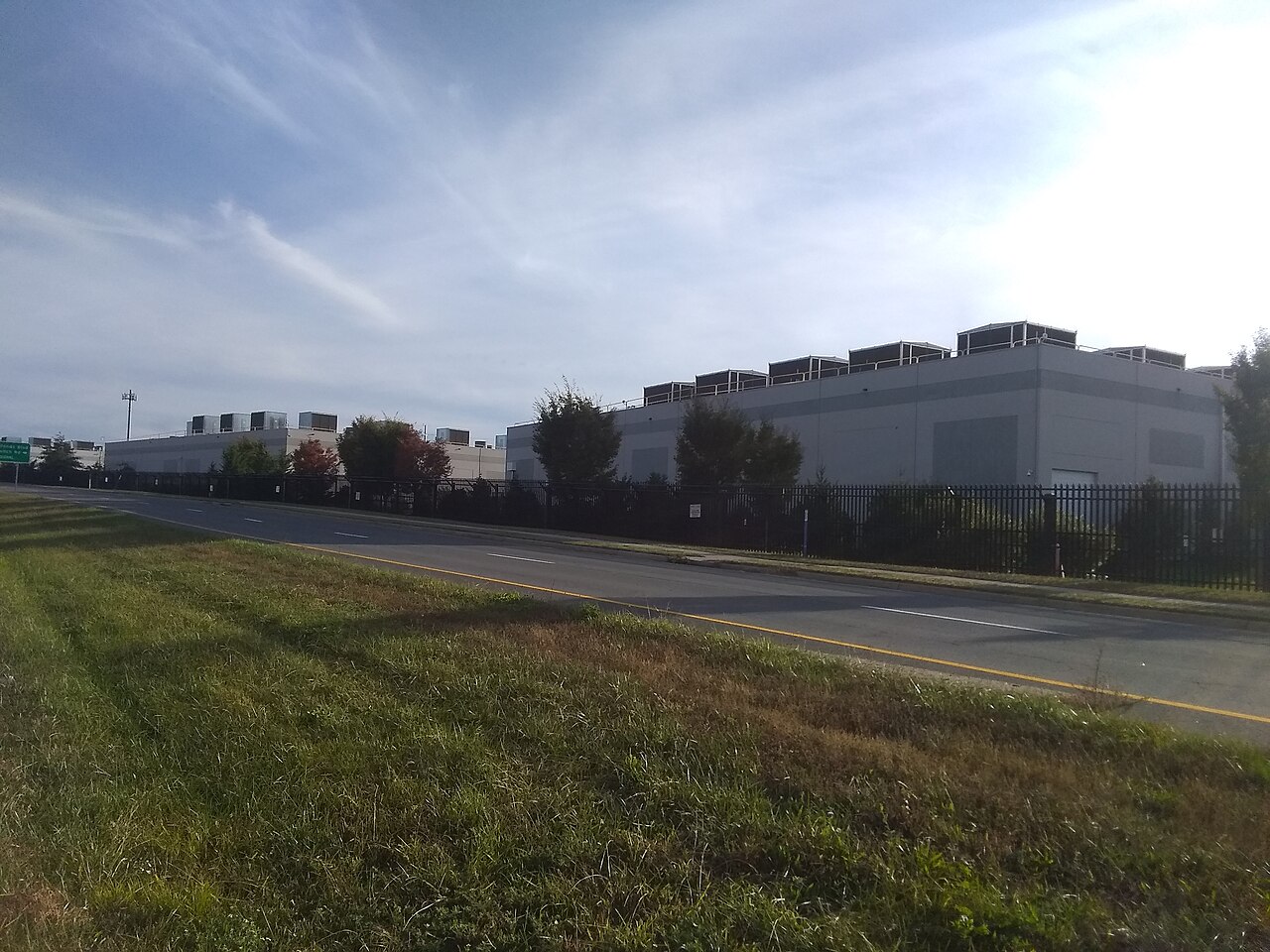
Header image: Andy Jassy, President and CEO of Amazon, via Wikimedia Commons, licensed under CC BY-SA 4.0. In-body photograph: AWS data center buildings in Ashburn, Virginia, photographed by Vahurzpu in 2020, via Wikimedia Commons, licensed under CC BY-SA 4.0. No photograph exists of Amazon's Q2 2026 earnings call itself or of the specific capacity this quarter's capex will fund, so both images depict Amazon's leadership and existing AWS infrastructure rather than the event.