On August 20, 2026, Alibaba launched Qwen-UI-Agent, a model built specifically to operate graphical interfaces the way a person does: reading what is on a phone or computer screen, deciding what to tap or click, and carrying multi-step tasks to completion across apps, browsers and desktops. In its technical report, Alibaba says the model reaches state-of-the-art results across a broad set of GUI benchmarks, outscoring flagship general-purpose models including OpenAI's GPT-5.6 Sol, Anthropic's Claude Opus 4.8, Google's Gemini 3.5 Flash and ByteDance's Seed 2.1 Pro on the tasks it was measured against. It is one of the more concrete data points yet in the shift from chatbots that talk to agents that act.
 Qwen
Qwen OpenAI
 Anthropic
 Google
The claims are vendor-reported, which is the right lens to read them through. But the direction of travel is what makes this notable: a specialized, interface-operating model beating larger generalists on their own emerging turf.
What a GUI Agent Actually Is
Most of the AI systems people interact with today work through text or through purpose-built tool integrations: an API the model is explicitly taught to call. A GUI agent takes a different route. It looks at the pixels of a screen, or a structured representation of them, identifies the interactive elements (a button, a text field, a menu item), and issues the same kinds of actions a human would: tap, type, scroll, click. The appeal is generality. If a model can operate any interface a person can see, it does not need a dedicated integration for every app; it can, in principle, use whatever software is in front of it.
One model, four surfaces
Qwen-UI-Agent is reported to act across each of these environments, all resting on the same underlying skill.
Operating phone apps by reading the on-screen interface
Desktop applications and OS-level interactions
Navigating and acting inside web pages
Multi-step information gathering across sources
The shared foundation: locating and interpreting individual on-screen elements so an action lands where it should.
That generality is also what makes the problem hard. The capability underneath all of it is what researchers call GUI grounding: correctly mapping an intention ("submit the form") to the exact on-screen element that performs it. Small errors compound. An agent that grounds a single tap incorrectly does not just fail one step; it can end up in an unexpected state from which the rest of the task derails. This is why interface-operation benchmarks are demanding, and why a model built specifically for the task can outperform a larger generalist that treats screen operation as one capability among hundreds.
Reading the Benchmark Numbers Carefully
Alibaba reports 82.1% task success on MobileWorld, a mobile GUI benchmark, and describes that as 12.0 percentage points above GPT-5.6 Sol and 14.6 points above Claude Opus 4.8. On a separate real-device benchmark it calls MobileWorld-Real, spanning more than 400 tasks across over 100 apps, it reports a 92.2% success rate. The company positions the model as state-of-the-art across mobile use, computer use, browser use, its DeepSearch mode, and GUI grounding.
Qwen-UI-Agent on the MobileWorld benchmark
Task-success rate (%) as reported by Alibaba. Competitor bars are implied from the reported gaps of 12.0 and 14.6 percentage points, not separately published scores.
Vendor-reported figures. As with any first-party benchmark, independent replication is the standard that matters.
Two cautions belong on these figures. First, they are first-party results. That is normal for a launch, and it is not a reason to dismiss them, but the standard that matters is independent replication on shared, held-out tasks. Vendor benchmarks are a claim, not a verdict. Second, the competitor comparisons in the chart above are implied from the reported gaps rather than independently published point scores, because the report frames the results as margins over the baselines rather than a like-for-like leaderboard. The headline worth keeping is directional: a specialized model reports a clear lead over general-purpose flagships on interface operation, and the size of the claimed margin is large enough to be interesting even after discounting for first-party optimism.
A benchmark score is a claim about a controlled setting. Reliability in the wild, across apps that update and screens that vary, is a different and harder test.
On reading agent benchmarks
Why Specialized Beats Generalist Here (For Now)
There is a recurring pattern in AI where a focused model trained hard on one capability outperforms a larger model that has to be good at everything. Interface operation rewards that focus. It depends on precise visual grounding, on understanding how interface states transition when you act on them, and on recovering gracefully when a screen does not look the way the model expected. A model whose training is concentrated on those skills, with data drawn from real devices and real apps, can build competence that a generalist, spread across coding, math, writing and conversation, has less room to develop.
Whether that advantage holds is an open question. The history of the field suggests specialized leads are often temporary: a capability that a focused model pioneers frequently gets absorbed into the next generation of generalist models, which then match or exceed it while retaining their breadth. Computer use may follow that arc, or interface operation may prove different enough that dedicated agents remain the better tool. It is too early to know, and the honest position is that both outcomes are still open.
The Part Benchmarks Do Not Measure
The gap between a benchmark score and a dependable product is where computer-use agents live or die. A controlled benchmark holds many things constant. The real world does not: apps update their layouts, screens differ across devices and settings, network delays change timing, and permission prompts and login walls interrupt flows. An agent that succeeds 92% of the time on a fixed benchmark may behave very differently against an app that shipped a redesign last week.
There is also the question of consequences. Reading a screen is low-stakes; acting on it is not. An agent that can tap "confirm" can also tap "confirm" on the wrong transaction. As these systems move from benchmarks toward doing real work, the engineering that matters shifts from raw success rate toward guardrails: confirmation steps for irreversible actions, clear boundaries on what an agent is permitted to touch, and the ability for a person to see what it did and undo it. Those are product and safety problems as much as model problems, and they are not captured by any single accuracy number.
What This Signals for the Agent Landscape
Qwen-UI-Agent is one entry in a fast-moving field. Multiple labs are pursuing computer use, because an agent that can operate arbitrary software is a more general kind of assistant than one limited to pre-wired integrations. Alibaba shipping a competitive, specialized model in this category, and reporting leads over the biggest Western flagships, is a marker of how quickly the capability is maturing and how globally distributed the effort has become.
For teams thinking about where to place bets, the practical implication is that no single model is likely to dominate every task. Interface operation, coding, reasoning and conversation are increasingly served best by different models, and the leaders in each category change month to month. That is the case for staying model-agnostic. A platform like Metir AI, which routes across models from multiple providers rather than committing to one, lets teams use whichever model is currently strongest for a given job without rebuilding when the leaderboard shifts again, as it reliably does.
Sources:
- Qwen-UI-Agent Technical Report | Tongyi MAI
- Alibaba Launches Qwen-UI-Agent, Surpassing GPT-5.6 and Claude 4.8 | Digital Phablet
- AI Agents News, Week of August 22, 2026 | AI Agent Store
- Qwen-UI-Agent Technical Report | arXiv
Image credits
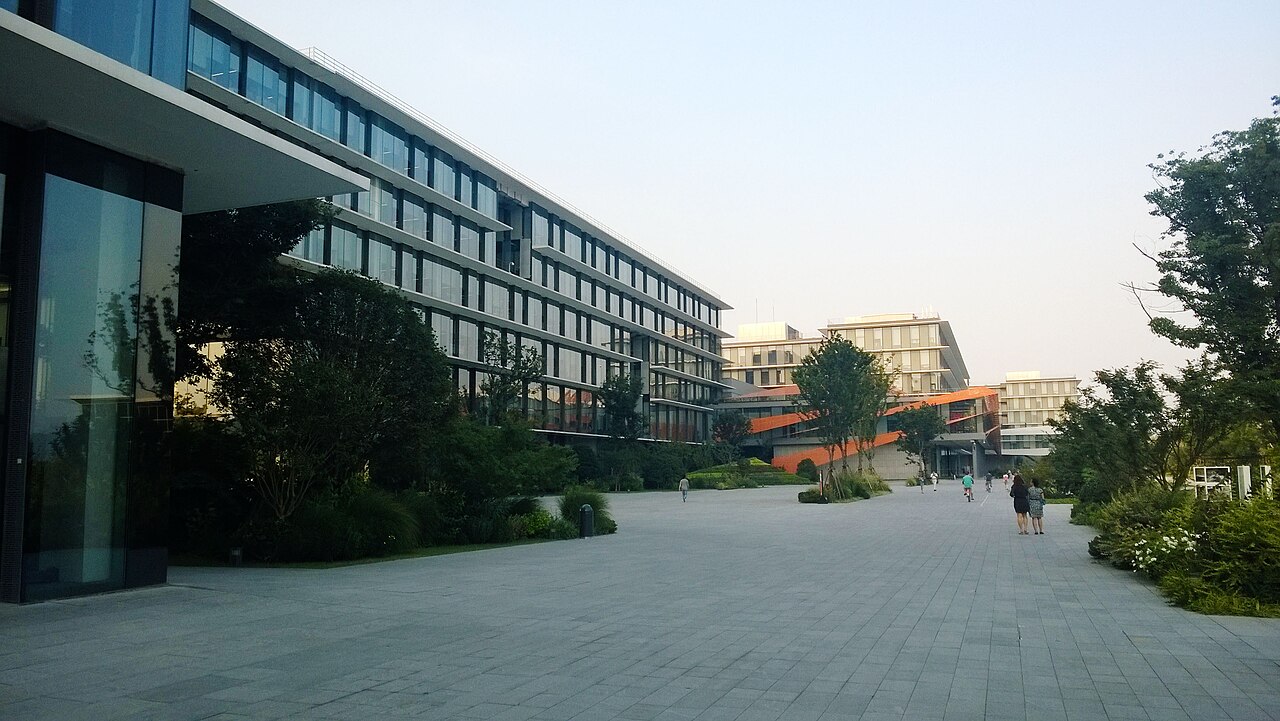
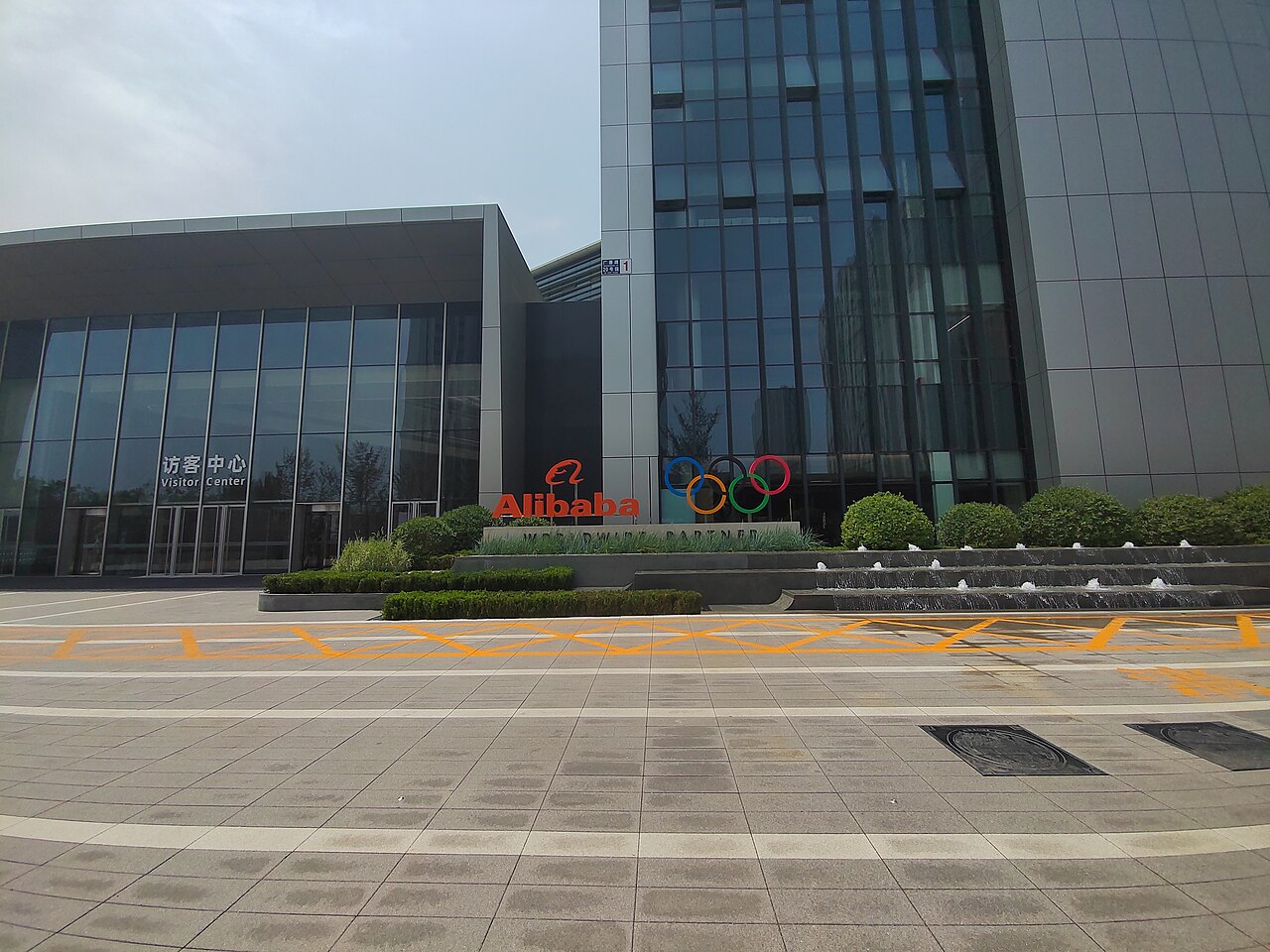
Header image: Alibaba's Xixi Park (TaobaoCity) campus in Hangzhou, China, by Danielinblue via Wikimedia Commons, licensed under CC BY-SA 4.0. In-body photograph of an Alibaba campus entrance and visitor center by HoweyYuan via Wikimedia Commons, licensed under CC BY-SA 4.0.