On July 19, 2026, Alibaba's Qwen team announced Qwen 3.8 Max, a 2.4 trillion parameter model it describes as one of the most capable systems available today, second only to Claude Fable 5 among the models it tested against. The announcement lands three days after Moonshot AI's Kimi K3, and together the two releases push the open-weight frontier firmly into the multi-trillion-parameter class. The headline number is real and the ambition is genuine. The benchmark claim, though, rests on a narrower foundation than the phrasing suggests, and the most important technical detail has not been disclosed. This piece separates what is confirmed from what is asserted.
 Qwen
Qwen Moonshot AI
 Anthropic
What was actually released
Qwen 3.8 Max is the preview variant of Alibaba's upcoming Qwen3.8 flagship, a 2.4 trillion parameter multimodal model. It went live on Alibaba's Token Plan and is wired into the company's coding-focused Qoder and QoderWork platforms, with open weights promised to follow rather than shipping on day one. That sequencing, a hosted preview now and downloadable weights later, mirrors how Moonshot staged Kimi K3, where the model went live on July 16 with full weights due July 27.
The scale is the clearest fact. At 2.4 trillion parameters, Qwen 3.8 sits just below Kimi K3's 2.8 trillion and well above earlier open releases such as Thinking Machines' 975 billion parameter Inkling. Going from Qwen's previous generation to this figure within months places Alibaba in the same bracket as the largest open models ever released.
The open-weight class scaled into the trillions in 2026
Total parameter count of notable 2026 open-weight releases, in trillions. Qwen 3.8 Max lands just below Kimi K3 at the top of the open field.
Total parameters, not active-per-token. Alibaba has not disclosed Qwen 3.8's active-parameter count, a key driver of real serving cost for sparse mixture-of-experts models.
The benchmark claim needs a careful reading
The line drawing attention is that Qwen 3.8 is "second only to Fable 5." It is worth being precise about what that does and does not mean. The claim comes from Alibaba's own internal evaluations, against a set of models Alibaba chose. No independent third-party benchmarks for Qwen 3.8 had been published at announcement, which is the norm for a same-day launch but also the reason to hold the ranking loosely.
Launch charts reliably flatter the lab that publishes them, because the publishing lab picks the tests, the comparison set, and the settings. That is not unique to Alibaba. It applied equally to Moonshot's self-reported Kimi K3 figures and to every frontier launch this year. The useful reference is always independent evaluation, and for Qwen 3.8 that data did not yet exist. Until an independent composite such as the Artificial Analysis Intelligence Index scores it, "second only to Fable 5" is best read as a statement of ambition backed by internal numbers, not a settled placement.
A same-day benchmark claim is a hypothesis the lab is confident in, not a result the field has checked.
The number Alibaba did not give
For a sparse mixture-of-experts model, the total parameter count sets the ceiling on what the model can hold, but it is the active parameters per token that determine how much compute each query costs. Modern large models fire only a small fraction of their experts on any given token, which is what makes a multi-trillion-parameter model practical to serve at all. Kimi K3, for comparison, activates roughly 16 of its 896 experts per token.
Alibaba did not disclose how many of Qwen 3.8's 2.4 trillion parameters are active at inference. That omission matters more than it might appear. Two models with the same total size can differ by an order of magnitude in serving cost depending on their active share, and cost is often what decides whether a model is usable in production rather than impressive in a demo. Without the active figure, and without published token throughput or latency, the practical economics of running Qwen 3.8 remain an open question even as the capability claim grabs attention.
Where this fits in the 2026 open-weight race
Two announcements in one week, both in the multi-trillion-parameter class, both from Chinese labs, is not a coincidence so much as a pattern reaching its logical stage. Through 2026 the open-weight field has steadily closed on the closed frontier, and the contest has shifted from whether an open model can be competitive to which open model leads and on what terms. Kimi K3 made the capability argument and then broke with tradition by pricing like a Western mid-tier model rather than a bargain. Qwen 3.8 answers with more scale and a direct comparison to the strongest closed model.
What is confirmed is the direction of travel. The strongest downloadable models are now within touching distance of the strongest closed ones on the tests each lab chooses to run, and the number of credible options a builder can choose from keeps growing. What is not yet confirmed is exactly where Qwen 3.8 lands once independent evaluators, real serving costs, and long-horizon agentic tests are in, which is where the "second only to Fable" claim will actually be settled.
What it means for people building on models
For a team deciding what to build on, Qwen 3.8 widens an already wide menu rather than settling it. It adds another large, open, coding-oriented option from a major lab, on top of Kimi K3, the closed US frontier, and a growing set of cheaper open models. The right response to a launch like this is not to switch to the newest headline, and it is not to ignore it, but to be able to test it cheaply against whatever is already in production.
That is easier when a stack is not wired to a single provider. The recurring lesson of a year like this one, with a new frontier-class model arriving almost weekly, is that the durable advantage goes to whoever can route each job to whatever fits it and swap models as the evidence changes, rather than rebuilding every quarter. A model-agnostic workspace such as Metir AI, which already exposes open models like Qwen alongside the closed frontier, is one way to hold that flexibility, so trying Qwen 3.8 on a coding task once independent numbers exist becomes a routing choice rather than a migration.
The bigger picture
Qwen 3.8 Max is a genuine milestone on scale: a 2.4 trillion parameter open-weight model from one of the world's largest AI labs, arriving in the same week as an even larger one. It is also a useful case study in reading AI launches well. The parameter count is a fact, the open-weight commitment is a commitment worth watching, and the "second only to Fable 5" ranking is a confident internal claim that independent testing has not yet checked. Holding those three apart, rather than collapsing them into a single headline, is the difference between following the open-weight race and being carried along by it.
Sources:
- Alibaba Announces 2.4 Trillion-Parameter Open-Weight Qwen 3.8, Says It's Second Only To Fable 5 | OfficeChai
- Alibaba Launches Qwen 3.8 With 2.4 Trillion Parameters, Claims Near-Frontier Performance | MLQ News
- Alibaba's Qwen takes on Kimi K3 with open-weight Qwen 3.8, says model is "second only to Fable 5" | The Decoder
- Qwen3.8-Max-Preview: Alibaba's New AI Model Explained | Progressive Robot
- China's Moonshot AI releases Kimi K3, the largest open-source model ever | VentureBeat
Image credits
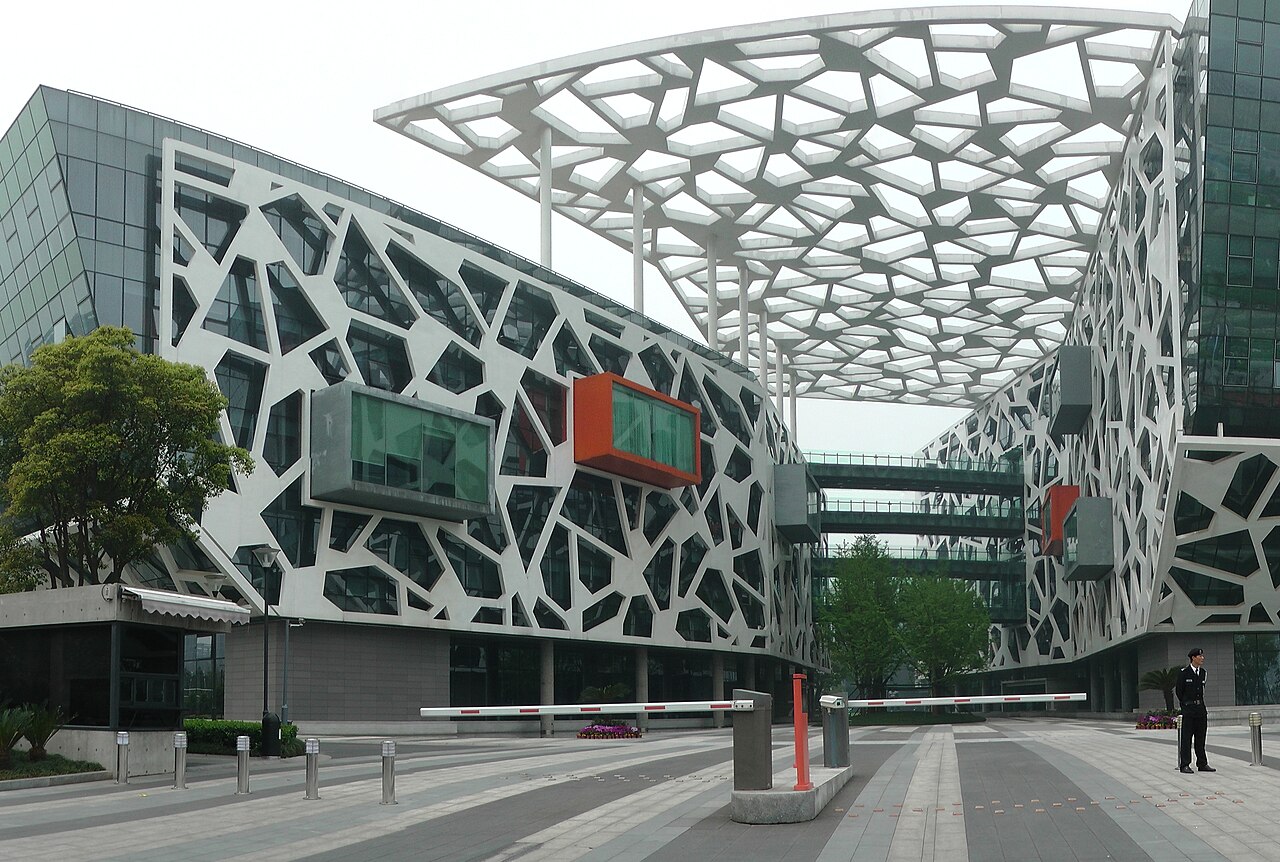
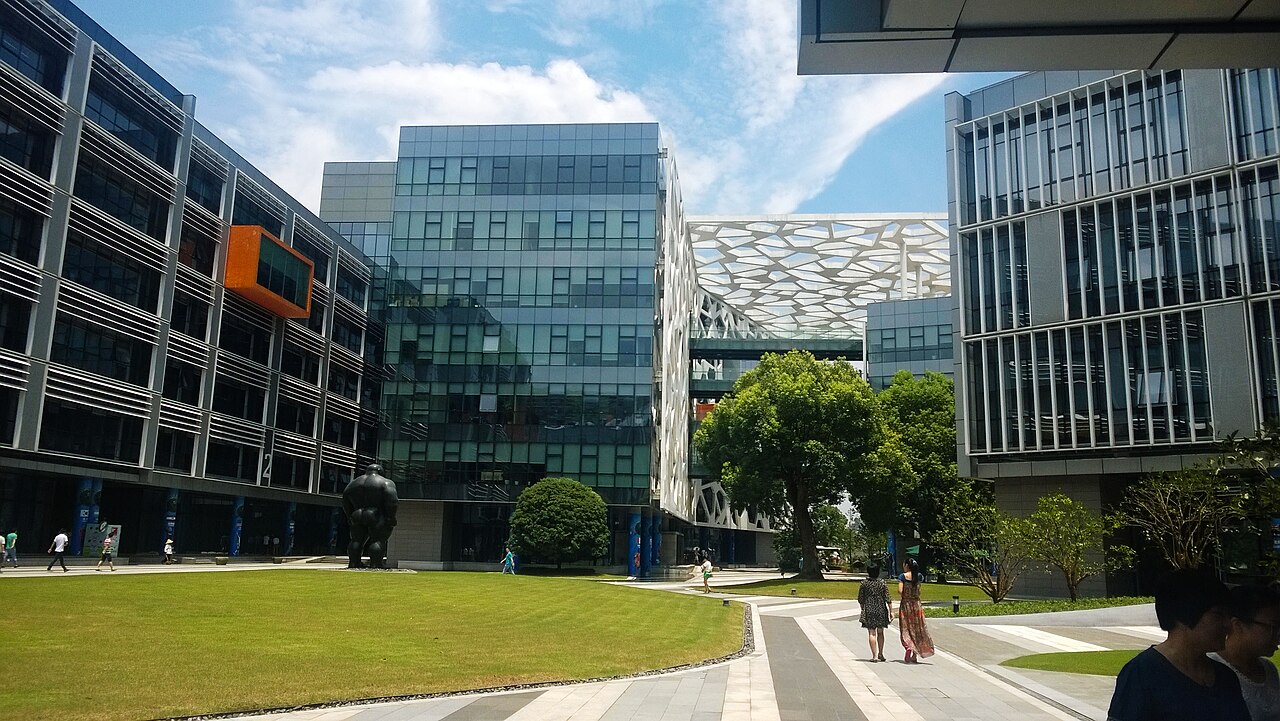
Header image: Alibaba Group headquarters, Hangzhou, by Thomas LOMBARD via Wikimedia Commons, licensed under CC BY-SA 3.0. In-body photograph of the Alibaba Group headquarters campus in Hangzhou by Danielinblue via Wikimedia Commons, licensed under CC BY-SA 4.0.