Alibaba said on August 23, 2026 that it plans to raise HK$80 billion, roughly US$10.2 billion, by placing 710 million new shares with investors in Hong Kong. The company priced the shares at HK$112.70 each, a 3.6% discount to the prior close, and said every dollar of net proceeds would go toward its "full stack" of artificial intelligence capabilities: semiconductors, computing infrastructure, and the development and deployment of AI models. It is the largest primary follow-on share sale ever completed by a Hong Kong-listed company, and, according to Reuters, the third-largest primary follow-on anywhere in the world this year, behind offerings from Alphabet and Intel.
 Qwen
Qwen NVIDIA
 Google
The raise is not a surprise in isolation. It is the financing leg of a capital-spending plan Alibaba has been executing all year, and it arrived days after quarterly results that showed exactly why the company needs the cash.
What Alibaba Actually Announced
The mechanics are straightforward. A primary follow-on offering means Alibaba is issuing brand-new shares rather than existing holders selling their stakes, so the proceeds flow to the company itself rather than to selling shareholders. The 3.6% discount to the last traded price is the incentive institutional buyers receive for absorbing a large block of stock at once, and it is a narrow discount by the standards of deals this size, which signals healthy demand. The placement was structured as an offshore transaction not registered under US securities laws, which is why US investors were not eligible to participate.
A record Hong Kong placement, by the numbers
Terms of Alibaba's August 23, 2026 share sale, and how it ranks among this year's largest primary follow-on offerings worldwide.
Largest primary follow-on offerings of 2026
Largest 2026 primary follow-on
Second-largest 2026 primary follow-on
HK$80B, and the largest-ever by a Hong Kong-listed company
Rank order as reported; the Alphabet and Intel deal sizes were not disclosed alongside Alibaba's and are shown by position only.
The detail that matters most is the stated use of proceeds. Alibaba did not frame this as a general corporate raise or a balance-sheet cushion. It named three specific destinations, and together they describe a vertically integrated AI strategy: custom silicon at the bottom, the data centers and networking that turn that silicon into usable compute in the middle, and the models and applications that run on top. That "full stack" language is deliberate, and it is the through-line connecting this raise to everything else Alibaba has said about AI this year.
Why Now: The Capex Bill Came Due
In February 2026, Alibaba committed to spending 380 billion yuan, about US$56.4 billion, on AI and cloud infrastructure across fiscal 2026 through 2029. By the end of the June 2026 quarter, it had already deployed roughly half of that, around 190 billion yuan, and management has since signaled that the final total is likely to overshoot the original target as data-center construction costs climb.
Halfway through a 380 billion yuan AI build
Alibaba's three-year AI and cloud capital-spending plan (fiscal 2026-2029) and how much it had spent by the end of the June 2026 quarter.
Full plan is about US$56.4 billion. Management has said the total is likely to overshoot as data-centre buildout costs rise.
That spending is producing visible results on the revenue line. Alibaba's cloud and AI business grew 45% year over year in the June quarter, its fastest expansion in 22 quarters. But the same quarter also showed the cost of that growth: net profit fell sharply as the company front-loaded infrastructure spending, and reporting described 2026 free cash flow turning negative under the weight of the buildout. When a company is spending tens of billions faster than the underlying business throws off cash, it has three options: slow the spending, take on debt, or raise equity. Alibaba chose the third, and the timing of the raise, immediately after a results announcement that spotlighted the capex-versus-cash-flow squeeze, is not a coincidence.
A full-stack AI strategy is expensive precisely because it refuses to outsource any layer of the stack to someone else's balance sheet.
Analysis based on Alibaba's fiscal 2026-2029 capex disclosures
The Financing Choice Says Something About the Strategy
There is a broader pattern worth naming here. Across the industry, the largest AI buildouts are increasingly financed through creative, off-balance-sheet structures: special-purpose vehicles, vendor credit lines, long-dated leases, and circular arrangements where a chip supplier helps finance the data center that will buy its chips. Alibaba's decision to raise plain equity in a public placement is, by comparison, an unusually direct way to pay for compute. It dilutes existing shareholders, but it does not add leverage or bury future obligations in a lease footnote.
That choice is easier for Alibaba to make than for most. As one of the few Chinese technology companies with deep access to Hong Kong's capital markets, a large retail and institutional shareholder base, and a balance sheet that reporting still describes as net-cash even after the raise, Alibaba can absorb a $10 billion equity issuance without stressing its credit. Many of the Western labs pursuing similar buildouts cannot, which is part of why their financing looks so much more complex. The financing structure is downstream of who has the balance sheet to use it.
The Regional and Competitive Context
The raise also has to be read against the constraints Alibaba operates under. Chinese firms have limited access to the most advanced foreign AI chips under US export controls, which raises the strategic value of controlling the full stack, including domestic silicon. Spending on "semiconductors" in the use-of-proceeds language is not a generic line item for a company that cannot freely buy the latest accelerators on the open market; it is a hedge against supply that can be cut off. That is a different calculus from the one facing US hyperscalers, whose chip access is constrained mainly by how fast suppliers can build, not by policy.
At the same time, Alibaba is competing at home against Baidu, Tencent, ByteDance and a fast-moving field of Chinese model labs, several of which have shipped competitive open-weight models this year. Cloud market share in China is won partly on the breadth and price of the AI services a provider can offer, and those services rest directly on the infrastructure this raise is meant to fund. The 45% cloud growth figure is both evidence that the strategy is working and a reason the company cannot afford to slow down.
What to Watch Next
Three questions will determine whether the raise looks prescient or premature a year from now. The first is utilization: newly built AI data centers only justify their cost if they run near capacity on paying workloads, and Alibaba's cloud growth rate is the cleanest signal of whether demand is keeping pace with supply. The second is the overshoot: if management is already telling investors the 380 billion yuan target will be exceeded, the question is by how much, and whether this $10 billion raise is the last equity call or the first of several. The third is margins, since the company has told investors it expects AI-related capex to break even within about three years at current gross margins, a claim that only holds if pricing power in cloud and AI services does not erode as competition intensifies.
For teams building on top of any of this, the durable lesson is less about Alibaba's balance sheet and more about how quickly the economics underneath every model provider are shifting. The cost of serving intelligence is being reshaped by who controls which layer of the stack, and those relationships change quarter to quarter. A model-agnostic approach, like the one Metir AI takes in routing across providers rather than committing to a single vendor's roadmap and cost structure, is one way to stay flexible while the companies underneath keep rebuilding their foundations at a cost of tens of billions a year.
Sources:
- Alibaba plans record $10.2 billion Hong Kong share sale to fund AI | Reuters via Investing.com
- Alibaba to issue HK$80 billion in new shares for global AI push | South China Morning Post
- Alibaba profit falls 75% after ramping up AI infrastructure spending | Reuters via Yahoo Finance
- Alibaba signals faster AI payoff, margin gains halfway through US$56 billion capex plan | South China Morning Post
- Alibaba Raises $10.2 Billion in Hong Kong's Largest Share Sale to Fund AI Race | Eastern Herald
Image credits
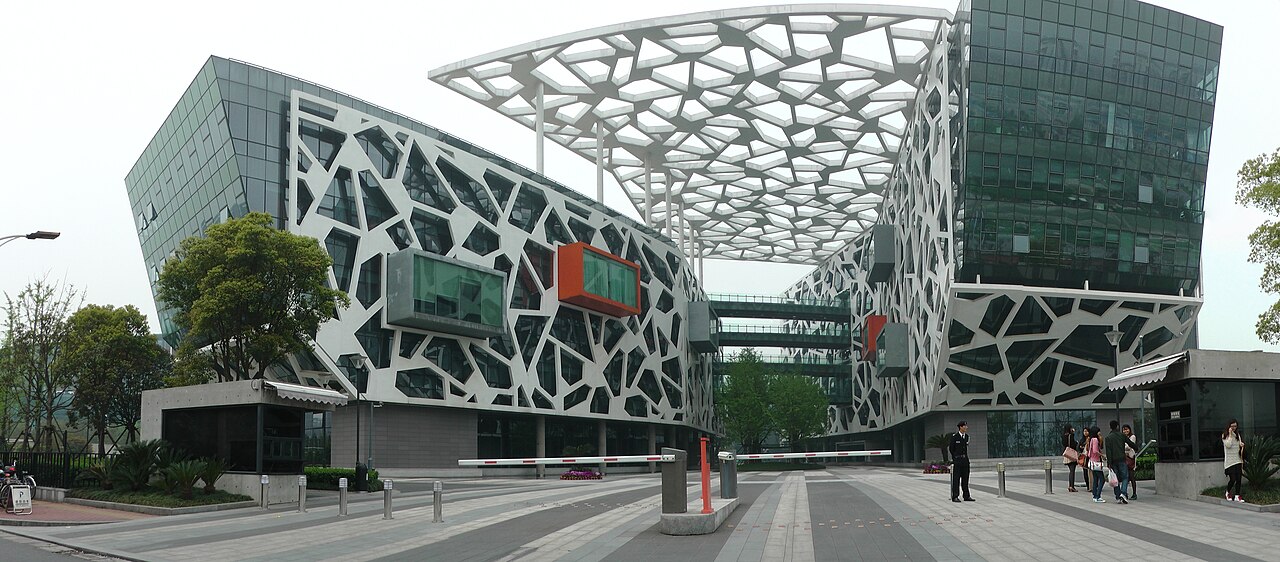
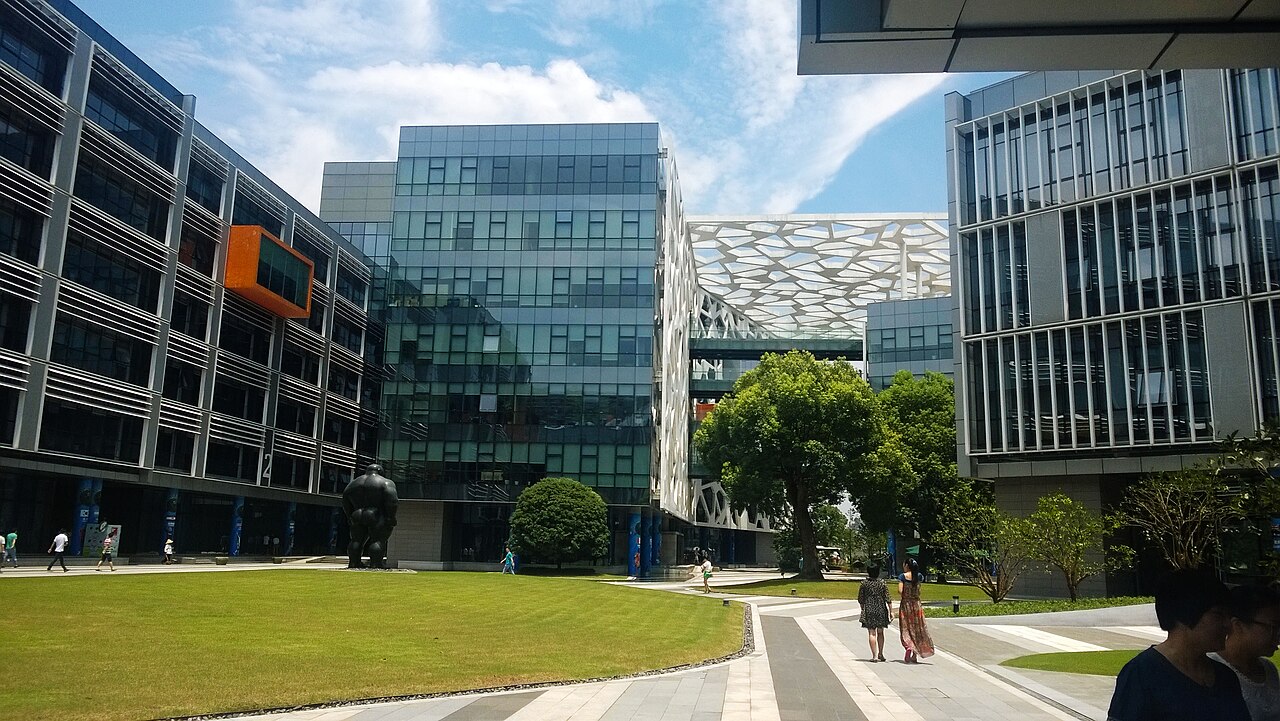
Header image: Alibaba Group headquarters in Hangzhou, China, by Thomas LOMBARD (building designed by HASSELL) via Wikimedia Commons, licensed under CC BY-SA 3.0. In-body photograph of Alibaba's Binjiang Park campus in Hangzhou by Danielinblue (designed by HASSELL) via Wikimedia Commons, licensed under CC BY-SA 4.0.