Global venture funding just had its biggest half-year on record, and the data makes clear that record was built almost entirely on the back of two companies. According to Crunchbase figures reported in early July 2026, startups worldwide raised $510 billion in the first half of 2026, more than the $440 billion invested across all of 2025. Of that record total, OpenAI and Anthropic alone accounted for $217 billion, or 43% of every dollar raised globally.
That single statistic reframes what "record year for venture capital" actually means in 2026. It is not a broad-based boom lifting startups across sectors. It is, in large part, two companies absorbing capital at a scale with few historical precedents, inside a market where AI now takes more than 70% of every dollar invested in a given quarter. This piece looks at what that concentration means, for the companies at the center of it and for the much longer tail of startups competing for what is left.
The headline number, and the number inside it
$510 billion in six months is a striking figure on its own. It surpasses the entirety of 2025's $440 billion in roughly half the time, which is the kind of statistic that normally signals a broad, healthy expansion of the venture market. But the composition tells a different story. More than 70% of global startup capital in the second quarter of 2026 went to AI-focused companies, up from just under 50% a year earlier. And within that AI share, a huge portion went to just two labs.
 OpenAI
 Anthropic
Anthropic raised $65 billion in the second quarter alone, a round large enough to make it, on Crunchbase's Unicorn Board, the most valuable private company anywhere. Rounds of that size did not exist in the venture market a few years ago. They now anchor it.
Two companies, 43% of every venture dollar
Share of the record $510 billion in global startup funding raised in H1 2026, by recipient.
OpenAI and Anthropic together raised $217 billion in H1 2026, 43% of all global startup funding, out of a record $510 billion total. Source: Crunchbase.
What extreme concentration does to the rest of the market
When two companies take 43% of all venture dollars, the natural question is what happens to everyone else. There are two honest readings, and neither one is obviously wrong.
The crowding-out reading holds that capital is finite in any given period, and every dollar committed to a mega-round is a dollar that a limited partner, a growth fund, or a strategic investor did not deploy into a smaller company. Under this view, the "long tail" of startups faces a market that looks flush in aggregate but feels tight in practice: later-stage AI labs absorb the largest checks, index-fund-style capital chases the same handful of proven winners, and earlier-stage or non-AI companies compete for a shrinking residual pool even as headline funding numbers hit records.
The rising-tide reading holds the opposite: that a market can expand in absolute terms for everyone even while its share concentrates at the top. Record numbers of billion-dollar-plus acquisitions, 24 of them in Q2 2026 alone, totaling $113 billion, the highest quarter on record, suggest an ecosystem with real exit liquidity flowing back to founders and early investors, who often recycle that capital into new startups. Under this view, mega-rounds for OpenAI and Anthropic do not subtract from the rest of the market so much as validate the category and draw in more total capital that eventually filters down.
When two companies take 43% of all venture dollars, the honest question is not whether the market grew. It is who the growth actually reached.
Metir AI Team
The truthful position sits between the two. Both dynamics can be operating on different companies at the same time: exit liquidity genuinely benefiting some parts of the ecosystem while capital scarcity genuinely constrains others, particularly startups outside AI or without a clear tie to the infrastructure buildout.
Why the mega-rounds keep getting bigger
Part of what explains rounds at the scale of Anthropic's $65 billion raise is that frontier AI labs are not simply software companies raising growth capital. They are also, functionally, buyers of enormous quantities of compute. Training and serving frontier models requires long-term commitments to GPU capacity, data center buildout, and power, costs that scale with model size and usage in a way traditional software companies never had to fund. Venture capital, sovereign wealth funds, and strategic investors writing checks into OpenAI and Anthropic are, in effect, also financing the infrastructure layer beneath them.
That dynamic helps explain why more than 70% of Q2 2026 startup capital flowed to AI companies. It is not only that investors believe in the products; it is that the capital intensity of building and running frontier models is an order of magnitude larger than prior software cycles, so each dollar has to be bigger to keep pace. This is a related, though distinct, phenomenon from the vendor-financed "neocloud" buildout on the infrastructure side of the AI stack, where compute providers and chipmakers are similarly reshaping how capital moves through the industry.
The bull case and the bear case
Presented evenly, the bull case for this level of concentration rests on demand that is visibly real: enterprise and consumer adoption of frontier models has scaled fast enough to generate substantial, growing revenue at both OpenAI and Anthropic, and record exit activity, 24 billion-dollar-plus acquisitions in a single quarter, indicates genuine liquidity rather than paper valuations alone. Investors backing the largest rounds are underwriting companies with demonstrated usage, not speculative pre-revenue bets.
The bear case is concentration risk in its plainest form. When 43% of an entire asset class's annual flow depends on two companies' continued ability to raise, deploy, and monetize capital at unprecedented scale, the market's health becomes unusually sensitive to those two companies specifically. A slowdown in either lab's growth, a shift in model economics, or increased competition from open alternatives would ripple through venture statistics in a way that a more distributed market would not experience. Capital intensity cuts both ways: it is a barrier that protects incumbents, but it also means each successive round must be larger just to maintain pace, a treadmill that eventually tests investor appetite.
What this means for builders
For companies building products on top of frontier models rather than raising venture rounds themselves, the practical takeaway is less about predicting the next funding cycle and more about not making an implicit bet on which lab wins the concentration race. With OpenAI and Anthropic each commanding the resources to keep shipping frontier-class models, and open alternatives from other labs continuing to close the gap, tying a product's roadmap to a single provider means inheriting that provider's pricing, availability, and competitive position as your own. A model-agnostic approach, building so that the underlying model is a swappable input rather than a permanent architectural decision, is one way builders hedge against exactly this concentration. Platforms like Metir AI take that approach at the application layer, letting teams draw on whichever frontier model is performing best at a given moment rather than committing to one lab's roadmap.
The takeaway
H1 2026 produced the largest half-year of venture funding on record, and also one of the most concentrated. $510 billion moved through the global startup market, $217 billion of it into two companies, and more than 70% of quarterly capital into AI broadly. Whether that concentration reflects a market correctly identifying its biggest winners early, or a market narrowing in ways that will eventually need to broaden back out, is not yet resolved by the data. Record exit activity suggests the ecosystem is not simply inflating on paper. But a venture market where two companies define nearly half the total is, almost by definition, a different market than the one that existed even twelve months earlier.
Sources:
- Global Startup Exits, IPOs & M&A Soar Amid AI Boom in Q2 & H1 2026 | Crunchbase News
- OpenAI and Anthropic Take 43% of H1 2026 Venture Funding | AI Weekly
- Global Venture Funding Hits Record $510B in First Half as AI Boom Accelerates | SiliconANGLE
- Global Startup Funding Hits Record $510B in First Half of 2026, Crunchbase Data Shows | MLQ.ai
Image credits
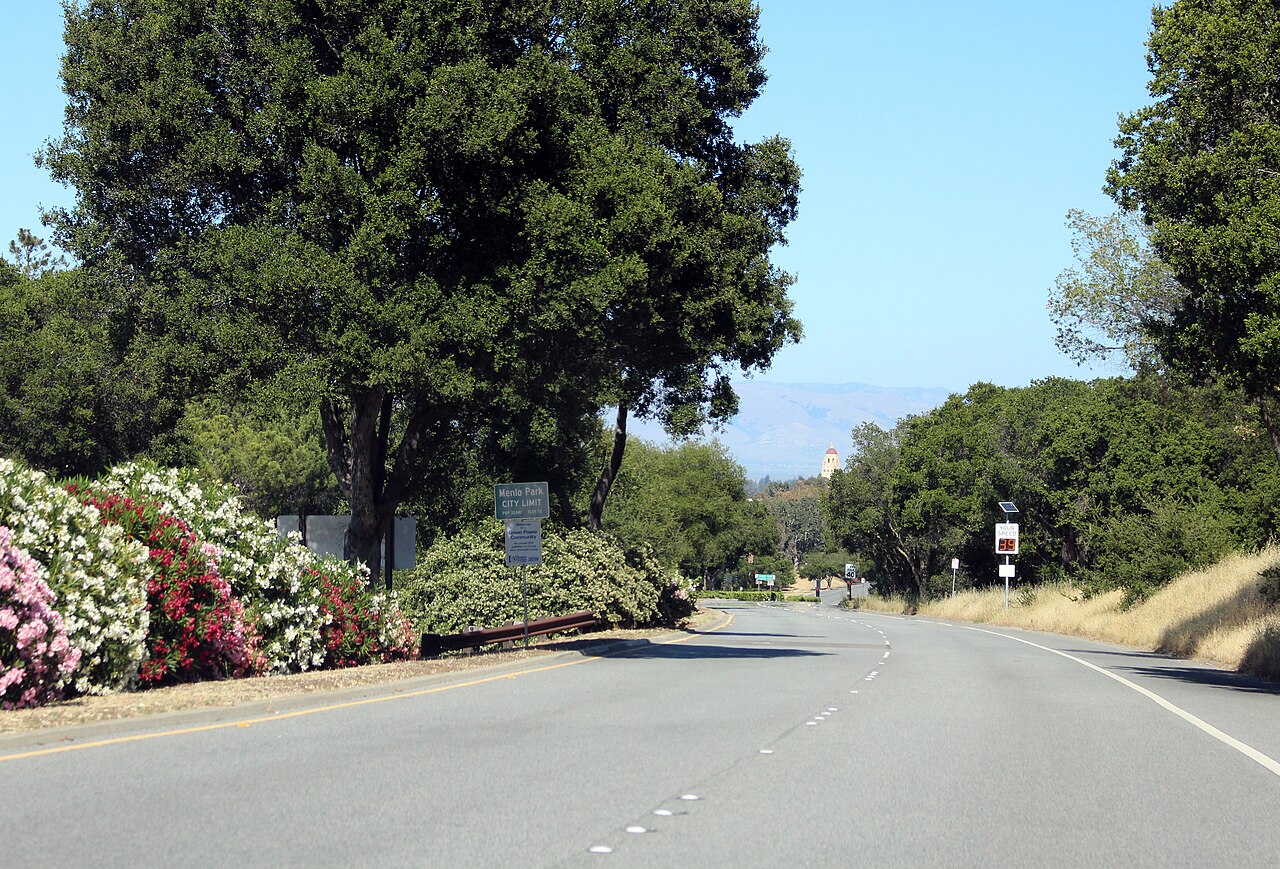
Header image: eastbound view down Sand Hill Road in Menlo Park, California, the corridor that houses much of the venture industry, by Coolcaesar via Wikimedia Commons, licensed under CC BY-SA 4.0. In-body photograph of 1515 Third Street, San Francisco, by Coolcaesar via Wikimedia Commons, licensed under CC BY 4.0.