When OpenAI launched GPT-3 in June 2020, it cost $0.06 per 1,000 tokens—a price that seemed revolutionary at the time. Fast forward to 2026, and we're witnessing something extraordinary: AI token costs have plummeted by up to 95%, fundamentally transforming who can afford to build with artificial intelligence.
This isn't just about cheaper software. The dramatic decline in AI token costs represents a historic shift in the democratization of intelligence itself. Let's dive into the numbers, compare today's major providers, and explore what this means for the future of AI.
The Historical Price Collapse: From GPT-3 to 2026
The story of AI pricing is one of relentless deflation—a rare phenomenon in the technology industry.
GPT-3 Era (2020-2022): The Expensive Beginning
When GPT-3 launched in 2020, OpenAI positioned its most capable model, Davinci, at $0.06 per 1,000 tokens. For context, 1,000 tokens is roughly 750 words—about one page of text.
This pricing meant generating a 10,000-word document cost approximately $0.80. Not exorbitant, but expensive enough to limit AI to well-funded companies and research institutions.
Then came the first major price cut. In September 2022, OpenAI slashed GPT-3 prices by two-thirds, bringing Davinci down to $0.02 per 1,000 tokens. This move democratized AI access, making consumer applications economically feasible for the first time.
GPT-3.5 and the 2023 Revolution
By November 2022, OpenAI released GPT-3.5 Turbo alongside ChatGPT. The pricing? An astonishing $0.002 per 1,000 tokens for input and $0.002 per 1,000 tokens for output—10 times cheaper than GPT-3.
As reported by industry analysts, this represented a 90% reduction from GPT-3 Davinci in just over two years. AI had suddenly become accessible to individual developers and small startups.
GPT-4 and the Premium Tier Emerges (2023-2024)
When GPT-4 launched in March 2023, OpenAI introduced tiered pricing:
- GPT-4 (8K context): $0.03 input / $0.06 output per 1,000 tokens
- GPT-4 (32K context): $0.06 input / $0.12 output per 1,000 tokens
While more expensive than GPT-3.5, GPT-4's capabilities justified the premium for many use cases. But the story didn't end there.
2024-2025: The Great AI Price War
By mid-2024, intense competition from Anthropic (Claude), Google (Gemini), and xAI (Grok) triggered what analysts now call "The Great AI Price War".
Key milestones:
- February 2024: OpenAI cut GPT-3.5 Turbo prices by 50% for input and 25% for output
- July 2024: OpenAI launched GPT-4o mini at $0.15 per million input tokens—a 60% discount versus GPT-3.5 Turbo
- August 2024: Google slashed Gemini 1.5 Flash prices by 78% for inputs and 71% for outputs
- Late 2024: Anthropic undercut competitors with Claude pricing 95% cheaper than early GPT-4 rates
The result? By early 2026, today's AI models cost a fraction of what GPT-3 did just six years ago.
2026 LLM Pricing Comparison: OpenAI vs Claude vs Gemini vs Grok
Let's compare the current landscape. All prices are per 1 million tokens unless otherwise noted.
OpenAI Token Pricing (2026)
According to OpenAI's official pricing page, here's what you pay today:
| Model | Input (per 1M tokens) | Output (per 1M tokens) |
|---|---|---|
| GPT-5.4 Pro | $30.00 | $180.00 |
| GPT-5.4 Thinking | $2.50 | $15.00 |
| GPT-5.4 Instant | $2.50 | $15.00 |
| GPT-4o mini | $0.15 | $0.60 |
| GPT-3.5 Turbo | $0.50 | $1.50 |
Key Insight: GPT-5.4 Instant—OpenAI's fast everyday model—now costs $2.50 per million input tokens with $15.00 output. That's an 83% reduction from GPT-4's initial $15 per million rate in 2023.
Even more remarkable: GPT-4o mini at $0.15 per million tokens is 400 times cheaper than GPT-3 Davinci was in 2020.
Anthropic Claude Pricing (2026)
Anthropic's Claude models offer compelling alternatives:
| Model | Input (per 1M tokens) | Output (per 1M tokens) |
|---|---|---|
| Claude 4.5 Sonnet | $3.00 | $15.00 |
| Claude 4.5 Opus | $15.00 | $75.00 |
| Claude 3.5 Haiku | $1.00 | $5.00 |
Key Insight: Claude 4.5 Sonnet at $3.00 input matches GPT-4o's performance tier while offering superior long-form writing capabilities. Claude 3.5 Haiku at $1.00 per million provides an ultra-efficient option for high-volume tasks.
Anthropic also offers Prompt Caching (90% discount on repeated content) and Batch API (50% discount), driving real costs even lower.
Google Gemini Pricing (2026)
Google's Gemini lineup is aggressively priced:
| Model | Input (per 1M tokens) | Output (per 1M tokens) |
|---|---|---|
| Gemini 3 Pro | $1.25 | $10.00 |
| Gemini 3 Flash | $0.30 | $2.50 |
| Gemini 3 Flash (Lite) | $0.10 | $0.40 |
| Gemini 3 Flash-8B | $0.0375 | $0.15 |
Key Insight: Gemini 3 Flash (Lite) at $0.10 per million input tokens is one of the cheapest capable models available. Gemini 3 Flash-8B is even more aggressive at $0.0375—cheaper than almost anything on the market.
Google's Batch API offers an additional 50% discount, making Gemini 3 Pro just $0.625 per million tokens for non-urgent workloads.
xAI Grok Pricing (2026)
xAI's Grok models, launched in 2024, compete with unique features:
| Model | Input (per 1M tokens) | Output (per 1M tokens) |
|---|---|---|
| Grok 4 | $3.00 | $15.00 |
| Grok 4.1 Fast | $0.20 | $0.50 |
| Grok 2 | $0.20 | $1.50 |
Key Insight: Grok 4.1 Fast at $0.20 input / $0.50 output offers competitive pricing with a massive 2 million token context window—one of the largest available. Cached inputs cost just $0.05 per million, making repeated queries extremely affordable.
The Real Cost of Intelligence: 2020 vs 2026
Let's put this in perspective with a real-world example.
Scenario: You want to generate a comprehensive 50,000-word research report (approximately 67,000 tokens).
Using GPT-3 Davinci (2020)
- Cost: $4.00 to generate the report
- Capability: Basic language generation, no reasoning
Using GPT-5.4 Instant (2026)
- Cost: $0.67 to generate the report
- Capability: Advanced reasoning, multimodal understanding, superior quality
Result: You get dramatically better AI for 83% less money.
Or consider GPT-4o mini at $0.15 per million tokens:
- Cost: $0.04 to generate the same 50,000-word report
- Savings: 99% cheaper than GPT-3 Davinci in 2020
This is the democratization of intelligence in action.
What's Driving Prices Down?
Several forces are colliding to push AI token costs toward zero:
1. Intense Competition
As OpenAI CEO Sam Altman acknowledged, OpenAI faces a "code red" threat from Google and Anthropic. The result? Aggressive price cuts to maintain market share.
In June 2025, OpenAI slashed its o3 model pricing by 80%, bringing it to $2.00 per million input tokens. This move shocked the industry, forcing competitors to respond with their own reductions.
2. Infrastructure Efficiency
AI inference—the actual process of running models—has become vastly more efficient. Techniques like:
- Quantization: Reducing model precision without sacrificing quality
- Model distillation: Creating smaller, faster models from larger ones
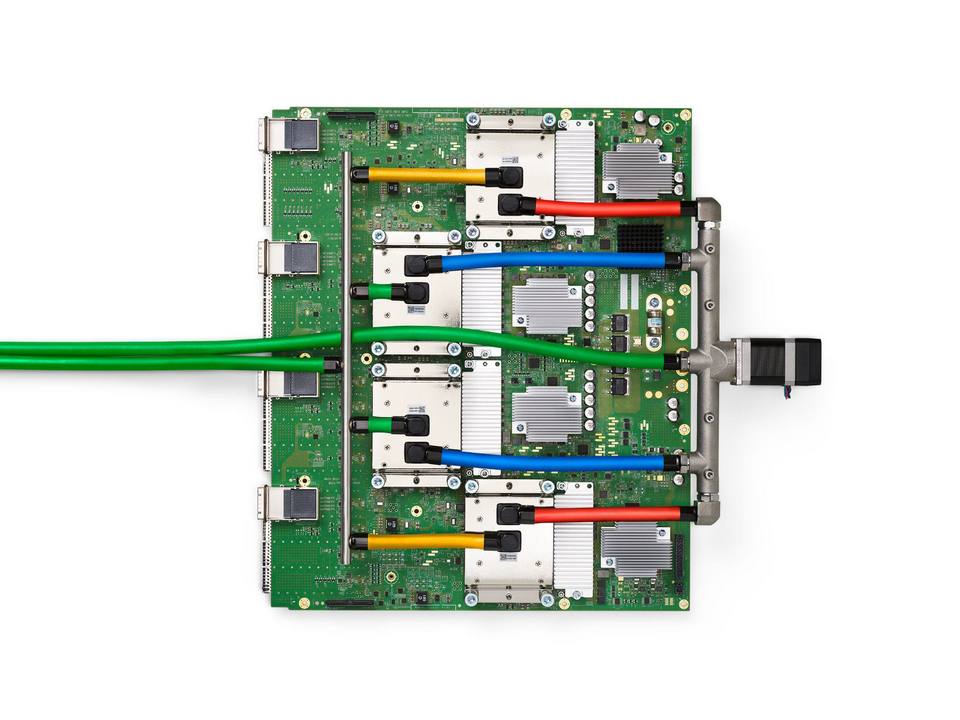
- Hardware optimization: Custom AI chips (Google TPUs, NVIDIA H100s) dramatically reducing compute costs
These innovations mean providers can serve more tokens per dollar of infrastructure investment.
3. Open-Weight Models
The rise of open models like Meta's Llama 3.1 has fundamentally changed the economics. According to industry analysis, open-weight models allow API providers to operate without recouping massive R&D costs, enabling rock-bottom pricing.
4. Scale Economics
As usage scales into trillions of tokens, providers achieve unprecedented economies of scale. Fixed infrastructure costs spread across larger volume means lower per-token costs.
The Democratization of AI: Who Benefits?
The collapse in AI token costs isn't just good for tech companies—it's transforming entire industries.
Startups and Indie Developers
In 2020, building an AI-powered app required significant capital. Today, a solo developer can launch a sophisticated AI product for less than $100/month in inference costs.
As one technology director noted, "This price reduction fundamentally changes our ROI calculations. Projects that were economically unfeasible last quarter suddenly look viable."
Education and Research
Students and researchers now have access to frontier-grade intelligence without institutional budgets. A graduate student can run thousands of experiments on Claude or GPT-5.4 for the cost of a coffee.
Small and Medium Businesses
SMBs can now afford to implement AI customer service, content generation, data analysis, and more—capabilities previously reserved for enterprises with deep pockets.
Developing Markets
Lower costs mean AI services can expand globally, including regions where $200/month subscriptions are prohibitively expensive. The global south finally has affordable access to cutting-edge AI.
The Hidden Subsidy: Are These Prices Sustainable?
Here's the uncomfortable truth: Industry analysis suggests the real cost of inference is approximately $6.37 per million tokens generated.
When compared to public API prices like GPT-4o mini at $0.60 per million output tokens, the implied subsidy rate potentially exceeds 90%.
Why are providers losing money?
- OpenAI is reportedly on track to lose approximately $5 billion in 2024 due to high infrastructure costs
- Anthropic expects to be $2.7 billion in the red by 2025 if current trends continue
These companies are subsidizing AI access to gain market share, betting that:
- Costs will continue to fall through efficiency gains
- Usage will scale dramatically, eventually turning profitable
- Locking in users now creates long-term value
For consumers and developers, this means we're currently in a golden age of artificially low prices. Whether these rates persist remains to be seen, but for now, the beneficiaries are anyone building with AI.
2026 Pricing Strategies: How to Maximize Value
Given the current landscape, here's how to get the most value from AI token pricing:
1. Use Multi-Provider Platforms
Don't lock yourself into a single provider. Platforms like Metir AI give you access to OpenAI, Claude, Gemini, and Grok in one place, letting you:
- Choose the cheapest model for each task
- Leverage each provider's strengths
- Avoid vendor lock-in
2. Leverage Batch Processing
If your workload isn't time-sensitive, batch APIs offer 50% discounts across providers:
- OpenAI Batch API: 50% off
- Anthropic Batch API: 50% off
- Google Batch API: 50% off
3. Implement Prompt Caching
For repeated content (system prompts, documentation, reference material), caching reduces costs by 90%:
- Anthropic Prompt Caching: 90% discount on cache reads
- Google Context Caching: 90% discount on cache reads
4. Right-Size Your Model Choice
Don't use GPT-5.4 Pro for tasks that GPT-5.4 Instant or GPT-4o mini can handle. Match model capability to task complexity:
- Simple tasks: Use mini/flash models ($0.10-0.60 per million)
- Medium tasks: Use mid-tier models ($1-3 per million)
- Complex reasoning: Use flagship models ($10-15 per million)
5. Monitor Usage and Optimize
Track which tasks consume the most tokens and optimize:
- Shorten prompts where possible
- Use function calling instead of free-form responses
- Implement streaming to reduce perceived latency without extra cost
The Future: Where Are AI Token Costs Headed?
Based on historical trends and current dynamics, here's what we can expect:
Near-Term (2026-2027)
- Continued price pressure as competition intensifies
- More aggressive caching and batch discounts to win enterprise customers
- Consolidation as smaller providers struggle to compete on price
Mid-Term (2028-2030)
- Stabilization as subsidies become unsustainable
- Tiered pricing becomes more sophisticated (quality-based, SLA-based, industry-specific)
- Open-source inference becomes mainstream for commodity tasks
Long-Term (2030+)
- Near-zero marginal costs for basic AI (commoditized)
- Premium models maintain pricing power for specialized capabilities
- Edge/local inference eliminates API costs for many use cases
The trajectory is clear: AI is becoming a utility, with prices trending toward the cost of computation itself.
Conclusion: The $0.06 to $0.0001 Journey
From GPT-3's $0.06 per 1,000 tokens in 2020 to Gemini 3 Flash (Lite)'s $0.0001 per 1,000 tokens today, we've witnessed a 99.8% price reduction in just six years.
This isn't just about cheaper software—it's about democratizing intelligence itself. What was once affordable only to tech giants is now accessible to students, startups, and small businesses worldwide.
The winners in this new era are:
- Developers who can build AI products without massive capital
- Businesses that can implement AI without enterprise budgets
- Researchers who can experiment freely
- Consumers who benefit from AI-powered services at lower costs
The AI pricing war shows no signs of slowing. As competition intensifies and technology improves, we can expect costs to continue falling—bringing us closer to a world where intelligence is as abundant and affordable as information itself.
Ready to take advantage of today's AI pricing? Try Metir AI for free and get access to all major AI providers in one platform—no need to juggle multiple subscriptions or compare pricing yourself.
Want to learn which AI model to use for specific tasks? Check out our guide: Which LLM to Use and When: The Ultimate Guide to Choosing the Right AI Model in 2026
Sources
- OpenAI Pricing
- OpenAI Cuts Prices for GPT-3 by Two Thirds
- OpenAI Model Pricing Drops by 95%
- Anthropic Claude Pricing
- Claude 3.5 Sonnet Announcement
- Google Gemini API Pricing
- xAI Grok Models and Pricing
- The Great AI Price War
- OpenAI Cuts O3 Model Prices by 80%
- OpenAI Under Pressure as Google, Anthropic Gain Ground
- GenAI Competition Pricing Wars
- LLM API Pricing Comparison 2025
Image credits
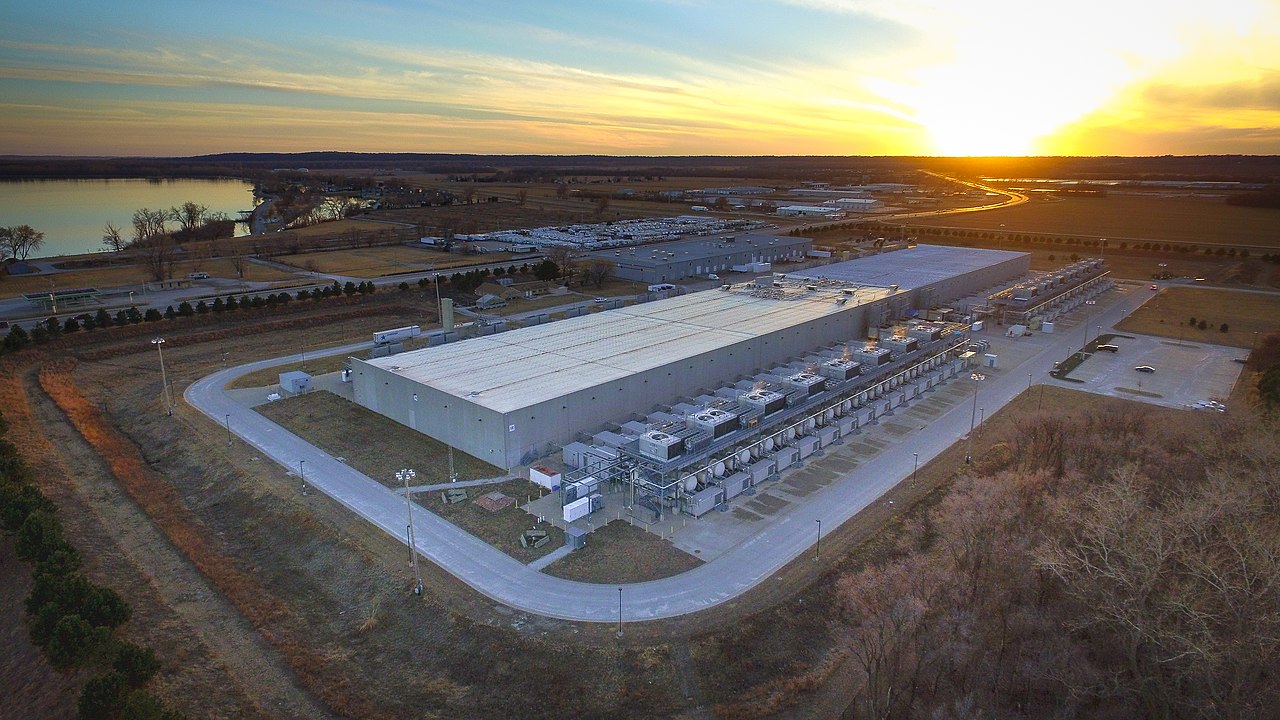
Header image: Google's data center in Council Bluffs, Iowa, by Chad Davis via Wikimedia Commons, licensed under CC BY 2.0. In-body photograph of a Google TPU v4 board by Norman P. Jouppi and colleagues via Wikimedia Commons, licensed under CC BY 4.0.