On the morning of September 3, 2026, three of the world's biggest AI chatbots stopped working within minutes of each other. ChatGPT, Claude and Grok all went down at roughly the same time, and Cursor, the coding tool that leans on those models, went down with them. Google's Gemini did not. That single asymmetry, three rival labs down together while a fourth stayed up, is the most useful fact in the whole incident, because it turns a routine outage story into a case study in how concentrated the AI industry's infrastructure has become underneath a market that looks, on the surface, like healthy competition.
 OpenAI
 Anthropic
 xAI
xAI Google
What happened, in order
Outage reports began spiking around 10:30 to 11:00am ET (roughly 6:30 to 7:45am PT) on September 3. Downdetector, which aggregates user-submitted outage reports, logged more than 35,000 US reports for ChatGPT at the peak, alongside roughly 1,400 for Claude and about 1,200 for Grok. OpenAI's own status page listed a long list of impacted components, including Conversations, Login, Codex, Search, Voice mode, Image Generation, Deep Research, Agent, ChatGPT Atlas and Connectors, evidence that the disruption was not confined to one feature but touched the platform broadly.
Downdetector reports during the September 3 outage
Peak US self-reported outage counts, by service. ChatGPT's much larger user base shows up directly in the report volume; Gemini shows no comparable spike.
Source: Downdetector peaks as widely reported on September 3, 2026 (see Sources below). Red: services that went down. Green: Gemini, which stayed up.
Anthropic and OpenAI both marked their incidents resolved within roughly three hours. Grok took longer to fully recover. Cursor, which routes coding requests through these underlying models, reported its own downtime as a direct consequence, a reminder that an outage at a foundation model provider does not stay contained to that provider's own product; it propagates to every tool built on top of it.
The Azure East US question, and its caveat
Multiple outlets reported that Microsoft Azure's East US region experienced disruption at the same time the three chatbots went down, and noted that ChatGPT, Claude and Grok all lean on Azure East US as part of their infrastructure, while Gemini runs on Google's own cloud. That correlation is the most widely cited explanation for why three separate companies failed together and a fourth did not.
It is worth being precise about what is and is not confirmed here. No single shared root cause was officially confirmed by all three providers as of this writing; the companies' own status updates described the incidents in provider-specific terms, and at least one report noted that major cloud providers' own status pages showed no publicly acknowledged issue at the time. The Azure East US explanation is the best-supported reading of a genuinely confusing morning, not a verified joint postmortem. Readers should treat it as the leading hypothesis rather than an established fact, while still taking seriously the underlying pattern it points to: three competing AI companies sharing enough infrastructure that a regional cloud problem could plausibly take all three down inside the same half hour.
One cloud failure domain, three chatbots
Widely reported cloud dependency behind the September 3 outage. No single official root cause was confirmed across all three providers; this shows the reported infrastructure pattern.
All three services went down within minutes of each other and recovered within about three hours (Grok lagged behind).
Running on separate infrastructure, Gemini registered no comparable Downdetector spike during the incident.
Attribution to Azure East US is widely reported (see Sources below), not officially confirmed by all three providers as a single shared cause.
What a "failure domain" actually means
A failure domain is the set of things that can be taken down by the same underlying fault. Two services sit in the same failure domain if a single event, a power failure, a network routing error, a bad configuration push, a hardware fault in a shared piece of infrastructure, can take both of them offline at once. Services in different failure domains might both fail on a bad day, but not because of the same event.
Redundancy only works if it crosses a failure domain boundary. Running two data centers on the same regional power grid is not real redundancy against a grid failure. Running an application across two cloud regions that share the same identity provider, the same DNS infrastructure, or the same networking backbone is not real redundancy against a fault in that shared layer. The point of the September 3 incident is not that three companies happened to have a bad morning together; it is that if the Azure East US explanation holds, their failure domains overlapped in a way that was invisible to their own customers until it mattered.
A failure domain is the set of things that fail together. Redundancy only counts when it crosses that boundary, and from outside a vendor you usually cannot see where the boundary actually is.
Metir AI analysis
Two layers of concentration, not one
The Cloud Security Alliance published an analysis in June 2026 that frames this precisely: enterprises face correlated concentration risk at both the model layer and the cloud layer, because the two are not independent. The frontier AI model market is dominated by a small number of labs, chiefly OpenAI, Anthropic and Google, and those labs' compute in turn runs on an equally small number of hyperscaler clouds. A company that thinks it has diversified its AI risk by using two different chatbot vendors may not have diversified anything at the infrastructure layer, if both vendors' compute sits behind the same cloud region.
That is the structural reason the September 3 outage is worth more attention than a typical vendor incident. Model-layer concentration is visible: everyone knows there are only a handful of frontier labs. Cloud-layer concentration is much harder to see from outside, because a chatbot's own status page rarely says which cloud region served a given request, and a company's AI vendor contract rarely discloses the cloud dependency beneath it. The CSA's point is that these two concentrations compound rather than offset. Picking a different model provider does not necessarily mean escaping the same cloud region, the same power grid, or the same networking backbone.
Why this is no longer a tolerable cost of doing business
Two numbers explain why a three-hour outage now registers as a business event rather than an inconvenience. Enterprise downtime now costs an average of about $8,600 per minute, a 54% rise since 2022, and 87% of enterprises say they have experienced at least one material cloud disruption in the past twelve months. AI-specific downtime is a subset of that broader cloud-disruption trend, but it carries an added wrinkle: unlike a database or a web server, an AI assistant is often the interface itself, the layer through which an employee searches, drafts, codes or queries data. When that layer goes down, the workflows built on top of it do not degrade gracefully, they stop.
That is the shift Forrester's Charlie Dai captured in comments to IT Pro after the outage: AI is increasingly becoming operational infrastructure rather than a productivity add-on. A productivity add-on that goes down for three hours is an annoyance. Operational infrastructure that goes down for three hours is an incident with a dollar figure attached, and the September 3 outage is a concrete illustration of what that figure looks like when it hits three vendors simultaneously instead of one.
What resilience actually looks like, and what it costs
The obvious response, spread workloads across multiple model providers and multiple clouds, is directionally correct but not free. A few honest tradeoffs are worth naming.
Multi-provider routing adds real engineering overhead: different providers have different APIs, different rate limits, different failure modes, and prompts that work well on one model do not always transfer cleanly to another. Multi-cloud adds its own version of the same problem: data residency, latency, and cost all shift when a workload can land in more than one place, and testing a failover path convincingly requires actually exercising it, not just architecting for it on paper. None of this is free engineering time, and for a team running a single internal tool rather than a customer-facing product, the cost of building true redundancy can exceed the cost of occasionally waiting out a three-hour outage.
Multi-provider redundancy is not free. The honest question for most teams is not whether to eliminate single points of failure, but which workflows are actually critical enough to justify the engineering cost of doing so.
Metir AI analysis
What is achievable at low cost is optionality at the model layer specifically, even if full cloud-layer redundancy remains expensive. A platform that gives a team access to many leading models rather than locking them into one, like Anthropic's Claude, OpenAI's GPT models, Google's Gemini and others, means an outage at a single lab does not have to halt a workflow outright; a request can route to a different provider while the primary one recovers. Metir AI is built on that model-agnostic premise for exactly this reason: reducing dependency on any single provider is a meaningfully cheaper form of resilience than building full infrastructure redundancy from scratch, even if it does not solve the cloud-layer concentration problem the CSA describes.
The CSA's own recommendations point the same direction at the governance level: build an AI dependency inventory that tracks which workflows rely on which provider and, where knowable, which cloud; treat AI vendors with the same third-party risk scrutiny as any other critical infrastructure vendor; and negotiate for the visibility, in SLAs and vendor disclosures, that would let a company actually know whether its "diversified" AI stack shares a failure domain before the next outage reveals it the hard way.
The takeaway
Three competing companies going down within minutes of each other is a rare enough event that it is tempting to read it as an anomaly. The more useful reading is the opposite: it is a visible instance of a structural condition that exists on every ordinary day, just usually invisible, because most days do not produce a simultaneous failure to expose it. The AI market looks decentralized when you count logos. It looks considerably more concentrated when you trace the compute underneath those logos back to the handful of clouds it actually runs on. September 3 did not create that concentration. It just made it visible for three hours.
Sources:
- ChatGPT, Claude, and Grok hit by simultaneous outages | Quartz
- Azure failure likely brought down ChatGPT, Claude and Grok | Computing
- True AI-pocalypse as ChatGPT, Claude, and Grok all go down at once | The Register
- ChatGPT, Claude and Grok all simultaneously hit outages | Axios
- Gemini Survived When ChatGPT, Claude, and Grok Collapsed: Azure Is at Fault | Tech Times
- Simultaneous ChatGPT, Grok and Claude Outage Exposes AI Concentration Risk | AI Governance
- "AI is increasingly becoming operational infrastructure rather than a productivity add-on": Yesterday's triple AI outage should be a wake-up call for enterprises | IT Pro
- Major AI platforms go down in unprecedented simultaneous outage | MacDailyNews
- ChatGPT, Gemini, Grok and Claude down: What's going on? | LADbible
- OpenAI, Anthropic, xAI, Cursor Hit by User-Reported Outages in U.S. | Roic News
- AI Provider Concentration Risk: Enterprise Resilience | Cloud Security Alliance
- Cloud Outage Statistics for 2025-2026 | DataStackHub
- Cloud Downtime Statistics for 2025-2026 | DataStackHub
Image credits
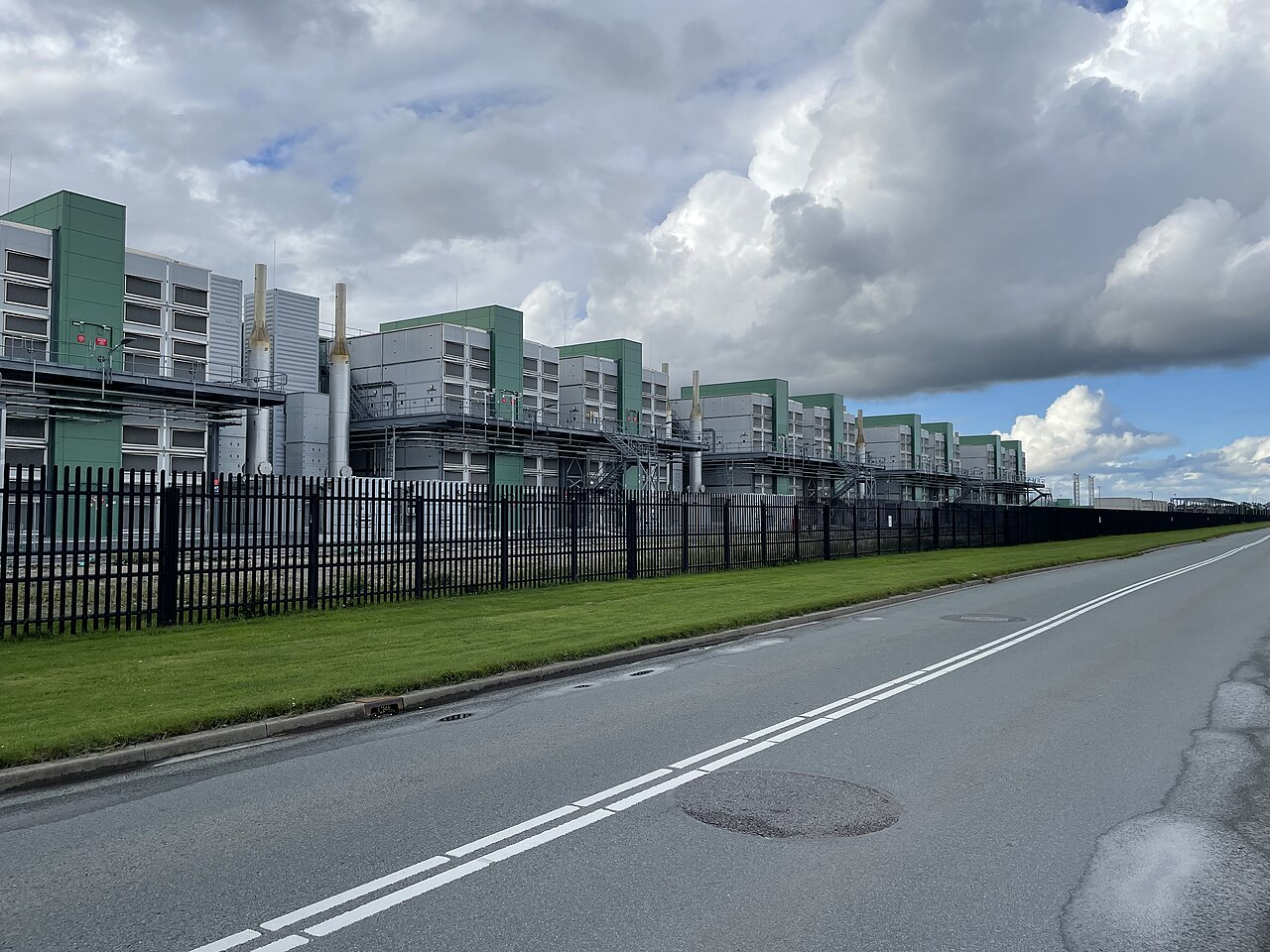
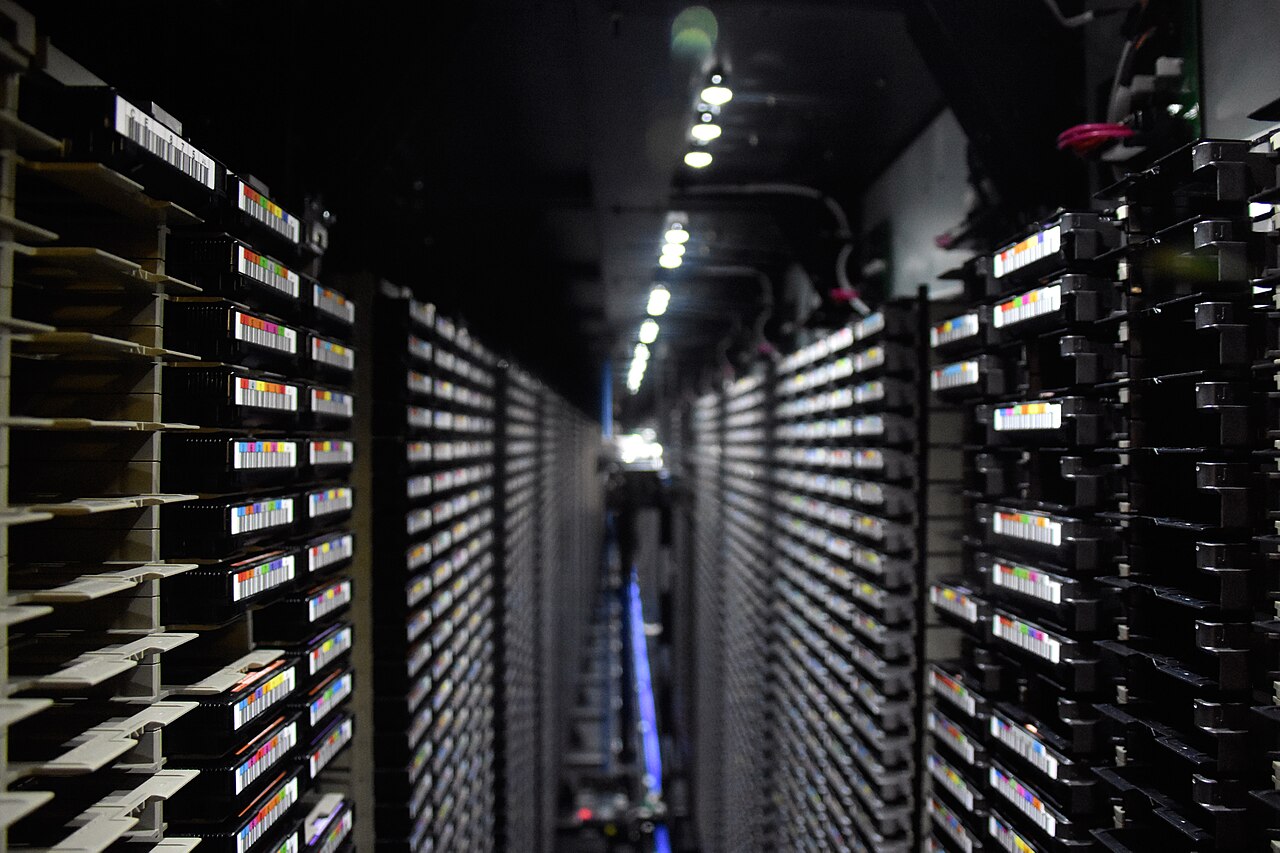
Header image: a Microsoft data center building in Middenmeer, the Netherlands, photographed in 2023 by Hay Kranen, via Wikimedia Commons, licensed under CC BY 4.0. It illustrates a real Microsoft hyperscale data center generally; it does not depict the specific Azure East US facility reported in connection with the September 3, 2026 outage. In-body photograph: server and storage racks inside CERN's Computer Center in Geneva, by SimonWaldherr, via Wikimedia Commons, licensed under CC BY-SA 4.0. It illustrates the density of infrastructure inside a large computer center generally and does not depict any infrastructure belonging to Microsoft, OpenAI, Anthropic or xAI.