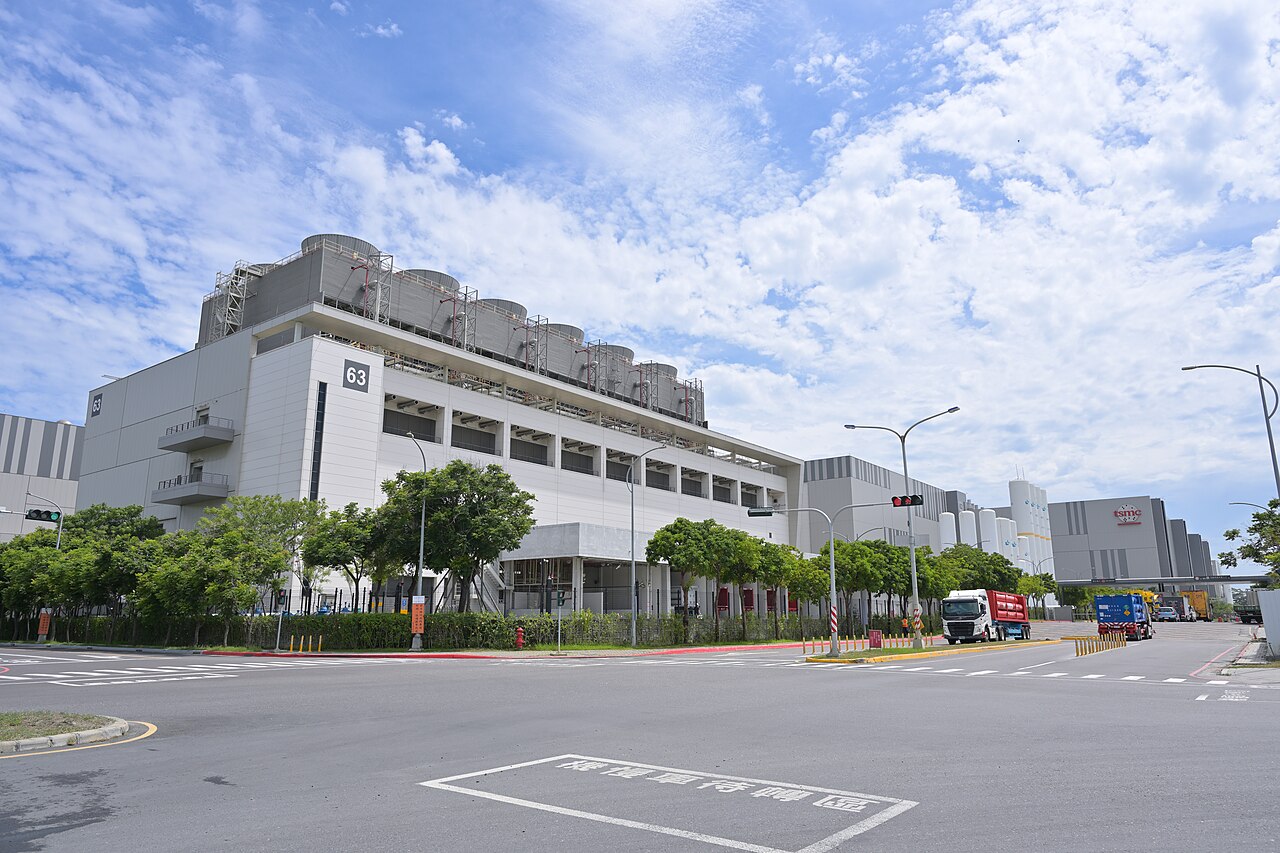
For most of the current AI era, the model labs bought their compute from one place. They designed software; Nvidia designed the chips; TSMC built them. That division of labor is now visibly loosening. In the space of a few weeks, OpenAI and Broadcom unveiled a custom inference chip called Jalapeño, Anthropic was reported to be in early talks with Samsung about a chip of its own, and TSMC confirmed its 2-nanometer node had begun generating revenue, the manufacturing capacity all of this new silicon will draw on. Individually these are separate stories. Together they describe a structural shift: the companies that make the models are moving into the business of making the chips those models run on. This piece explains why, what it realistically changes, and the parts of the picture that are easy to overstate.
 OpenAI
 Anthropic
 NVIDIA
 Google
 AWS
AWSWhat actually happened
On June 24, 2026, OpenAI and Broadcom introduced Jalapeño, a chip built specifically for inference, the process of running a trained model to answer a query rather than training it in the first place. OpenAI said the chip went from initial design to manufacturing tape-out in roughly nine months, which the companies described as among the fastest development cycles ever for a high-performance chip, and that early samples were already running real workloads in the lab, including one of OpenAI's own coding models. Initial deployment is targeted for the end of 2026.
About a week later, on July 2, The Information reported that Anthropic was in early discussions with Samsung to manufacture a custom AI chip, aiming at Samsung's 2nm foundry process and advanced packaging. The report was careful about how preliminary this is: Anthropic had not settled what the chip would do, how powerful it would be, or how it would fit into a server. Notably, Anthropic had earlier hired an engineer who was among the first on OpenAI's own chip team, and Samsung had participated in Anthropic's most recent funding round as a strategic partner.
A few weeks that reshaped the AI-silicon map
Selected custom-silicon milestones across mid-2026, showing how quickly the model labs moved to secure their own chips.
- Early Jun 2026Anthropic hires a custom-chip veteranClive Chan, an early engineer on OpenAI’s chip team, joins Anthropic’s compute effort.
- Jun 24, 2026OpenAI and Broadcom unveil JalapeñoAn LLM-optimized inference chip, taken from design to tape-out in about nine months, targeting deployment by end of 2026.
- Jul 2, 2026Anthropic reported in talks with SamsungEarly-stage discussions for a custom AI chip on a 2nm process, with details on use and design still open.
- Jul 16, 2026TSMC’s 2nm node books first revenueN2 reaches roughly 3% of wafer revenue, the manufacturing capacity the next wave of custom chips will draw on.
These two labs are not first. Google has designed its own TPUs for years, Amazon offers Trainium and Inferentia chips through AWS, and Meta has been deploying its own MTIA silicon internally. What is new is that the two best-known frontier model labs, whose entire identity has been software, are now visibly committing to custom hardware.
Who is building their own AI chips
Frontier AI players designing custom accelerators, their manufacturing or design partners, and how far along each effort is, as of mid-July 2026.
| Player | Partner | Chip | Status |
|---|---|---|---|
| In-house + Broadcom | TPU (multiple generations) | In production, years of deployment | |
| Amazon (AWS) | Annapurna Labs | Trainium / Inferentia | In production, offered on AWS |
| Meta | In-house | MTIA / custom silicon | Deploying internally |
| OpenAI | Broadcom | Jalapeño (inference) | Unveiled Jun 2026, deploy target end-2026 |
| Anthropic | Samsung (reported) | Custom AI chip (2nm) | Early talks, not yet designed |
Highlighted rows are the two most recent entrants. Cloud providers have shipped custom silicon for years; the model labs are newer to it.
Why the labs want their own silicon
Three motivations sit behind this, and they reinforce each other.
The first is cost, specifically the cost of inference. Training a frontier model is a large but essentially one-time expense per model. Inference is forever: every query from every user, every day, runs on hardware that has to be bought and powered. As AI products scale to hundreds of millions of users, inference becomes the dominant, recurring line in the compute bill. A chip designed narrowly for a lab's own inference patterns, rather than a general-purpose GPU that must do everything, can in principle deliver meaningfully better performance per watt on exactly the workloads that matter most. Over billions of queries, small per-query efficiency gains compound into very large savings.

The second is supply. Advanced AI accelerators have been supply-constrained for the entire boom, with the leading vendor describing its data-center GPUs as sold out and pointing to around a trillion dollars of confirmed demand through 2027. When the input you most depend on is rationed, controlling more of your own supply chain is a strategic hedge, not just a cost play. A custom chip does not remove the dependence on a foundry like TSMC or Samsung, but it does reduce dependence on a single merchant-chip vendor's roadmap and allocation decisions.
The third is differentiation and control. Co-designing hardware and software lets a lab optimize the full stack for its specific models: the memory movement, the networking, the serving patterns its systems actually use. Owning that stack is both a potential performance edge and a way to shape a roadmap around the lab's own priorities rather than waiting for a vendor's next generation.
Training is a large one-time cost per model. Inference is forever, and that is where custom silicon earns its keep.
What it does not change
It is just as important to be precise about the limits, because the narrative can outrun the reality.
Designing a chip is not the same as escaping Nvidia. Nvidia's advantage is not only its silicon but its software ecosystem, its networking, and the fact that its GPUs are general-purpose and can run any model, including ones that do not exist yet. A lab's custom chip is typically narrow, tuned for that lab's own inference, and complements rather than replaces a large general-purpose GPU fleet, especially for training and for experimentation. Every lab pursuing custom silicon is, at the same time, still signing enormous deals for merchant accelerators. This is diversification, not divorce.
Custom silicon also does not remove the foundry chokepoint. Whether a chip is designed by Nvidia, OpenAI or Anthropic, it is still fabricated by a small number of leading-edge foundries, overwhelmingly TSMC and, increasingly, Samsung. That is precisely why TSMC's 2nm node booking its first revenue in the same window matters: the entire custom-silicon wave depends on leading-edge manufacturing capacity being available, and that capacity is itself the industry's tightest constraint. Moving chip design in-house shifts where the bottleneck sits; it does not eliminate it.
And the effort is expensive and slow to pay back. Even Jalapeño's unusually fast nine-month cycle is only the design phase; volume deployment, software maturity and real-world validation take longer. A custom-chip program is a multi-year, multi-billion-dollar commitment that only makes sense at enormous inference scale. For nearly every company that is not a frontier lab or a hyperscaler, buying compute remains the right answer by a wide margin.
The read-through for everyone else
For the wider market, the custom-silicon race is best read as a signal about where the cost of intelligence is heading. When the largest players invest billions to shave the per-query cost of inference, they are betting that AI usage will keep growing to a scale where those savings dominate. That same competition, playing out across merchant and custom chips alike, is what keeps pushing the price of a unit of intelligence down and the diversity of viable hardware up.
For teams building on top of models rather than under them, the practical implication is about flexibility. As inference increasingly runs on a patchwork of merchant GPUs and lab-specific custom chips, the hardware a given model runs on becomes an implementation detail that can change underneath you, along with its price and speed. The durable strategy is to avoid hard-wiring a product to any single provider's stack, and instead route each task to whatever model and backend currently offer the best fit. A model-agnostic workspace such as Metir AI embodies that stance: the specific chip and provider serving a model stay abstracted away, so improvements in inference economics reach the user as better speed and price without a migration.
The bigger picture
The move by OpenAI and Anthropic into custom silicon is a genuine milestone, because it marks the point where the model labs stopped treating hardware as someone else's problem. The motivations are sound and the trend is real: at frontier scale, controlling inference cost, supply and the full stack is worth the investment. But the story is one of vertical integration, not independence. The labs are adding a layer to their stack, not removing their reliance on merchant GPUs for the hard cases or on a handful of foundries for manufacturing. The most accurate way to hold it is as a maturing of the industry, in which the companies that lead in models are now also competing, cautiously and expensively, in the silicon that runs them, while the deepest constraint, leading-edge fabrication, stays exactly where it was.
Sources:
- OpenAI and Broadcom unveil LLM-optimized inference chip | OpenAI
- OpenAI unveils its first custom chip, built by Broadcom | TechCrunch
- Anthropic is discussing a new custom chip with Samsung | TechCrunch
- Anthropic in Talks With Samsung for Custom AI Chip | Bloomberg
- TSMC 2Q26 profit surges 77% to a record on AI demand, first 2nm revenue | DigiTimes
- NVIDIA Announces Financial Results for Third Quarter Fiscal 2026 | NVIDIA Newsroom
Image credits
Header image: TSMC Fab 18 in the Southern Taiwan Science Park, photographed in May 2025, by 4300streetcar via Wikimedia Commons, licensed under CC BY 4.0. In-body photograph of the Samsung Digital Complex in Suwon by Grzegorz Sokol via Wikimedia Commons, licensed under CC BY 3.0.