Anthropic said it will put another $20 million into Public First Action, a group that advocates for AI safeguards, doubling its total commitment to $40 million. The move landed alongside fresh federal lobbying disclosures showing the AI-native labs sharply increasing their spending in Washington even as some legacy technology companies pulled back. Together, the two data points mark a moment when the AI industry's political spending stopped being incidental and became a visible force heading into the 2026 midterms.
This is a story worth reading carefully rather than reflexively, because the mechanics are easy to blur. Election spending and lobbying are different channels with different rules, and the AI companies are not moving in one direction. Sorting out who is spending, through which channel, and toward what end reveals more than any single headline number.
Two different channels, two different rulebooks
The clearest way to understand the surge is to separate its two tracks. The first is election-adjacent spending through outside groups. Anthropic's $40 million commitment to Public First Action falls here. The company has said the money supports the group's "public-education and policy mission" and "cannot be used" to influence federal, state or local candidates directly. In practice, the line is porous: such nonprofits can and do route donations into advertising that highlights specific candidates and their records, which is why this kind of spending draws scrutiny even when it is not a formal campaign contribution.
The second track is direct federal lobbying, which is separately disclosed and tightly defined: paying to influence legislation and regulation through registered lobbyists. This is where the quarter-over-quarter numbers tell a crisp story.
Federal lobbying: the AI natives are climbing as legacy tech eases off
US federal lobbying spending in the second quarter of 2026, in millions of dollars, per federal disclosures.
Meta still outspends the AI-native labs on direct lobbying, but its total fell quarter over quarter while Anthropic and OpenAI both rose. Lobbying is separate from election spending, where Anthropic has committed $40 million to the Public First Action group.
In the second quarter of 2026, Anthropic spent $1.97 million on federal lobbying, up 26% from the first quarter, while OpenAI spent $1.2 million, up 18%. Together the two AI-native labs spent $3.17 million, a 23% quarter-over-quarter increase. Over the same period, Meta's lobbying total fell 15% to $5.99 million. Legacy technology and defense firms easing off while AI-native companies accelerate is the underlying shift the raw totals can obscure.
 Anthropic
 OpenAI
 Meta
Meta Microsoft
 Google
What the money is actually about
The disclosures show the labs lobbying on cybersecurity, copyright, cloud computing and defense procurement, but the central prize behind the spending is the shape of AI regulation itself, and in particular whether it is written at the federal or the state level. A patchwork of differing state laws is expensive and complex for national companies to comply with, which gives the industry a strong incentive to push for a single federal framework, and sets up a fight over whether federal rules should preempt state ones.
The debate does not split neatly into industry versus critics. Companies disagree with one another about how strict the rules should be and where liability should sit, and safety-focused groups, some funded by the very labs they scrutinize, are pushing for guardrails that parts of the industry resist. Anthropic's positioning, funding a group that advocates for AI safeguards while also lobbying on its own commercial interests, captures the tangle: the same company can back stronger oversight in one channel and defend its business model in another, and both can be sincere.
The AI regulation fight is not industry against regulation. It is a contest among companies, advocacy groups and lawmakers over which rules, written at which level of government, and enforced how.
Metir AI analysis
Why this is happening now
The timing tracks two forces converging. First, the 2026 midterms create a natural focal point for political spending, and reporting has described AI money flowing into outside groups alongside crypto and other well-funded interests, sometimes spending in parallel against the same candidates. Second, the regulatory window is genuinely open: with frontier models advancing quickly and several governments moving toward formal oversight frameworks, the rules being written now could shape the industry's economics for years. Companies spend most aggressively precisely when the rules are still unsettled, because that is when spending has the most leverage.
The comparison to earlier technology waves is instructive. Social media and ride-hailing companies also ramped political spending as they scaled and as regulators caught up, and the AI labs are following a recognizable arc, just faster and at a larger scale relative to their revenue. What is different is how early it is happening. These are young companies, some not yet public, already deploying eight-figure sums into the political system before their business models have fully matured.
What it means beyond politics
For people and organizations using AI rather than lobbying about it, the practical relevance is that the rules are unsettled and will stay that way through at least the midterms. Compliance obligations, liability, data and copyright rules, and the federal-versus-state question are all live, and the outcomes will differ by jurisdiction. That uncertainty is an argument for building in ways that can adapt rather than betting everything on one provider's regulatory posture or one jurisdiction's rules. Flexibility, including the ability to move workloads between providers as policy and availability shift, is a hedge against a policy landscape still being actively contested, and it is part of why model-agnostic platforms such as Metir AI treat provider choice as something to keep open rather than fix in advance.
Looking ahead
The numbers will keep climbing through the 2026 election cycle, and the disclosures to watch are the next quarterly lobbying filings and the flow of money through outside groups as the campaign intensifies. The substantive question underneath the spending is whether the United States lands on a coherent federal framework or a fragmented state-by-state patchwork, because that single choice will do more to shape how AI is built and deployed than any individual model release. The spending surge is best read not as a scandal or a virtue but as a signal: the industry believes the rules being written now matter enormously, and it is paying accordingly.
Build on AI that adapts as the rules do
With the regulatory landscape still being contested, flexibility is a practical advantage. Metir AI gives you unified access to leading models from OpenAI, Google, Anthropic and others in one workspace, so you can route each task to the right model and adapt as policy, pricing and availability shift. Try Metir AI free.
Sources:
- OpenAI, Anthropic boost lobbying as legacy tech and defense spending slips | CNBC
- Anthropic, OpenAI, Waymo Drop Record $4.3 Million on Q2 Lobbying | Bloomberg Government
- Anthropic Doubles AI Policy Donation to $40M for 2026 Midterms | AI Weekly
- Anthropic pours another $20 million into AI safety group | Ground News
- What AI companies want for the millions they're spending on elections | CNBC
- Anthropic is heating up the midterm proxy war over AI regulation | AOL
Image credits
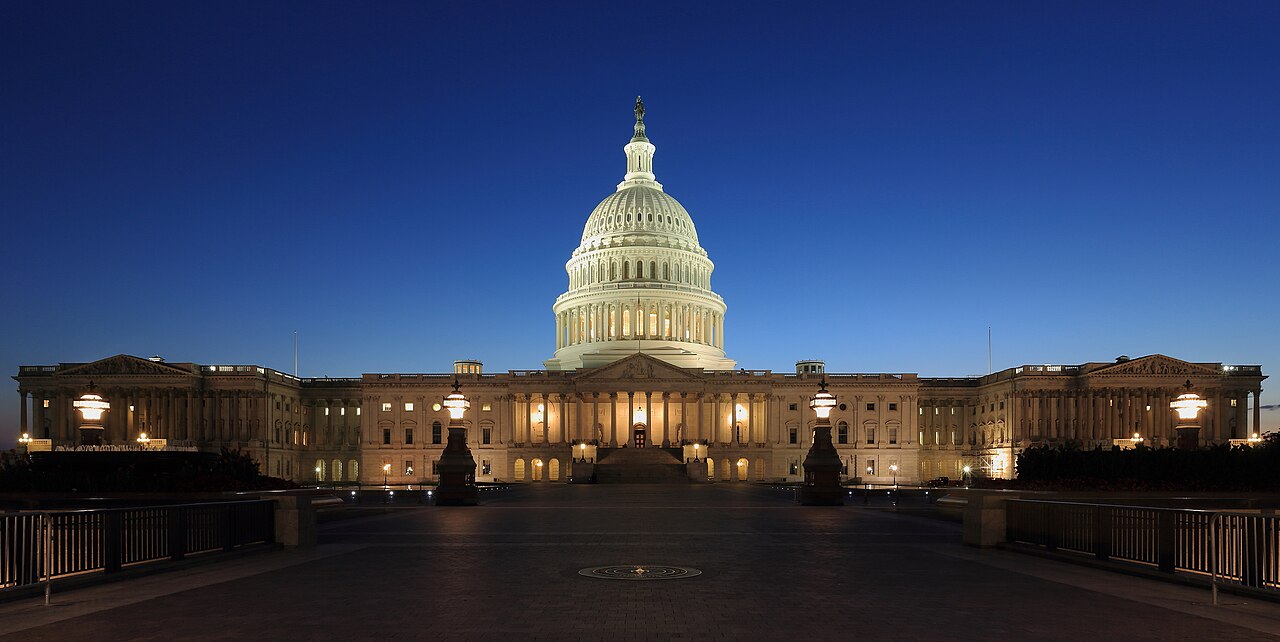
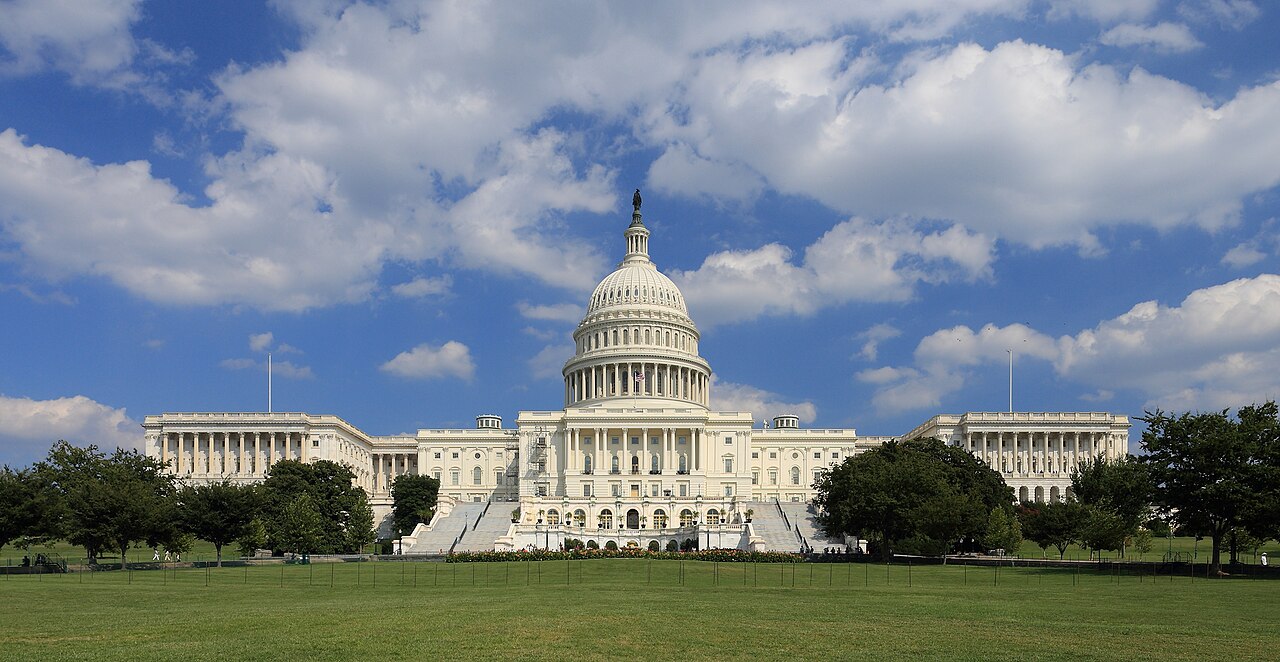
Header image: the United States Capitol at dusk, by Martin Falbisoner via Wikimedia Commons, licensed under CC BY-SA 3.0. In-body photograph of the west front of the United States Capitol, by Martin Falbisoner via Wikimedia Commons, licensed under CC BY-SA 3.0. Both photos depict the US Capitol building.