
In 2026, artificial intelligence has become as essential to daily workflows as email or search engines. Millions of professionals now rely on AI for writing, coding, research, analysis, and creative work. Yet most users are making a costly mistake: locking themselves into a single AI ecosystem.
If you're paying $20 monthly for ChatGPT Plus, or you've committed to Claude Pro or Gemini Advanced, you might be experiencing what analysts are calling "AI ecosystem lock-in"—and it's costing you more than money. It's limiting your access to the best tools, exposing you to unnecessary risks, and leaving you unprepared for the rapidly evolving AI landscape.
This comprehensive guide explores why single-provider AI subscriptions are problematic, the risks they pose, and how multi-model platforms like Metir AI, T3 Chat, and Magai.co are solving these challenges by giving you access to all the leading AI models through one unified interface.
The AI Ecosystem Trap: How We Got Here
When OpenAI launched ChatGPT Plus in February 2023, it seemed like a no-brainer. For $20/month, you got access to GPT-4—then the most powerful language model available—with faster response times and priority access during peak hours.
But the AI landscape has transformed dramatically since then. According to recent analysis, "the real risk lies in workflow dependency during a period of rapid AI evolution." An annual ChatGPT commitment locks you into OpenAI's ecosystem during a period when Claude 4.6 Sonnet leads in coding performance with 72.7% on software engineering benchmarks, and Gemini Advanced offers 2TB Google One storage plus massive context windows at $19.99/month.
The problem isn't just ChatGPT Plus. Whether you're subscribed to Claude Pro, Gemini Advanced, or any single-provider service, you're betting that one company will maintain competitive superiority across all use cases indefinitely. In the fast-moving AI race of 2026, that's an increasingly risky bet.
The Five Critical Risks of Single-Provider Lock-In
1. Missing the Best Models for Your Specific Tasks
Here's a truth that single-provider platforms don't want you to know: different AI models excel at different tasks. The idea that one model can be "best" at everything is marketing fiction.
Recent comprehensive testing shows that the optimal model varies dramatically by use case:
For Coding & Software Development: Claude 4.6 leads with 77.2% on SWE-Bench Verified, the industry standard for real-world coding tasks. As one analysis noted, "For long coding sessions and bug fixing, pick Claude 4.6; for algorithm design, Gemini 3; for quick iterations with safe patches, GPT-5.1."
For Deep Research: ChatGPT produced a 36-page report with 25 sources in testing, hitting the "sweet spot" of being neither too short (Claude) nor too long (Gemini). Meanwhile, Perplexity AI has become the go-to for real-time research with its integrated web search capabilities.
For Writing & Content: Claude includes more ethical guardrails and excels at helping polish prose and providing nuanced feedback. It's particularly strong for tasks focused on the craft of writing.
For Multimodal & Visual Tasks: ChatGPT's image feature follows instructions the best and produces the best text rendering, while Gemini offers advanced multimodal capabilities integrating text and images seamlessly.
For Large Document Analysis: Gemini 3 Pro boasts a massive 2 million token context window, making it superior for analyzing large files or reading very long PDFs that other models can't handle.
The AI leadership race is also highly competitive, with rankings changing frequently. According to AI benchmarking data, "Gemini 3 Pro leads overall reasoning benchmarks with an unprecedented 1501 LMArena Elo, becoming the first model to break the 1500 barrier, while Claude 4.6 Sonnet dominates real-world coding at 77.2% SWE-bench."
When you're locked into a single provider, you're using a one-size-fits-all solution for problems that demand specialized tools. It's like using a hammer for every job when you need a complete toolbox.
2. Privacy and Data Concerns
How AI companies handle your data varies dramatically—and if you're locked into one provider, you're entirely dependent on their policies, practices, and security.
Data Training Policies: OpenAI and Microsoft disclose that user data may be used for model training while offering pathways to opt-out. However, the defaults and clarity vary significantly. After months of litigation with The New York Times, OpenAI was fighting a court order that forced the company to retain all consumer ChatGPT conversations indefinitely, including deleted chats—an order that only ended in September 2025.
European Regulatory Concerns: In late 2024, the Italian Garante announced a €15 million fine against OpenAI for GDPR violations. According to the Garante, OpenAI had not identified a lawful basis for training ChatGPT pre-launch, nor had it identified an appropriate lawful basis for processing from launch on November 30, 2022 until March 30, 2023.
Growing Incident Rates: In 2024, AI privacy/security incidents jumped 56.4%, and 82% of breaches involve cloud systems. Stanford's AI Index Report documented 233 AI-related incidents in 2024, representing more than just a statistical increase—they signal a fundamental shift in the threat landscape.
The Volume Risk: As cybersecurity experts note, "One reason AI arguably poses a greater data privacy risk than earlier technological advancements is the sheer volume of information in play. Terabytes or petabytes of text, images or video are routinely included as training data, and inevitably some of that data is sensitive."
Having all your sensitive conversations, proprietary code, and confidential documents with a single AI provider creates a concentrated risk. If that provider has a security breach, policy change, or regulatory issue, all your data is exposed.
3. Pricing and Value Lock-In
Let's talk about the economics. A ChatGPT Plus subscription costs $20/month and gives you access to exactly one provider's models. If you want Claude Pro, that's another $20/month. Gemini Advanced through Google One AI Premium? $19.99/month.
Want access to all three leading providers? You're looking at roughly $60/month—and that's before adding specialized services like Perplexity Pro for research.
Analysis shows that for moderate users, "Light users (10-20 queries/day): $3-8/month via API; Moderate users (30-50 queries/day): $10-15/month via API." Many users don't realize they're dramatically overpaying for what they actually use.
The pricing lock-in is especially problematic because:
- Usage limits vary dramatically: ChatGPT Plus limits in 2025 adjust dynamically based on system load, meaning Plus users may still encounter slowdowns or temporary blocks during peak demand.
- Features change without notice: Annual subscriptions lock you in during periods when competitors may offer superior features.
- No cross-provider portability: Your conversation history, custom instructions, and workflows don't transfer between platforms.
4. Vendor Dependency Risks
What happens when your AI provider has problems? We've seen numerous examples of why vendor dependency is risky:
Service Outages: On March 25, 2025, a widespread Facebook and Instagram outage impacting Meta AI received more than 550,000 reports during the peak of the incident. When your work depends on AI and your single provider goes down, you're stuck.
Policy Changes: Recent reports indicate OpenAI declared a "code red," prioritizing speed over safety to counter Google's Gemini 3. Internal memos reportedly reveal GPT-5.4 was rushed despite known biases and risks. If you're locked into a single ecosystem, you're vulnerable to whatever strategic decisions that company makes—whether or not they align with your needs.
Model Deprecation: AI companies regularly deprecate older models, sometimes with limited notice. If your workflows depend on specific model behaviors, this can be disruptive.
Privacy Incidents: One of the most controversial incidents occurred on June 13, 2025, when users reported that private Meta AI conversations appeared publicly in the app's Discover section. Although Meta initially stated this visibility was "by design," the backlash prompted a UI change.
Regulatory Uncertainty: U.S. federal agencies issued 59 AI-related regulations in 2024—more than double the 25 issued in 2023. This regulatory surge isn't limited to the United States; legislative mentions of AI increased by 21.3% across 75 countries globally.
When you depend on a single vendor, any of these issues can halt your productivity entirely.
5. Innovation Stagnation
Perhaps the subtlest but most important risk of single-provider lock-in is missing breakthrough innovations happening elsewhere.
Claude introduced Artifacts—a feature that appears when a user asks Claude to generate content like code snippets, text documents, or website designs. These Artifacts appear in a dedicated window alongside conversations, creating a dynamic workspace where users can see, edit, and build upon Claude's creations in real-time. If you're locked into ChatGPT, you miss this entirely.
Gemini's live camera feature lets AI see your computer screen in real-time. Users find it helpful to have Gemini's live camera on while coding so they can ask it to debug issues as they happen. This multimodal, real-time capability represents a fundamentally different interaction model.
Google announced Antigravity, an agent-first coding tool built for Gemini 3 Pro, on November 18, 2025. The tool supports third-party models including Claude Sonnet 4.6 and OpenAI's GPT-OSS—demonstrating how innovation increasingly happens at the platform level, not just the model level.
When you're committed to a single ecosystem, you're betting that one company will consistently lead innovation across all dimensions. History suggests this rarely happens. Instead, innovation is distributed—different companies excel at different things at different times.
The Case for Multi-Model Access
Given these risks, the solution becomes clear: instead of committing to a single AI provider, use platforms that give you access to multiple leading models through one unified interface.
Flexibility to Use the Right Tool: As one comprehensive analysis concluded, "Multi-model strategies (using the right model for each task) deliver 40-60% cost savings with better performance." Being able to switch seamlessly between Claude for writing, GPT-4.5 for general tasks, Gemini for document analysis, and Perplexity for research means you're always using the optimal tool.
Cost Efficiency: Rather than paying $60+/month for multiple separate subscriptions, unified platforms typically charge $8-40/month for access to all major models—delivering access to AI models that would cost $60+ individually.
Future-Proofing: When new models launch or capabilities improve, multi-model platforms add them to their offering. You're not locked into yesterday's technology just because you committed to an annual subscription.
Side-by-Side Comparison: The ability to ask the same question to multiple models simultaneously is invaluable for important decisions, complex problems, or quality validation.
As the competitive analysis notes, "The AI landscape has matured from 'which chatbot should I use?' to 'which specialized tools fit my specific workflow?' Success in 2026 means matching your tasks to the right models rather than committing to a single platform."
Solutions: Multi-Model Platforms Leading the Way
Three platforms are leading the charge in providing comprehensive multi-model access. Here's what each offers:
Metir AI: The Comprehensive Multi-Model Solution
Metir AI is designed from the ground up as a unified platform for accessing the world's leading AI models across web and mobile devices. Built for professionals who need the flexibility to use the right AI for each task, Metir offers:
Model Access: Comprehensive access to Claude Sonnet 4.6 (Anthropic), GPT-4.5 (OpenAI), Gemini 3 Pro (Google), Perplexity for research, Grok (xAI), and other leading models—all through one clean, unified interface.
Platform Availability: Full-featured web application plus native iOS and Android mobile apps, ensuring your AI tools are always accessible whether you're at your desk or on the go.
Privacy-Focused Architecture: Unlike single providers that may use your data for training, Metir AI is built with a privacy-first approach, keeping your conversations and data secure.
Unique Features:
- AI Agents: Beyond simple chat, Metir AI offers specialized AI agents designed for specific workflows and use cases
- Ambient AI: Context-aware AI that adapts to your working environment and needs
- Unified Interface: One consistent experience across all models—no need to learn multiple platforms
- Cross-Device Sync: Seamlessly switch between web and mobile with full conversation history
Pricing: Competitive pricing designed to be more cost-effective than maintaining multiple separate subscriptions to individual providers.
Best For: Professionals and teams who want comprehensive multi-model access with strong mobile support and privacy protections, especially those interested in emerging AI agent capabilities.
Visit: metirai.com
T3 Chat: The Speed-Focused Multi-Model Platform
Created by developer Theo Browne and his team T3 Tools, T3 Chat is a high-speed AI chat platform that lets users interact with and compare leading models through seamless real-time switching in one intuitive interface.
Model Access: Claude Sonnet 4.6, GPT-4.5, DeepSeek V3, Gemini 3 Pro, and other top models with the ability to switch between them instantly mid-conversation.
Speed: The core feature is ultrafast responses using Cloudflare Edge Computing—up to 2x faster than ChatGPT and 10x faster than DeepSeek.
Unique Features:
- Branching Conversations: Explore multiple conversation paths without losing context
- Local-First Privacy: Conversation history is saved on your own device's browser using IndexedDB, not on platform servers—enhancing data privacy
- Advanced Search: Local search capabilities to find past conversations quickly
- Real-Time Web Search: Integration with web search across all models
- Image Generation: Pro plan includes 100 monthly "Premium Requests" for image generation using Anthropic and OpenAI's image models
Pricing:
- Free Tier: Access to select models with reasonable usage limits for casual use
- Pro Subscription: $8/month for nearly unlimited access to all models—significantly undercutting the $20 monthly fee for mainstream services like ChatGPT Plus or Claude Pro
Best For: Individual users prioritizing speed, privacy, and cost-effectiveness, especially developers and power users who value the branching conversation feature.
Visit: t3.chat
Magai: The Team-Focused Multi-Model Powerhouse
Founded in 2023, Magai has rapidly emerged as a leading generative AI platform designed for modern creators and businesses.
Model Access: Access to over 50 different AI models including ChatGPT, Claude AI, Google Gemini, Meta Llama for text generation, plus DALL-E, Ideogram, Leonardo.ai, Flux, and Stable Diffusion for image generation, and Luma Ray and Runway for video creation.
Unique Features:
- Mid-Conversation Model Switching: Unlike other tools that force you to restart when switching models, Magai keeps your full conversation history even across different AI engines
- Auto Model Selection: Choose "Auto" and it automatically selects the most suitable model based on your prompt
- Custom Personas: Over 40 pre-built AI personas for specific use cases (marketing, coding, legal writing, social media strategy), plus ability to create custom personas with unique instructions and memory
- Team Collaboration: Real-time collaboration features, shared AI content, and team workspaces
- Organization Tools: Chat folders, saved prompts library, and team collaboration capabilities
- Transparent Pricing Model: Each model displays a clear "Multiplier" indicating its relative cost, empowering informed decisions
Pricing:
- Solo Plan: $20/month—ideal for freelancers, content creators, and solo entrepreneurs. Includes access to all AI models, custom personas, and full workspace tools.
- Team Plan: $40/month—supports up to 5 users with triple the usage limits, collaborative tools, and team-specific features. Perfect for marketing agencies, startups, and remote teams.
- 30-Day Money-Back Guarantee: Risk-free exploration of the platform
Best For: Teams, agencies, and businesses that need comprehensive multi-modal AI capabilities (text, image, video) with strong collaboration features and transparent usage-based pricing.
Visit: magai.co
Comparison: How These Platforms Stack Up
| Feature | Metir AI | T3 Chat | Magai |
|---|---|---|---|
| Text Models | Claude Sonnet 4.6, GPT-4.5, Gemini 3 Pro, Perplexity, Grok | Claude Sonnet 4.6, GPT-4.5, DeepSeek, Gemini 3 Pro | 50+ models including ChatGPT, Claude, Gemini, Llama |
| Image Generation | Coming Soon | Limited (100/month on Pro) | 10+ models (DALL-E, Flux, Stable Diffusion, etc.) |
| Video Generation | No | No | Yes (Luma Ray, Runway) |
| Mobile Apps | iOS & Android | Web only | Web only |
| Team Features | Coming Soon | No | Yes (Real-time collaboration) |
| Privacy Approach | Privacy-first, secure storage | Local-first (IndexedDB) | Platform storage, not used for training |
| Unique Selling Point | AI Agents + Ambient AI + Mobile | Speed (2x faster) + $8 pricing | 50+ models + video/image + teams |
| Starting Price | Competitive | $8/month Pro | $20/month Solo |
| Free Tier | Available | Yes | No (30-day guarantee) |
| Best For | Professionals wanting mobile + agents | Individual power users | Teams needing multi-modal + collaboration |
How to Choose the Right Multi-Model Platform
Selecting the optimal multi-model platform depends on your specific needs:
Consider Your Primary Use Cases:
- Heavy coding/development work: Prioritize platforms with Claude Sonnet 4.6 and strong IDE integrations
- Content creation (text + images + video): Magai's comprehensive multi-modal capabilities shine here
- Research-intensive work: Look for platforms offering Perplexity integration or strong web search
- Mobile-first workflows: Metir AI's native mobile apps provide on-the-go access
Evaluate Pricing vs. Your Usage:
- Light users (10-30 queries/day): T3 Chat's $8/month pricing offers exceptional value
- Moderate users with occasional image needs: Consider whether included image generation justifies higher pricing
- Heavy team usage: Calculate per-seat costs and whether collaboration features justify team plans
Check Mobile Support Requirements:
- Desktop-only workflows: All three platforms work excellently on web
- Need mobile access: Metir AI's native apps provide the best mobile experience
- Occasional mobile use: Progressive web apps (PWAs) may suffice
Privacy Considerations:
- Maximum privacy: T3 Chat's local-first approach keeps data on your device
- Enterprise security needs: Evaluate each platform's security certifications and data handling
- Compliance requirements: Ensure the platform meets your industry's regulatory standards
Trial Before Committing:
- Take advantage of free tiers (Metir AI, T3 Chat) or money-back guarantees (Magai) to test workflows
- Experiment with model switching to see which interface feels most intuitive
- Test your most common use cases across different models to validate the value of multi-model access
The Future: Why Multi-Model Platforms Will Win
The AI landscape is evolving in ways that make multi-model platforms increasingly essential:
Specialization Over Generalization: As one industry analysis notes, "Providers are differentiating offerings through model tiers: OpenAI has premium (GPT-5) vs lite (mini/nano) models; Google has Pro vs Flash; Anthropic has Opus vs Sonnet vs Haiku; xAI has standard vs fast vs Mini." The future isn't one dominant model—it's specialized models optimized for specific tasks.
Rapid Innovation Cycles: Industry trends show increased adoption of per-action pricing and early separation of commodity language models and premium reasoning models. Looking to 2026 and beyond, expect broader rollout of SLA-based pricing tiers and continued model specialization.
Cost Optimization Pressure: Organizations are increasingly sophisticated about AI costs. The 2025 LLM API market reveals vast cost differentials: "OpenAI's GPT models remain at premium prices; Google's Gemini strikes a middle ground; Anthropic's Claude offers robust safety at moderate cost; xAI's Grok competes as a niche model; and DeepSeek pushes prices to rock-bottom levels."
Regulatory Complexity: With 59 AI-related regulations issued by U.S. federal agencies in 2024 alone, managing compliance across multiple providers is increasingly complex. Multi-model platforms can help consolidate and streamline this burden.
Conclusion: Breaking Free from AI Lock-In
The days of committing to a single AI provider are ending. As the AI landscape matures and models specialize, the question isn't "Which AI should I use?" but rather "How do I access the right AI for each task?"
Single-provider subscriptions like ChatGPT Plus made sense in early 2023 when GPT-4 was the clear leader. But in 2026's competitive landscape—where Claude Sonnet 4.6 leads coding, Gemini 3 Pro dominates reasoning benchmarks, and specialized models emerge constantly—locking yourself into one ecosystem means accepting compromises across use cases.
Multi-model platforms like Metir AI, T3 Chat, and Magai solve this problem by providing unified access to leading AI models. Whether you prioritize mobile access and AI agents (Metir AI), speed and cost-effectiveness (T3 Chat), or comprehensive multi-modal capabilities with team collaboration (Magai), these platforms offer compelling alternatives to single-provider lock-in.
The future of AI isn't about betting on one company to win. It's about having the flexibility to use the best tool for each job, the freedom to switch as the landscape evolves, and the cost efficiency of consolidated platforms.
Ready to break free from AI lock-in? Explore Metir AI for comprehensive multi-model access with mobile support and AI agent capabilities. Or try T3 Chat for lightning-fast performance at just $8/month, or Magai for team-focused multi-modal AI with video and image generation.
The AI race isn't slowing down—make sure you're not stuck watching from the sidelines of a single ecosystem.
Stay informed about the evolving AI landscape. Follow the Metir AI blog for insights, comparisons, and guides to help you make the most of AI in your workflows.
Sources
- T3 Chat AI Review 2025
- T3 Chat Pricing Analysis
- Magai AI 2025 Review
- ChatGPT Plus Alternatives 2025
- ChatGPT vs Claude vs Gemini Best Use Cases
- AI Model Comparison 2025
- AI Data Privacy Risks 2025
- LLM Pricing Comparison
Image credits
- Hero: Gradient Canopy, Google's campus building in Mountain View, California. Photo by GualdimG via Wikimedia Commons, CC BY-SA 4.0.
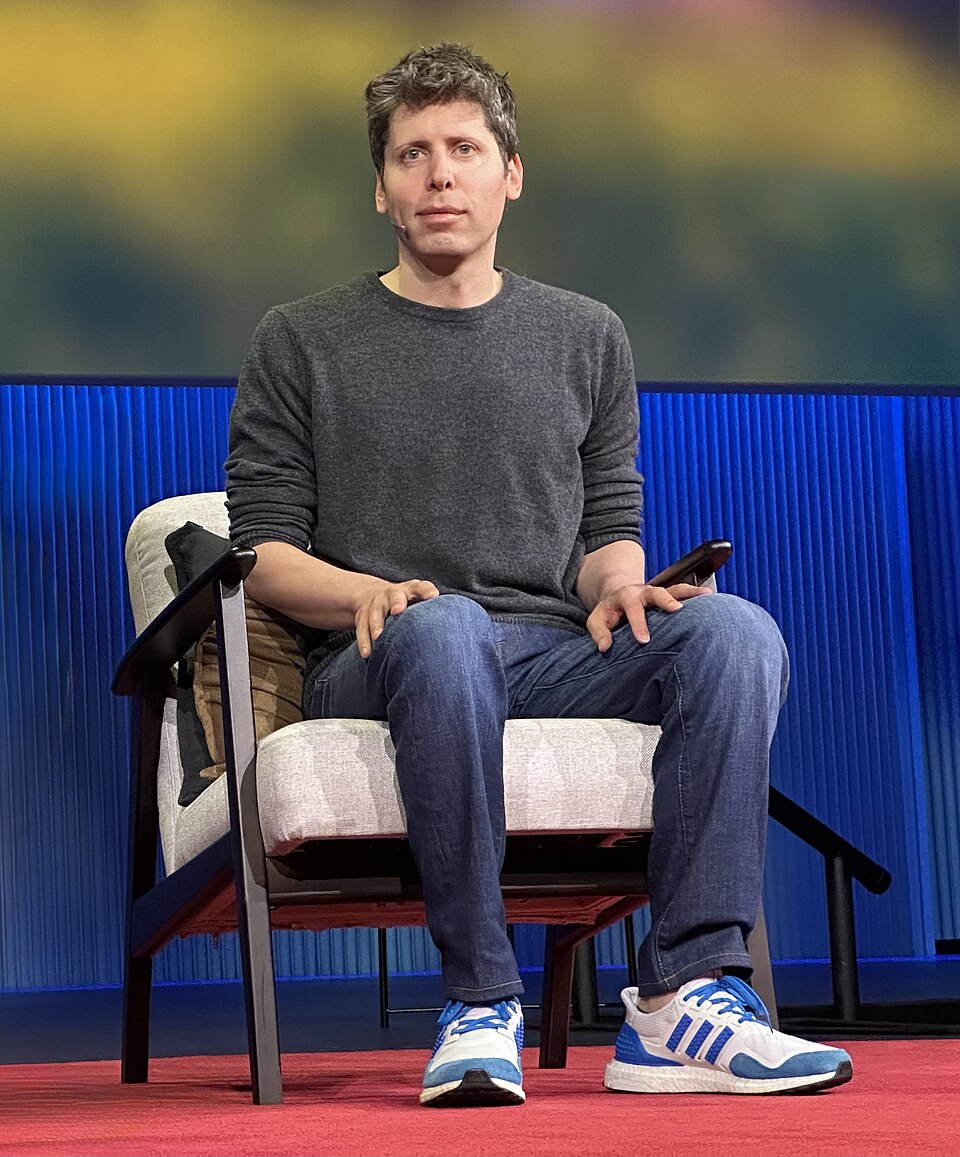
- In-body: Sam Altman speaking at TED. Photo by Steve Jurvetson via Wikimedia Commons, CC BY 2.0.