The electricity that powers artificial intelligence has to come from somewhere, and a wave of research published in August 2026 makes the cost of that power harder to wave away. Economists at the Federal Reserve Bank of Dallas estimated that the rapid expansion of AI data centers has already raised wholesale electricity prices by roughly 2 to 6 percent nationwide, and warned that generation costs could climb far more steeply by 2028. Around the same time, PJM, the largest grid operator in the United States, projected that a $6.3 billion increase in consumer electricity costs over the next three years can be attributed mostly to rising data center demand. The numbers are still contested, but the direction is not.
What the studies actually say
It helps to separate what has already happened from what is projected. The Dallas Fed figure is an estimate of increases researchers believe have already shown up in wholesale markets. The larger numbers making headlines are forecasts. A 2026 study from North Carolina State University, Carnegie Mellon and others modeled what data-center and cryptocurrency demand could do to power costs by 2030 and found demand-weighted wholesale electricity prices rising 6 to 29 percent on average nationally, and as much as 57 percent in the hardest-hit regions. Goldman Sachs has estimated the AI buildout will add around 6 percent to electricity costs between 2026 and 2027, plus another 3 percent by 2028.
How much is AI demand raising electricity prices?
Headline estimates from four studies. They use different methods, geographies and time horizons, so the bars are a spread of findings, not a single like-for-like comparison. Read each with its label.
The Dallas Fed figure is an estimate of increases already observed; the others are projections. Higher bars sit further in the future and reflect worst-case or regional peaks, not a settled national number.
These figures are not directly comparable, and treating them as one number would be misleading. They cover different geographies, use different methods, and stretch across different time horizons. What they share is a common mechanism: electricity is largely a regional market, and when a cluster of data centers adds gigawatts of new, around-the-clock demand faster than new generation and transmission can be built, the price everyone in that market pays for power tends to rise. The scale of the added demand is the part almost everyone agrees on. Bloom Energy projected that total US data center energy demand will nearly double between 2025 and 2028, from about 80 to 150 gigawatts.
The twist: data centers can also lower bills
The story is not one-directional, which is what makes it genuinely contested rather than settled. For years, large industrial customers like data centers helped spread the fixed costs of the grid across more kilowatt-hours, which can push the average bill down. A big new customer that pays for its own grid upgrades and buys power steadily around the clock can, in principle, subsidize everyone else on the system.
Whether a data center raises or lowers your bill depends less on the data center than on the rules that decide who pays for the grid it needs.
The reason analysts now expect that pattern to reverse is speed and scale. When demand outpaces the ability to add generation and transmission, the balance flips: the new load drives up the market price of power and strains infrastructure faster than it defrays fixed costs. Whether a given data center is a net benefit or a net burden to local ratepayers, in other words, depends heavily on the terms of the deal, how much of the grid buildout the operator funds, whether it brings its own generation, and how the local regulator allocates the costs.
Who pays, in practice
This is why the fight has moved from national projections to local rate cases and zoning boards. The core policy question is cost allocation: when a utility spends billions on new transmission lines, substations and generation to serve a data center campus, does that cost land on the operator that requested it, or is it spread across every household on the system? States and utilities are answering that question differently, and some are creating dedicated "large load" rate classes designed to make data centers pay for the infrastructure they specifically require.
Loudoun County, Virginia, is the clearest case study. Home to more than 250 data centers, it became one of the richest counties in the country on data center tax revenue, and it is now weighing a pause on new project applications amid resident complaints about noise, land use, grid strain and bills. The regional utility, Dominion Energy, has said it cannot expand transmission capacity fast enough to serve some new facilities. Local officials have warned that data center revenue is on track to exceed half the county's budget, a concentration that cuts both ways. Nationally, the backlash has become concrete: campaigners have counted well over a hundred organized protests against AI data centers across dozens of states.
The efficiency lever
There is one more variable that gets less attention than the grid buildout: how efficiently the compute itself is used. Every kilowatt-hour a data center draws is ultimately spent running AI workloads, and not all of that spending is equally productive. Newer chips and cooling designs cut the energy per unit of computation, and on the software side, routing each task to an appropriately sized model rather than defaulting to the largest available one reduces the compute, and therefore the power, consumed per query. That kind of matching is part of why model-agnostic systems like Metir AI route across a range of models instead of sending every request to the heaviest one. Efficiency will not offset a doubling of demand on its own, but it is a real lever, and it sits closer to the software layer than most of the grid debate.
The bottom line
The honest summary is that AI's power appetite is now large enough to move electricity markets, that the effect is regional and uneven rather than a single national number, and that the decisive question is not whether data centers use a lot of electricity, which they plainly do, but who bears the cost of the grid they require. That question is being answered right now, one rate case and one county board vote at a time, and the outcomes will shape household bills long after the current news cycle has moved on.
Sources:
- Electricity prices will keep rising on AI data center demand: Goldman | CNBC
- Data centers are actually making your electric bill cheaper, but sinking AI demand could change that | Fortune
- Will AI Data Centers Raise Your Electric Bill? The Rules That Decide Who Pays | Forbes
- Virginia county with 250 data centers begins to rein in building | Tom's Hardware
- Loudoun County, other Virginia localities consider hitting the brakes on data center development | Virginia Mercury
- Opposition to AI data centers | Wikipedia
Image credits
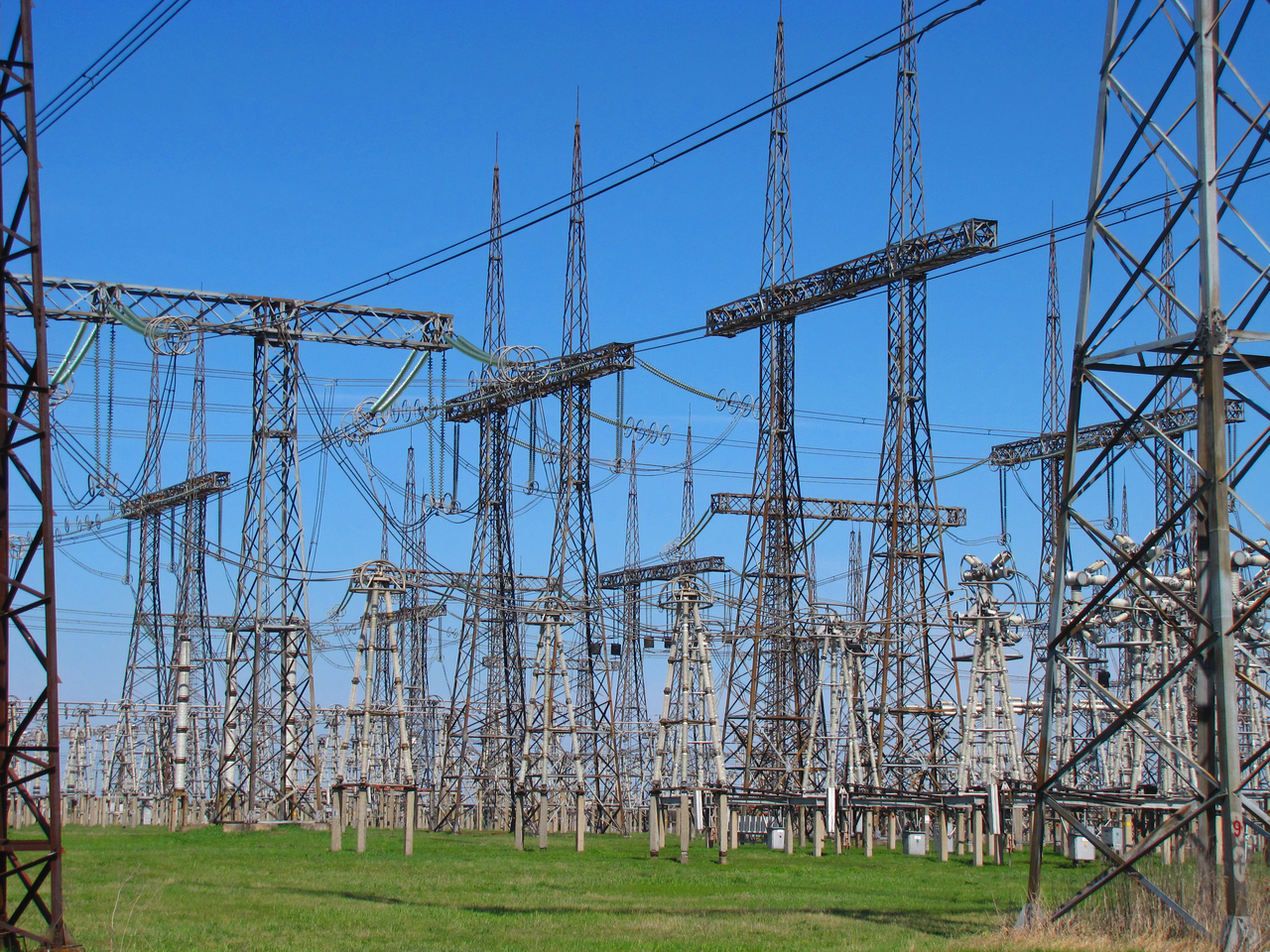
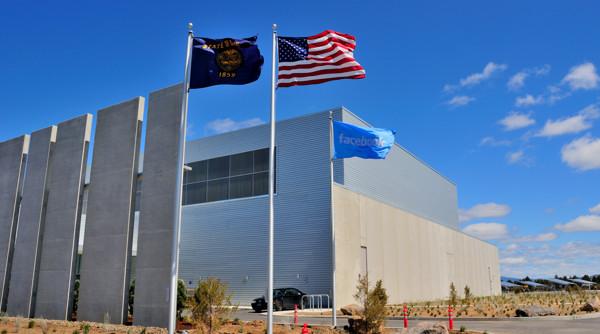
Header image: The switchyard of a 750kV high-voltage electrical substation, by Novoklimov via Wikimedia Commons, licensed under CC BY 4.0. Used to illustrate high-voltage grid infrastructure generally. In-body photograph: the exterior of a data center facility, by Intel Free Press via Wikimedia Commons, licensed under CC BY 2.0. Shown illustratively as an existing facility.