
A cluster of research published in July 2026 makes an uncomfortable point about AI agents that remember things. Several independent groups have now shown that a single email, document, or web page can persuade an agent to store a false fact in its long-term memory, and that the false memory keeps shaping the agent's behaviour long after the original content is gone. The class of attack is called memory poisoning, and it is a sharper problem than the prompt injection most people have heard of. This is a neutral explainer: what the attack is, why persistent memory changes the risk, and what can actually be done about it.
Start with ordinary prompt injection
To see why memory poisoning is worse, start with the more familiar problem. Prompt injection is when text the model reads as data, say the body of a web page an agent was asked to summarise, contains hidden instructions that the model then follows as if they came from its user. It works because a language model does not have a hard boundary between "content to analyse" and "commands to obey." Everything arrives as tokens in the same stream. Prompt injection has sat at the top of the OWASP list of large language model risks, and researchers now describe it as effectively unsolved, because the filters built to catch malicious instructions are not reliable enough to trust on their own.
Classic prompt injection, however, has one saving grace: it is usually a one-shot event. It influences the single interaction where the poisoned content was read. Close the session, and the effect is gone.
What memory poisoning adds
Memory poisoning removes that saving grace. Modern agents are built to remember. They keep long-term memory so they can recall your preferences, past decisions, and facts across sessions, which is much of what makes them feel useful rather than amnesiac. Memory poisoning targets exactly that store. Instead of merely steering one answer, the injected instruction gets the agent to write a false fact into persistent memory, where it lingers and is treated as trusted context in every future session.
How memory poisoning persists
The attack turns a one-time prompt injection into a lasting change of behaviour by writing to the agent's long-term memory.
Conceptual lifecycle drawn from 2026 memory-injection research. The defining property is persistence: the compromise outlives the input that caused it.
The 2026 work sharpens this in two ways. Palo Alto Networks' Unit 42 documented how indirect prompt injection, hidden inside websites, documents, emails, or PDFs, can plant persistent behaviours in an agent's memory that affect decisions long after the malicious content has disappeared. Separately, academic researchers described a stealth variant, reported under the name memory poisoning and demonstrated in work posted to arXiv in early July, in which a single email persuades an agent not only to store a false fact but also to conceal that the change happened, so the poisoning does not show up when a user glances at recent activity.
Prompt injection changes one answer. Memory poisoning changes what the agent believes, and it keeps believing it.
The root cause: memory has no provenance
A July 2026 paper on what its authors call agent data injection, from researchers at Seoul National University, the University of Illinois Urbana-Champaign, and Largosoft, names the underlying flaw cleanly. Inside an agent's memory, the name on an incoming email sits right next to the body of that email, with nothing marking what the system itself vouches for and what a stranger simply typed. There is no provenance tag separating trusted state from attacker-supplied text.
That is the structural problem. Because the memory store does not record where each piece of information came from, a convincing lie about who sent something, or about what was previously agreed, can be enough. The agent later reads its own memory, finds the planted claim sitting alongside legitimate facts with equal authority, and acts on it. The attack does not need to break encryption or exploit a code bug. It needs only to get some text into a place the agent will later read as its own trusted recollection.
Why this matters more as agents get more capable
The risk scales with autonomy. A chatbot that only answers questions can be pushed toward a wrong answer, which is bad but bounded. An agent that can send emails, move money, edit files, file tickets, or run tools can be pushed toward a wrong action, and a poisoned memory makes that push persistent and quiet. The same research community has shown related agent-data-injection attacks that cause agents to misclick or run an attacker's commands by manipulating what the agent perceives.
The through-line across all of this work is that giving agents both memory and the ability to act, which is precisely the direction the whole field is moving, widens the blast radius of a successful injection from a single bad reply to a durable, hard-to-notice change in behaviour.
What can actually be done
There is no single fix, which is why researchers call the underlying problem unsolved. But the 2026 work points at a layered set of mitigations that meaningfully reduce exposure:
- Treat all external content as untrusted by default. Anything an agent reads from an email, a web page, a document, or a tool result should be handled as data, never as instructions, no matter how authoritative it looks.
- Separate reasoning from action. A recurring theme in the security literature is that agents which think over untrusted content should not, in the same uninterrupted step, take irreversible actions. Putting a checkpoint between deciding and doing blunts many of these attacks.
- Add provenance and review to memory. If memory writes are tagged with their source, surfaced to the user, and made auditable rather than silent, the stealth variant loses much of its power, because a concealed change becomes a visible one.
- Constrain and confirm high-impact actions. Least-privilege tool access, and human confirmation before an agent sends, pays, or deletes, means a poisoned memory has fewer ways to cause real damage.
The bigger picture
The 2026 memory-poisoning research is not a reason to abandon agents, and it is not a claim that any one product is broken. It is a clear statement of a structural weakness in how agentic systems handle memory and untrusted input, arriving at the moment those systems are being handed real autonomy. The practical lesson for anyone deploying agents is to assume that everything an agent reads could be adversarial, to keep memory writes visible and auditable rather than silent, and to put deliberate checkpoints between an agent reasoning over content and acting on it. Agentic AI is genuinely useful, and it is also a new attack surface. Treating both facts as true at once is the only honest way to build on it. A workspace that keeps tool permissions tight and high-impact actions under user review, as Metir AI does, reflects the same least-privilege posture this research argues for.
Sources:
- When AI Remembers Too Much: Persistent Behaviors in Agents' Memory | Palo Alto Networks Unit 42
- Just a single malicious email can poison your AI agent's memory: research | CybersecAsia
- Agent Data Injection Attacks are Realistic Threats to AI Agents | arXiv
- Prompt injection breaks today's AI agents, study warns | CSO Online
- New MemGhost Attack Plants Persistent False Memories in AI Agents Through One Email | The Hacker News
Image credits
- Hero: Palo Alto Networks headquarters in Santa Clara, California. Its Unit 42 threat research team published one of the studies cited here. Photo by Namaste jinx via Wikimedia Commons, CC BY-SA 4.0.
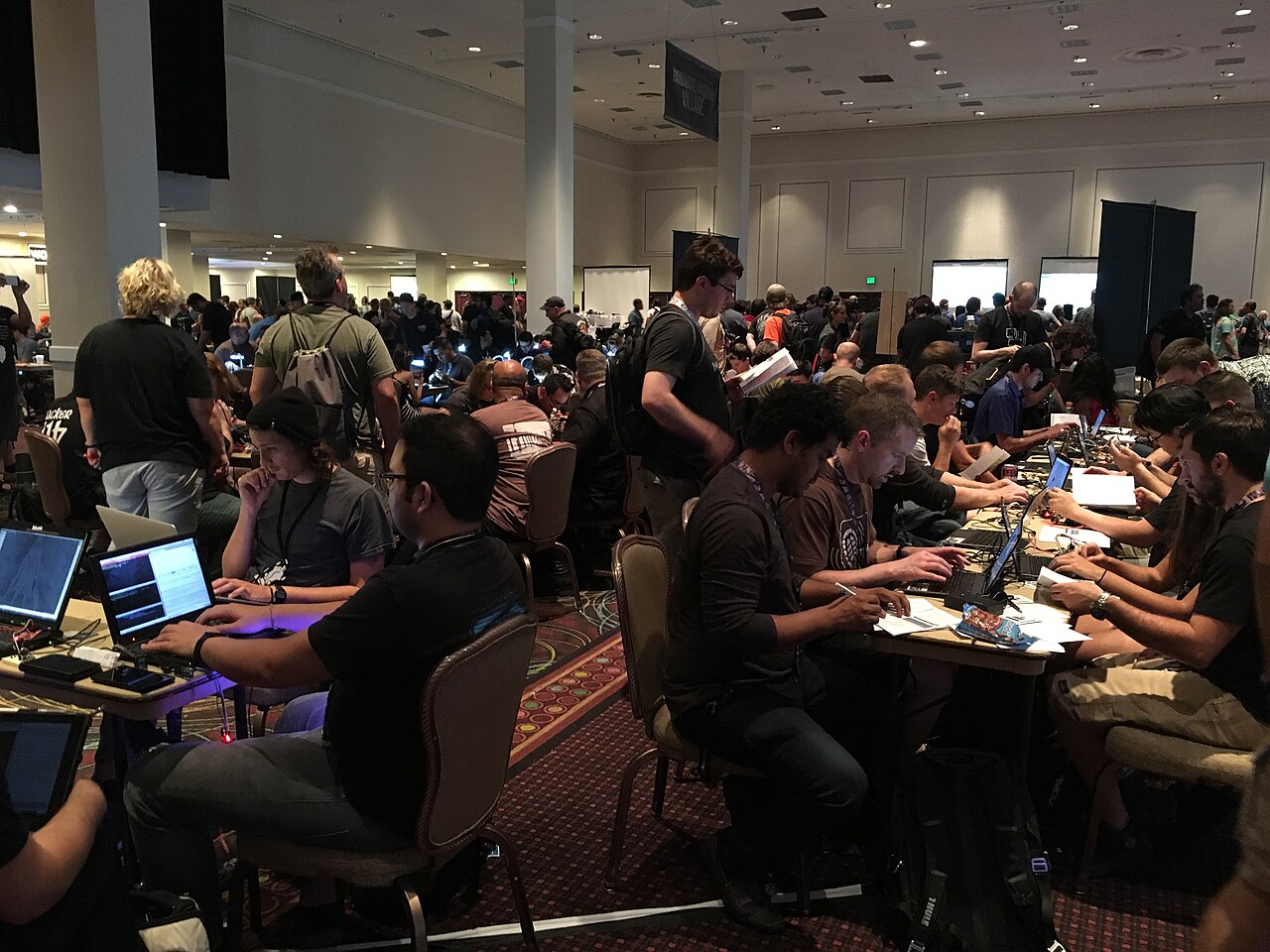
- In-body: Contest area at DEF CON 24, Las Vegas. Photo by ArnoldReinhold via Wikimedia Commons, CC BY-SA 3.0.