Ninety percent of professional developers now use an AI coding agent at work at least weekly. That is the headline from JetBrains' Developer Ecosystem Survey 2026, published in August 2026, and it describes a workforce that has, in practical terms, finished adopting this category of tool. Zoom out to the enterprise level and a very different number shows up: McKinsey's 2026 State of AI survey finds that only 23% of organizations are actually scaling an agentic AI system in any business function, even though 62% are at least testing one. Individual developers reached for agents years ahead of the organizations that employ them. This piece lays out what the 2026 survey data actually says about both sides of that gap, why different surveys produce such different-looking numbers for what sounds like the same question, and what separates the minority of agent projects that make it into production from the majority that stall.
Developer adoption is close to universal, depending how you count
JetBrains fielded its Developer Ecosystem Survey 2026 between May and July, reaching roughly 15,000 professional developers worldwide in its tenth year running. The survey counts any AI coding agent, local or cloud-based, spanning tools from GitHub Copilot to Claude Code to Codex-style assistants wired into an IDE. By that definition, 90% of respondents used one at work at least weekly, and 68% used one daily. For a category of software that barely existed in its current form three years ago, that is about as close to saturation as an enterprise developer tool gets.
 GitHub Copilot
 Claude Code
Stack Overflow's most recent completed Developer Survey, released in December 2025 and drawing nearly 49,000 responses from 177 countries, asked a related but narrower question. It separates simple AI features, autocomplete and inline suggestions, from autonomous, multi-step agents that plan and execute a task with less direct supervision. Measured that way, only 14.9% of professional developers use an agent daily and 9.2% more use one weekly, for roughly a quarter of developers using an agent at least weekly. More than half either do not use agents at all or stick to simpler AI features, and 38% report no plans to adopt one. This sits alongside a separate, broader figure from the same survey: 84% of respondents say they use or plan to use some form of AI tool, up from 76% the year before.
Two surveys, two definitions of "using an AI agent"
JetBrains asks about any AI coding agent and finds near-universal use. Stack Overflow isolates autonomous, multi-step agents from simpler AI features and finds a much smaller share, even though 84% of its respondents use some form of AI tool.
Sources: JetBrains Developer Ecosystem Survey 2026 (green); Stack Overflow 2025 Developer Survey (gray). Different survey, different agent definition, not a single trend line.
Both numbers are accurate. They are just answers to different questions. JetBrains asked about AI coding agents broadly, a category that in practice includes tools many developers experience as an upgraded autocomplete. Stack Overflow asked about agents specifically as distinct from that simpler category, isolating the harder claim, a tool acting with some autonomy over multiple steps. The lesson generalizes beyond these two surveys: any adoption statistic in this space is only as meaningful as its definition of "agent," and headline comparisons across surveys that do not share a definition are not really comparisons at all.
Enterprises have adopted agents. Fewer have put them into production.
At the company level, the adoption numbers look similarly high on paper. Writer's 2026 enterprise AI adoption survey, run with Workplace Intelligence among 2,400 executives and employees across the US, UK, Ireland, Benelux, France and Germany, found 97% of executives saying their company deployed AI agents in the past year, and 52% of employees reporting they already use one. A separate PwC AI Agent Survey of 308 US business executives found 79% saying agentic AI is already being adopted within their company, with 88% planning to increase AI-related budgets specifically because of it.
The gap opens once the question shifts from deployment to depth of use. Writer's same survey found only 29% of executives reporting significant ROI from their agent deployments, a 68-point spread between "we deployed this" and "this is paying off." PwC found a narrower but still real version of the same pattern: of the executives who say their company has adopted agentic AI, 66% report it is delivering measurable value, meaning roughly a third of self-described adopters are not yet seeing that value even by their own account. Forrester's own read on 2026, published on its research blog, states the pattern plainly: "Three-quarters of enterprise leaders tell us they're adopting agentic AI. Only a small minority have it running in meaningful production beyond 'agentish' chatbots."
Three-quarters of enterprise leaders tell us they're adopting agentic AI. Only a small minority have it running in meaningful production beyond 'agentish' chatbots.
Forrester, The State of Agentic AI in 2026
McKinsey's 2026 State of AI survey gives the clearest single-source picture of how that gap narrows in stages. Seventy-two percent of respondent organizations report using generative AI in some form, up sharply from 33% in 2024. Of those, 62% are at least testing an agent that can plan and execute multi-step work, 39 percentage points still experimenting and 23 already scaling one somewhere in the business. Looked at function by function rather than organization by organization, McKinsey finds no single business function where more than 10% of organizations are scaling an agent. Adoption, in other words, is not one threshold a company crosses; it is a funnel that gets substantially narrower at every stage between trying a tool and running it as production infrastructure.
Where the funnel actually narrows
From one 2026 survey: using AI at all is nearly universal, testing an agent is common, and scaling one in production is still a minority behavior.
Source: McKinsey & Company, The State of AI: Global Survey 2026. Bar width is proportional to the stated percentage.

Why the funnel narrows: cost, reliability, and who is accountable
None of the 2026 reporting points to a single blocker. It points to several, stacked on top of each other, each of which is easy to skip in a demo and hard to skip in production.
The first is governance and identity. Okta's AI Agents at Work 2026 report, based on a March 2026 survey of 784 executives and knowledge workers across seven countries, found that only 34% of organizations apply the same security controls to their AI agents that they apply to human employees. The same report found 58% of executives saying their company experienced an AI-related security incident or close call in the prior 12 months, even as 92% of executives said agents are already in widespread or moderate use. An agent that can read a calendar, send an email, or touch a production database is, from a security standpoint, a new kind of identity, one that most organizations have not yet decided how to provision, scope, or audit the way they would a new hire's access.
The second is cost and unclear value at scale. Gartner's June 2025 forecast, still the reference point cited across 2026 coverage of this topic, predicts that more than 40% of agentic AI projects will be canceled by the end of 2027, citing escalating costs, unclear business value, and inadequate risk controls as the leading reasons. Gartner's analysts have also pointed to "agent washing," existing chatbots, robotic process automation, and simple assistants rebranded as agents without the underlying autonomy, as a factor that inflates adoption headlines relative to what is actually running independently in production; the firm has estimated only a few hundred of the thousands of vendors marketing agentic AI products are offering something that meets the bar.
The third is the least glamorous and the most consistent across every 2026 survey cited here: production is simply a harder environment than a pilot. A pilot can succeed with a small team, a clean dataset, and an isolated sandbox. Production requires integration with legacy systems, security review, monitoring, a rollback plan, and a named owner accountable when the agent gets something wrong at 2 a.m. and nobody is watching the demo anymore. That is a description of ordinary software engineering discipline, not a new problem agentic AI invented, but it is discipline that a large share of 2026's agent projects still skip, because the pressure to show an agent working has outpaced the pressure to show one working reliably, unattended, at scale.
What separates the agents that make it
The organizations that do get an agent into durable production use are not distinguished, in this year's data, by which model or vendor they picked. They are distinguished by decisions that look almost administrative next to the AI itself: a named owner for the agent's outcomes, a measurable definition of what the agent is supposed to do before it launches, an evaluation process that runs continuously rather than once at launch, and a governance model that treats the agent's access to systems the same way it treats a person's. That list overlaps closely with what separated the small share of "AI Leaders" from "AI Followers" in a separate 2026 HCLTech enterprise study on broader AI ROI: measurable use cases, senior sponsorship, and confidence in the underlying data, defined up front rather than retrofitted after a pilot stalls.
There is also a quieter, more structural reason production lags adoption: the tooling layer itself is still consolidating. An organization running agents across several point products, each with its own permissions model, its own monitoring, and its own dependency on a single model provider, is repeating the integration and governance work described above every time it adds a new tool or a new model comes out. Reliability, cost control, and the ability to swap or combine models without rebuilding the surrounding system are exactly what separates a durable production agent from a pilot that quietly stops getting used. That is the practical argument for consolidating around a model-agnostic platform rather than a fresh point solution for every new release; it is the problem Metir AI is built to solve, giving a team one governed workspace across models instead of a new integration project each time a better one ships.
The takeaway
The 2026 data does not describe a technology that failed to catch on. It describes the opposite: individual developers adopted AI coding agents faster than almost any prior developer tool, JetBrains' 90% weekly figure is evidence of that on its own, and enterprises followed close behind on paper, with adoption figures from Writer and PwC both above three-quarters of surveyed organizations. What the same data shows just as clearly is that adoption and production are different achievements, measured by different numbers, and that the distance between them is where most of 2026's agentic AI spending and disappointment both live. Gartner's forecast that over 40% of agentic AI projects will be canceled by 2027 is not a prediction that the technology stops working; read alongside McKinsey's 23% scaling figure and Okta's 34% governance figure, it reads more like a forecast that the organizations skipping the unglamorous parts, ownership, evaluation, identity and access, will be the ones whose projects do not survive contact with production. The ones that already treat those parts as requirements, not afterthoughts, are the ones showing up in the smaller, harder number.
Sources:
- AI Coding Agents: Adoption Trends | The JetBrains Blog
- AI | 2025 Stack Overflow Developer Survey
- Developers remain willing but reluctant to use AI: The 2025 Developer Survey results are here | Stack Overflow
- Enterprise AI adoption in 2026: Why 79% face challenges despite high investment | WRITER
- PwC's AI Agent Survey | PwC
- The State of AI: Global Survey 2026 | McKinsey & Company
- McKinsey's State Of AI: The Scaling Gap Is Now CX's Problem | CX Today
- AI Agents at Work 2026: Securing the agentic enterprise | Okta
- Gartner Predicts Over 40% of Agentic AI Projects Will Be Canceled by End of 2027 | Gartner Newsroom
- The State Of Agentic AI In 2026: Companies Are Chasing, Few Are Catching | Forrester
Image credits
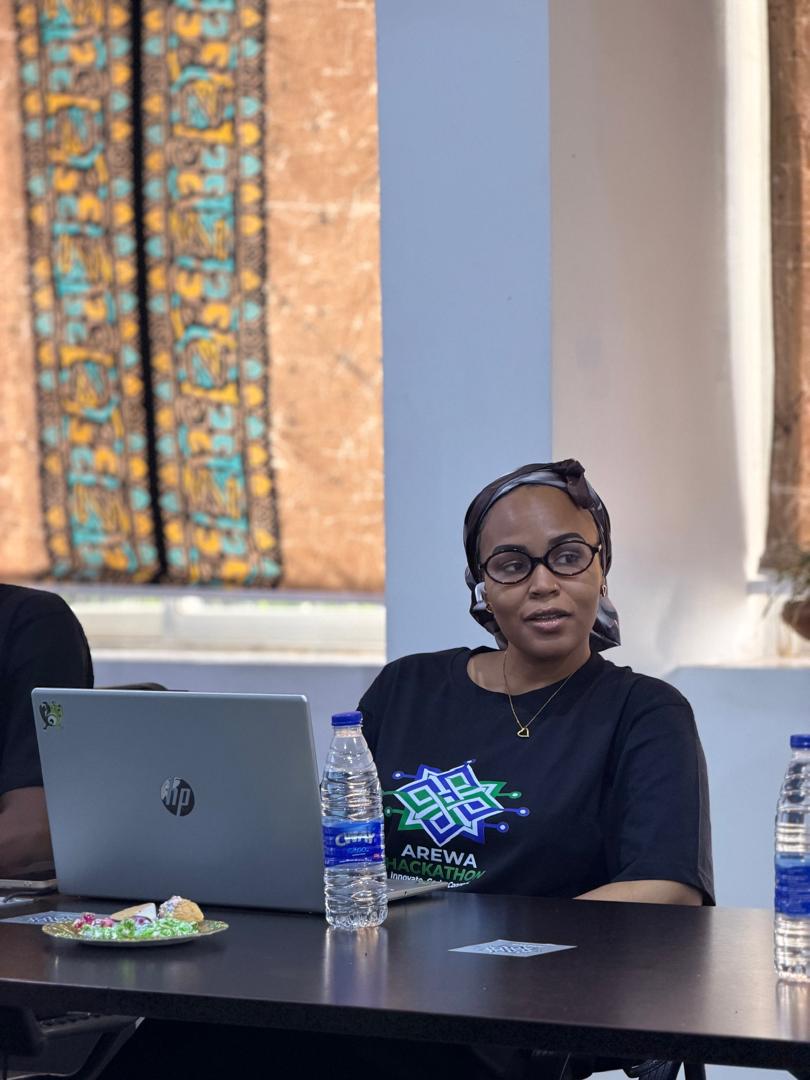
Header image and in-body photograph: developers working on laptops at desks during the Arewa Hackathon 2026, by JosefAnthony, via Wikimedia Commons (hero, in-body), licensed under CC BY-SA 4.0. The photos depict developers at a general-purpose hackathon and are not tied to any specific company, survey, or product named in this piece; they illustrate the kind of everyday developer work the JetBrains and Stack Overflow survey data describes.