On September 22, 2026, the US Department of Veterans Affairs made ambient AI clinical documentation a formal, enterprise-wide procurement. Abridge, one of the larger ambient documentation companies, announced it had been selected to deliver its technology under a VA enterprise contract with a total ceiling of $775.72 million over five years. The number is large enough to draw headlines, but the more useful question is what the contract actually authorizes, because the structure says more about how AI is entering large institutions than the dollar figure does.
This is a neutral, analytical read. Ambient documentation is one of the few AI categories with a clear, measured benefit and a genuine set of open questions, and both deserve to be stated plainly.
What the contract is, and what it is not
The most important detail is the contract type. This is a multiple-award, indefinite-delivery, indefinite-quantity vehicle. In plain terms, it is not a single $775 million payment to one company. It is a ceiling, a maximum total value across all eligible vendors over five years, under which VA medical centers and regions can place individual task orders as they choose. Abridge was selected as a vendor on the vehicle, which lets VA facilities adopt it without running a fresh procurement each time, but the actual spend depends on how many facilities order and how much they use.
That structure matters for interpretation. An enterprise contract of this shape is a purchasing framework, not a guaranteed revenue commitment. It lowers the friction of adoption across a very large system rather than mandating it, which is a meaningful difference when reading what the deal does and does not promise.
This is a ceiling across all eligible vendors, not a guaranteed check to one company. The structure is a purchasing framework, not a mandate.
On how to read a $775M enterprise contract
Why ambient documentation is the AI use case that stuck
Among the many proposed clinical uses of AI, ambient documentation is one of the few with broad, real deployment, and the reason is that it targets a well-defined pain rather than trying to practice medicine. Clinicians spend hours writing notes, often after clinic, a load widely blamed for burnout. An ambient scribe listens to the visit with consent, drafts a structured note, and hands it back for the clinician to edit and sign.
How an ambient AI scribe fits into a visit
The value is in removing after-hours charting, not in replacing clinical judgment. A human still reviews and signs every note.
With patient consent, the app captures the spoken clinician-patient conversation in the exam room or on a call.
›A model turns the conversation into a structured clinical note: history, assessment, plan, and coded elements.
›The clinician edits and approves the draft. The human, not the model, signs the note.
›The approved note is written into the electronic health record, so it lives where the rest of the chart does.
Generalized workflow for the ambient clinical documentation category.
The design keeps the human in the decision seat. The model drafts, the clinician reviews and signs, and the approved note flows into the electronic health record. That division of labor is why the category has been able to scale where more ambitious clinical AI has moved slowly: the tool removes clerical work without asserting clinical authority, and the failure mode of a bad draft is a caught edit rather than a wrong diagnosis. It is worth being precise, though, that a review-and-sign step only protects patients if clinicians actually scrutinize drafts rather than rubber-stamping them, which is a workflow and training question, not a model one.
The detail that makes the VA case genuinely hard
The VA is in the middle of a long, contested migration from its decades-old VistA and CPRS system to a new federal electronic health record built on Oracle Health. According to Abridge, its tool is operational on both the legacy VistA and CPRS environment and the new Oracle-based federal record, already live in more than 75 VA medical centers and supporting thousands of clinicians across primary care, twelve clinical subspecialties and clinical resource hubs, with multilingual capability across more than 28 languages.

Working across two EHRs at once is the unglamorous core of the story. Much of the difficulty in enterprise healthcare AI is not the model but the integration: preserving clinical context as a note moves between providers, specialties, care settings and, in the VA's case, two different records mid-transition. A tool that only worked on one side of that migration would be far less useful to the agency, which is why the cross-EHR capability, rather than any benchmark score, is the operative feature here.
The commercial backdrop
The VA award lands on top of a fast commercial ramp. Abridge is deployed across more than 300 US health systems, including large names, and by its own account expects to support over 100 million patient-clinician conversations this year. Its private valuation reached $5.3 billion in a mid-2025 Series E led by Andreessen Horowitz, roughly double an earlier-2025 mark, and it has been rated highly in independent KLAS evaluations for ambient documentation.
That context cuts two ways. It supports the read that ambient documentation has found durable product-market fit in a sector notoriously slow to adopt software. It also raises the ordinary scrutiny that follows any fast-scaling category: how much of the reported usage converts to durable value, how pricing holds as competitors crowd in, and how much of a multi-vendor enterprise ceiling any single supplier ultimately captures. A government framework contract validates the category strongly; it does not by itself settle the unit economics for any one vendor.
What it means for the wider AI picture
For anyone tracking where AI is genuinely landing in the economy, the VA contract is a useful marker. It shows AI entering a large, cautious, regulated institution not through a flashy autonomous agent but through a narrow, human-supervised tool that removes a specific administrative burden. The adoption pattern, buy a framework, deploy where it fits, keep a human signing off, is likely closer to how most institutions will absorb AI than the fully-autonomous scenarios that dominate discussion.
There is also a portability lesson buried in the cross-EHR requirement. The feature that made Abridge fit the VA is that it does not assume one fixed backend; it works across the environment the customer actually has, including one in mid-migration. That same principle, not hard-wiring to a single underlying system, is what keeps any AI deployment resilient as the ground shifts underneath it. For teams choosing how to build on AI models rather than health records, a model-agnostic platform such as Metir AI applies the same idea one layer up, keeping work usable across providers instead of betting a workflow on one.
The takeaway
The VA putting ambient AI documentation on a $775.72 million enterprise contract is a real signal that clinical AI has moved from pilot to procurement, but it should be read for what it is: a multi-vendor purchasing framework that lowers the barrier to adoption across a very large system, not a guaranteed windfall or a mandate. The category earned this position by staying narrow, keeping clinicians in control, and solving the integration problems, especially working across two electronic health records at once, that decide whether healthcare software actually gets used. Those are the same tests the next wave of clinical AI will have to pass, and they have little to do with leaderboard scores.
Build clinical and enterprise AI on a foundation that flexes
The feature that made this deal work was portability, a tool that fits the systems a customer already runs. Metir AI applies the same principle to models, keeping your work usable across the leading AI systems in one workspace rather than locked to one. Try Metir AI free.
Sources:
- Abridge Wins Seat on $775.7M VA Enterprise Contract to Power Ambient Clinical AI | HIT Consultant
- Abridge selected for VA ambient AI enterprise contract | Nextgov/FCW
- Abridge Selected for VA Ambient AI Enterprise Contract | Abridge
- Abridge scores $300M Series E, boosting valuation to $5.3B | Fierce Healthcare
- VA Awards New AI Scribe Contract, With Lessons for Governing AI at Scale | CDO Magazine
Image credits
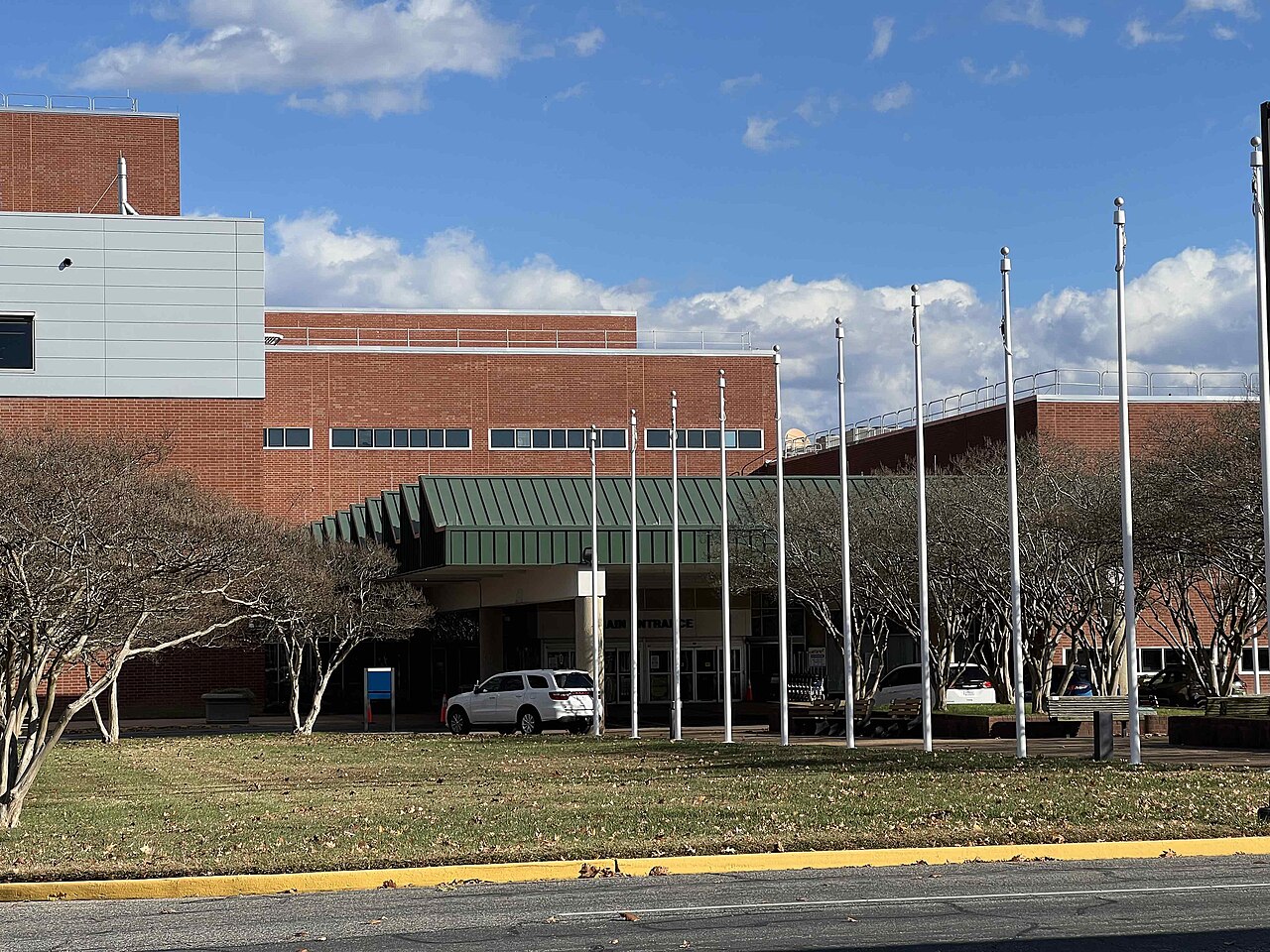
Header image: Richmond Veterans Affairs Medical Center, CC0, via Wikimedia Commons. In-body image: a US Department of Veterans Affairs medical center, CC0, via Wikimedia Commons.