On August 28, 2026, Andreessen Horowitz announced it had raised $1.1 billion for a new vehicle it calls the Machine Age Fund, dedicated to the physical build-out of artificial intelligence. The money will go into chips, memory, networking, storage, data centers, robotics, and edge devices, the hardware that AI runs on rather than the software that runs on AI. For a firm whose reputation was built on the idea that software eats the world, raising a billion-dollar fund for atoms instead of bits is a notable turn, and a useful signal about where the binding constraints on AI have moved.
What the Fund Backs
a16z described the fund as investing in founders who are, in its words, reinventing AI hardware. That spans the full physical stack: the compute silicon AI trains and runs on, the memory and networking that feed it, the storage underneath, the data centers that house it along with their power and cooling, and, at the far end, robotics and home AI appliances that push intelligence into the physical world. The common thread, the firm argued, is that all of these layers are hitting the wall of today's supply-chain capability and the limits of physics and computer science.
What the $1.1B Machine Age Fund is built to back
The fund spans the physical layers of AI, from silicon to end devices. The stated thesis: each layer is hitting the limits of today's supply chain, and of physics.
A software-first firm underwriting hardware is itself the signal: capital is chasing the physical constraints that now gate AI progress.
That framing is the whole thesis in one sentence. For most of the last decade, the scarce ingredient in technology was good software and the talent to write it, and capital flowed accordingly. a16z is betting that the scarce ingredient in AI has shifted to physical capacity: enough chips, enough memory bandwidth, enough power, enough cooling, built fast enough. When the bottleneck is physics rather than code, the returns migrate toward whoever can relieve the physical bottleneck.
Why This Is a Departure
It is easy to underplay how much of a shift this is. Software investing and hardware investing have very different shapes. Software scales at near-zero marginal cost, iterates in days, and can be fixed after shipping. Hardware demands heavy upfront capital, moves on multi-year timelines, carries real manufacturing and supply-chain risk, and is unforgiving of mistakes once fabricated. A firm optimized for the first world is deliberately stepping into the second.
When the bottleneck is physics rather than code, the returns migrate toward whoever can relieve the physical bottleneck.
Analysis of the Machine Age Fund thesis
The reason to do it anyway is that the demand signal is overwhelming. The scale of AI compute build-out, visible in the record data-center capital spending of the largest technology companies and the surging revenue of chip suppliers, has made hardware the part of the AI economy where money is most obviously being spent and most obviously constrained. a16z is following that constraint. The bet is not that software stops mattering; it is that, for a while, the marginal dollar of AI value is unlocked by relieving a physical limit rather than writing another application.
Reading It in Context
This fund does not exist in isolation. It arrives amid a broad rotation of capital toward AI infrastructure: hyperscalers committing record sums to data centers, chipmakers posting record quarters, and a wave of financing experiments aimed at helping smaller cloud providers afford the hardware they need. a16z putting a dedicated $1.1 billion fund behind the physical layer is a venture-market expression of the same macro story, one that says the infrastructure phase of AI still has room to run and that early-stage hardware, not just software applications, is now investable at venture scale.
There is a counter-reading worth holding alongside it. Hardware cycles are notoriously prone to overbuilding, and a rush of capital into physical AI infrastructure raises the same question that hangs over the whole build-out: whether demand will grow into the capacity being financed, or whether some of it is being constructed ahead of durable need. A dedicated venture fund can absorb individual company failures, that is what venture is for, but the timing bet, that the hardware constraint stays tight long enough for these companies to mature, is real and unproven. That is the honest uncertainty underneath the announcement.
What It Means for Everyone Downstream
For companies that simply use AI, this kind of investment is mostly good news at one remove. More capital aimed at chips, memory, networking, and data centers is, over time, more supply, and more supply is the thing most likely to ease the cost and availability pressure that currently shapes what AI is affordable to run. The catch is timing: hardware takes years to design, fabricate, and deploy, so relief from a fund announced in 2026 arrives later than the demand that motivated it.
That lag is a reminder that the AI stack is still being built underneath the products people use every day, and that the economics of running AI, how much compute costs and who can get it, remain in motion. For teams building on AI now, the sensible response is to stay flexible about which models and providers they depend on rather than committing hard to one set of assumptions about cost and capacity. A model-agnostic approach, of the kind platforms like Metir AI are built around, keeps that flexibility while the physical layer catches up to the demand a fund like this one is chasing.
The larger takeaway is about attention. When a firm as identified with software as Andreessen Horowitz raises a billion dollars for hardware, it is telling you where it thinks the next several years of value will be created. The bottleneck has moved from what AI can be told to do to what can physically be built to run it, and the smart money is following the bottleneck into the physical world.
Sources:
- a16z creates a $1.1B 'Machine Age' fund to 'accelerate the physical buildout of AI' | TechCrunch
- Andreessen Horowitz Targets AI Supply Crunch With New $1.1 Billion Hardware Fund | PYMNTS
- Andreessen Horowitz raises $1.1B AI infrastructure fund for chips, robots and more | SiliconANGLE
- The Machine Age Fund | Andreessen Horowitz
- Andreessen Horowitz Raises $1.1B to Fund Hardware Startups as AI Racks Near 1 Megawatt | TechTimes
Image credits
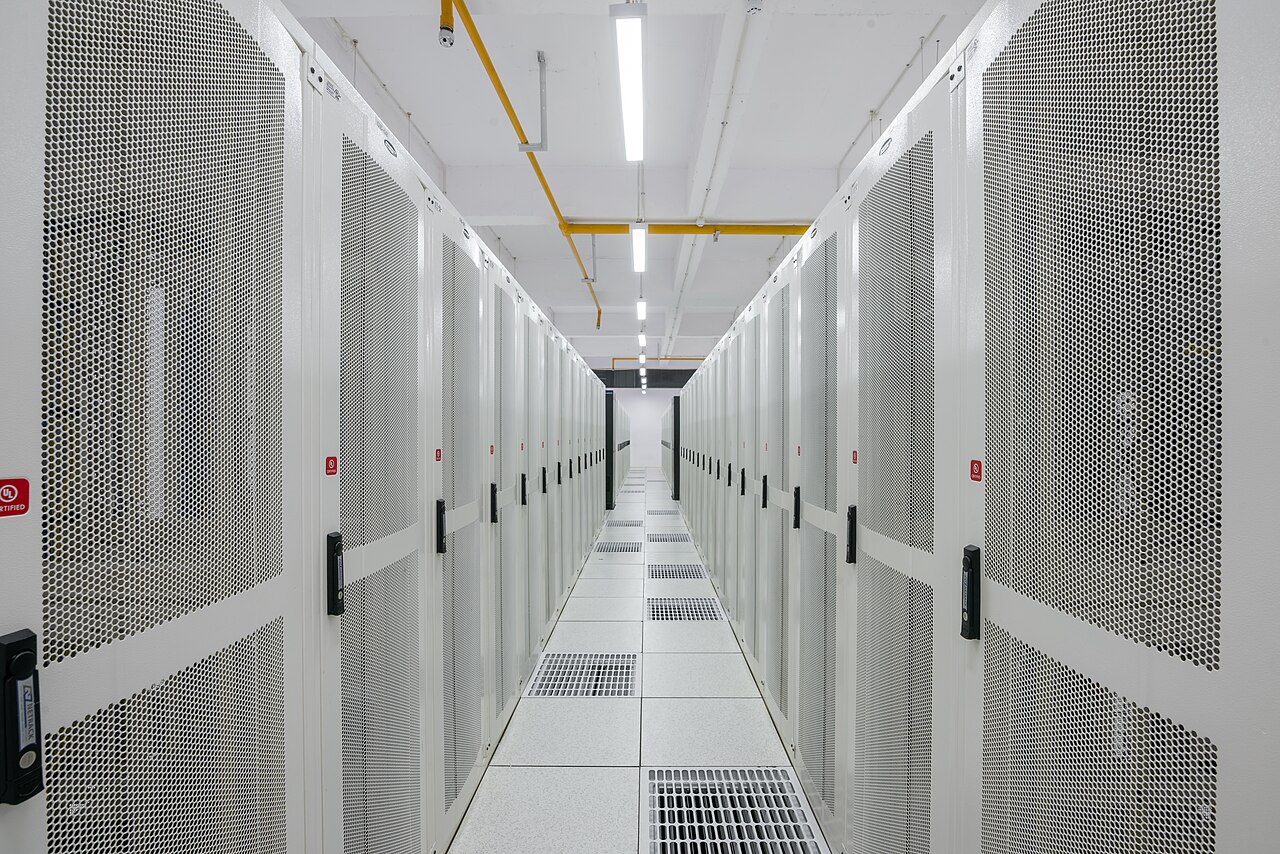
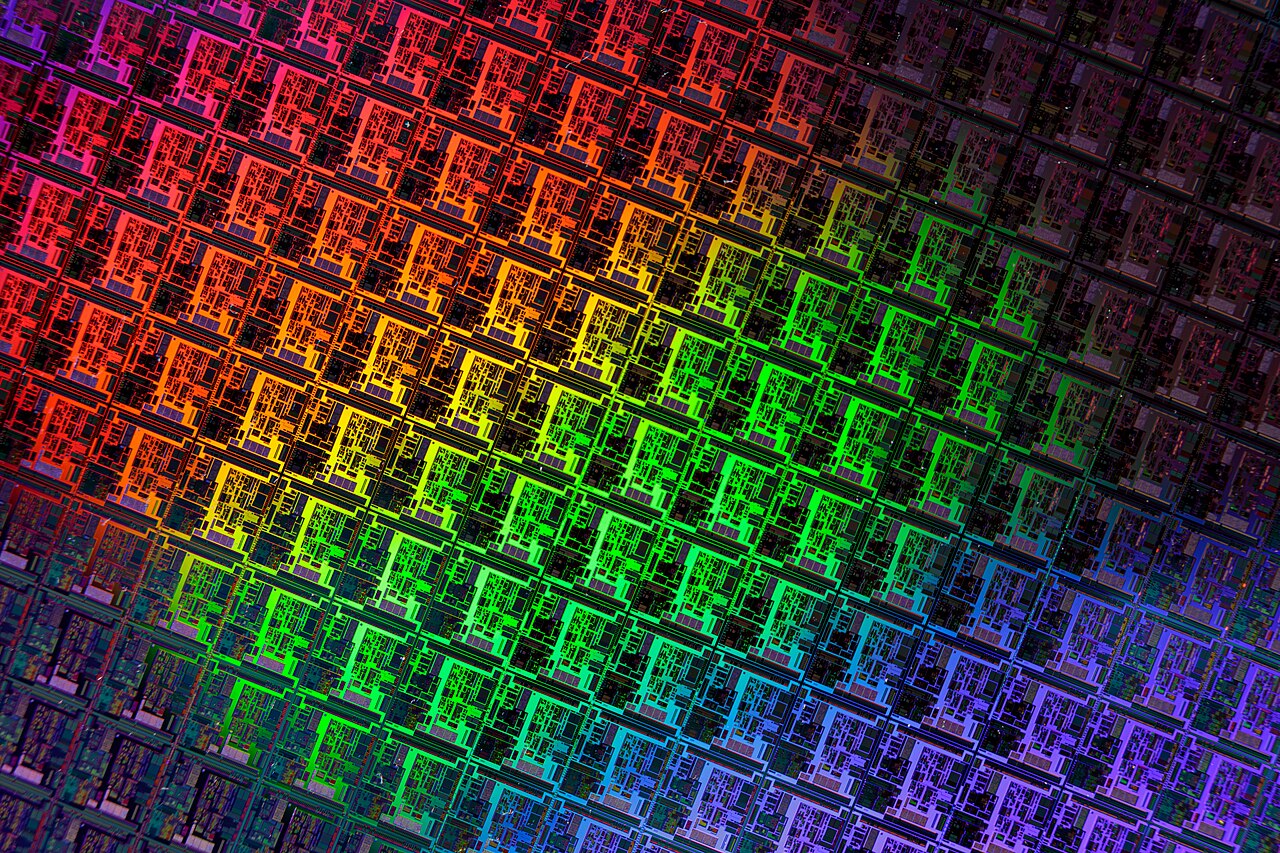
Header image: server racks inside a modern data center, by PiDatacenters via Wikimedia Commons, licensed under CC BY-SA 4.0. In-body photograph of a silicon semiconductor wafer, by Rob Bulmahn via Wikimedia Commons, licensed under CC BY 2.0.